
Vandaag of morgen in huis

Kwaliteit gegarandeerd

Welkomstaanbiedingen ontgrendelen: GRATIS bezorging | Tot 80% korting | Gratis 30 dagen JoyPlus-proefperiode
Download de app
An electric citrus juicer can quickly juice oranges, lemons and limes, but not every model is right for every kitchen. A compact juicer for a single glass of juice works differently from a lever-operated citrus press designed for several glasses. Claims such as ‘powerful motor’, ‘high juice yield’ and ‘easy to clean’ only tell you so much unless you check the specifications.
Look out for these three common pitfalls:
A hand-operated cone with automatic rotation is suitable for occasional use and small quantities. With a lever-operated citrus press, you press the fruit onto the cone using the handle. This takes less effort and can be handy when juicing several oranges in a row.
Don’t just look at the wattage. The citrus juicers in this selection range from 20 watts to 100 watts. A higher wattage may be useful if you plan to use the juicer regularly, but also check the maximum operating time, stability and pressing mechanism.
If you only juice lemons and limes, you won’t need a large cone. A wider cone is more practical for oranges or grapefruits. A model with two interchangeable cones gives you more flexibility for different citrus fruits.
A pulp filter catches pips and larger pieces of pulp. Consider the texture you prefer: some people like clear juice, while others enjoy pulp in their orange juice. An adjustable sieve or filter can be a better choice if you like to decide for yourself.
A citrus juicer with a drip-stop helps prevent juice from running onto the worktop when you remove the glass. Check that the spout actually closes and that your glass fits underneath it.
A reservoir of around one litre is practical for a household. If you only make a glass now and then, a smaller, lighter appliance may be a better choice. Also check whether the removable parts can be taken off and whether the product information says they’re dishwasher-safe. A smooth exterior and a motor base that you can wipe with a damp cloth mean less cleaning.
For electrical appliances sold in the Netherlands, also check for a suitable mains voltage of 220-240 volts, clear safety instructions and warranty information. A CE mark shouldn’t be taken as proof that an appliance is suitable for every use; always follow the manual and only use the product as intended.
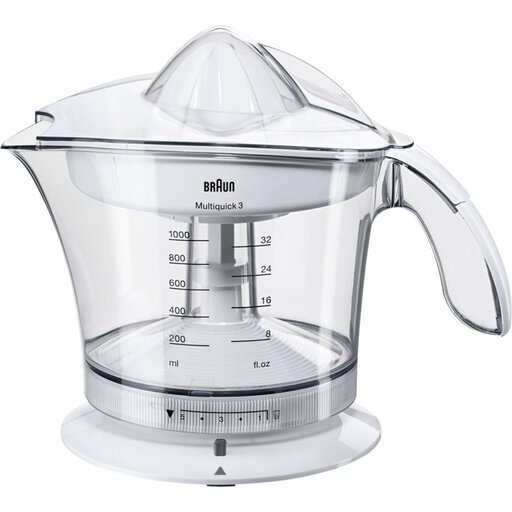
Why it suits this profile: This model has a power rating of 20 watts, a 1-litre reservoir and simple operation: just press the fruit onto the cone. It’s a good fit if you want to make fresh juice now and then without fiddling with complicated settings.
The product information doesn’t mention a drip-stop. So, if keeping your worktop completely clean is a priority, this isn’t the model for you.
1-litre capacity, cone that rotates in both directions, adjustable pulp filter and selected parts listed as dishwasher-safe in the product information.
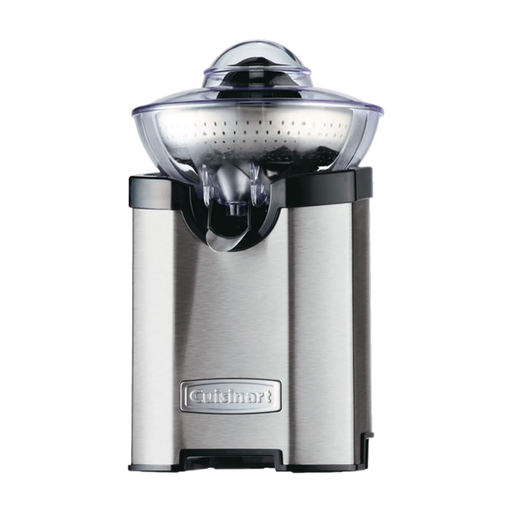
Why it suits this profile: With 100 watts of power, a stainless steel body, a wide spout and a 1-litre reservoir, this model is well suited to anyone who wants to juice oranges, lemons or limes every day.
The specifications list a drip-stop and dishwasher-safe removable parts. Before use, check the manual to confirm exactly which parts can go in the dishwasher.
100 watts of power, stainless steel body, drip-stop, 1-litre capacity and a stated 3-year manufacturer’s warranty.
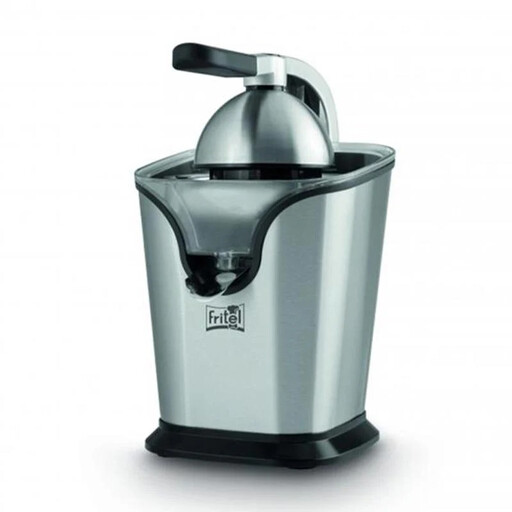
Why it suits this profile: The lever mechanism, 100 watts of power and two cones make this model a practical choice for households that juice different citrus fruits, from limes to grapefruits.
The two cones mean you don’t have to use the same size for every fruit. The drip-stop helps prevent spills when you change glasses.
100 watts, lever mechanism, two cones, pulp filter, drip-stop spout and removable parts listed as dishwasher-safe in the product information.
A slow juicer or centrifugal juicer is a different type of appliance. These juicers are designed for fruit and often vegetables too. They usually have a feed tube, a sieve or pressing system, and a separate pulp container. If you only want to juice oranges and lemons, they’re often more elaborate than you need.
A citrus juicer for oranges and lemons is usually simpler to use: halve the fruit, place it on the cone, then remove the parts once you’re done. If you also want to juice apples, carrots or leafy greens, you could consider a more versatile juicer. If so, look at the amount of chopping required, noise level, maximum operating time and ease of cleaning.
We’ve put together a complete, up-to-date list of products that meet these strict selection criteria and the applicable European safety requirements.
After use, unplug the appliance and remove the cone, filter, reservoir and spout as directed in the manual. Rinse off any dried-on pulp with lukewarm water first. Only parts explicitly labelled as dishwasher-safe should go in the dishwasher. Wipe the motor base with a damp cloth and never immerse it in water.
How long it lasts depends on how often you use it, how you clean it and whether you use it within its limits. Let the motor cool down if the manual says to, and don’t use the appliance for fruit or ingredients it wasn’t designed for. When buying, also check the warranty terms and whether spare parts are available.
A citrus juicer is usually switched on for just a few minutes at a time. Its total energy use depends on its power rating and how long you use it. A 100-watt model running for five minutes uses about 0.008 kilowatt-hours in theory. In practice, ease of cleaning, stability and choosing the right cone are often more important than a small difference in power.
