
Vandaag of morgen in huis

Kwaliteit gegarandeerd

Welkomstaanbiedingen ontgrendelen: GRATIS bezorging | Tot 80% korting | Gratis 30 dagen JoyPlus-proefperiode
Download de app
An electric citrus juicer can make squeezing oranges, lemons, limes and grapefruits much easier. Yet many models look alike, with the main differences coming down to ease of use, pulp settings, capacity and how easy they are to clean.
When comparing models, don’t focus only on wattage or an attractive product photo. A more powerful motor won’t necessarily produce more juice. A large jug isn’t always practical either if you usually make just one glass at a time. Here are the main pitfalls to avoid and the key specifications to consider for households in the Netherlands.
An electric orange juicer with a 100-watt motor sounds more powerful than a 25- or 40-watt model. However, the shape of the cone, the way you press the fruit and the rotation also affect how much juice you get. If you only make a glass of juice now and then, a compact 25-watt model may be enough. For making several glasses in a row, a sturdier design with a lever or pressing mechanism is more practical.
Not everyone likes their juice the same way. Some people prefer it smooth, while others enjoy a little pulp. So check whether the citrus juicer has an adjustable filter. A simple strainer often gives you less choice than a citrus juicer with a pulp filter and multiple settings.
Pay attention to the wording, too. A brand’s claim about, for example, a higher juice yield isn’t guaranteed for every fruit. A brand may report a particular result based on its own testing, but in practice the outcome depends on the type and ripeness of the citrus fruit, as well as how firmly you press it.
Juice and pulp dry quickly. A model with hard-to-reach corners can therefore be awkward to use every day. Look for removable parts and check which ones are dishwasher-safe. An easy-to-clean citrus juicer can save you time, especially after breakfast.
A drip-free citrus juicer also helps stop juice running onto your worktop. Check how the spout works and whether there’s enough room to position a jug or glass underneath it.
A small cone is suitable for lemons and limes. Oranges and grapefruits usually need a larger one. A model with two cones is therefore a versatile choice for different citrus fruits. Also check whether the product description specifically mentions oranges, lemons, limes and grapefruits.
A wide opening is especially useful if you don’t want to spend time cutting fruit beforehand. According to the product specifications, the Bear CZJ-A04B1 has a 110 mm opening and is designed for larger citrus fruits. That doesn’t mean every fruit will fit without any preparation, so always check the instructions for your model.
For one or two glasses, a jug holding around 500 to 700 ml is often practical. Families may prefer a jug with a capacity of 1 liter or more. However, a larger jug takes up more worktop space and still needs to be cleaned after use.
An orange juicer with a jug is useful when you want to make several glasses in a row. If you prefer to pour your juice straight into a glass, a compact citrus juicer with a good spout should be enough.
Choose a model with non-slip feet and use it on a flat, dry surface. Check whether the motor base must not be immersed in water; this is usually stated clearly in the safety information for electrical kitchen appliances. Unplug the juicer before assembling, taking apart or cleaning it.
Models with 220–240 volts and 50 Hz are suitable for the Dutch mains supply, but check the product specifications before ordering. Also look for the recommended maximum operating time. A citrus juicer is designed for citrus fruits; a standard juicer or slow juicer is a different type of appliance.
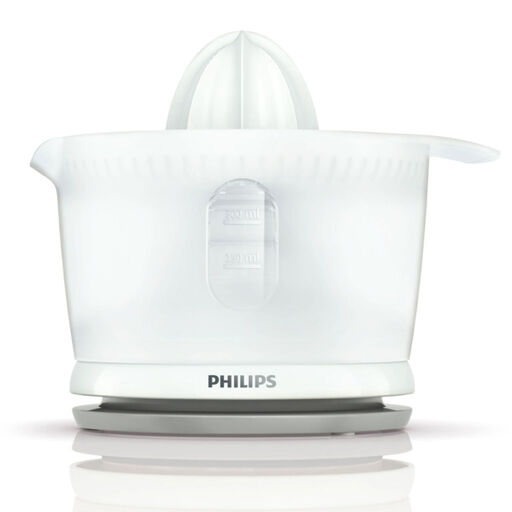
Why it suits this profile: This compact model has a 500 ml capacity, starts automatically when you press down and has a power rating of 25 W. It’s a good fit if you make a glass of juice now and then and have limited worktop space.
The specifications list removable, dishwasher-safe parts, cord storage and a drip-free spout. This makes cleaning and storage more straightforward.
500 ml jug, automatic shut-off, non-slip feet and a compact size of 14,5 × 19,7 × 16,4 cm.
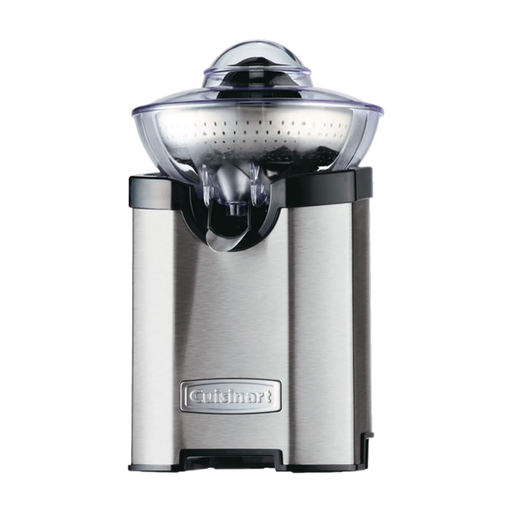
Why it suits this profile: The stainless steel housing, 100 W power rating and 1 liter capacity make it well suited to daily use and preparing several glasses at a time.
The product description mentions a drip-stop system and removable, dishwasher-safe parts. These features help reduce spills and the time spent cleaning.
Stainless steel housing, 1 liter capacity, extra-wide pouring spout and, according to the product specifications, a three-year manufacturer’s warranty.
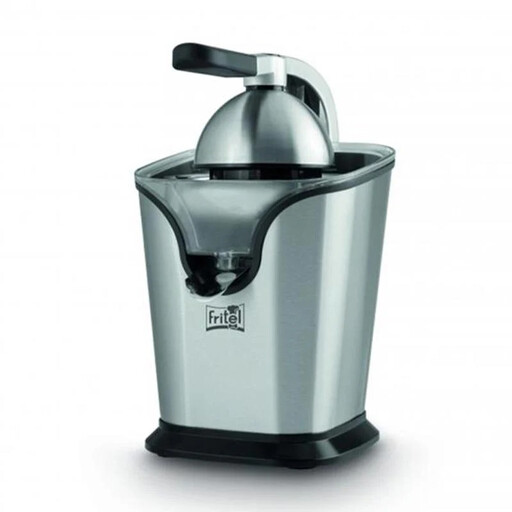
Why it suits this profile: The lever, 100 W power rating and two interchangeable cones are practical for households that regularly juice different types of citrus fruit.
The product specifications list a built-in pulp filter, a drip-stop spout and removable, dishwasher-safe parts. The two cones also mean you don’t have to rely on one universal size.
100 W power rating, two cone sizes, drip-stop function and compact dimensions of 270 × 185 × 165 mm.
We’ve put together a complete, up-to-date list of products that meet these strict selection criteria and the applicable European safety requirements.
That depends on the cone size and the opening. Models with two cones, such as the FRITEL CP 4177, are described as suitable for smaller fruit as well as oranges and grapefruits. Always check the manual and position the fruit firmly on the right cone.
Its lifespan depends on how often you use it, how you clean it and whether you follow the recommended maximum operating time. Let the motor cool down when instructed in the manual, and don’t force hard or unsuitable ingredients through the appliance. Clean the parts after each use and keep the motor base dry.
A citrus juicer usually only uses electricity for short periods. The energy used each time depends on the power rating and how long you run it. A 25-watt model running for ten minutes would theoretically use less energy than a 100-watt model, but actual running times vary between appliances. For a fair comparison, look at both power and juicing time, not just the wattage.
