
For anyone who juices one drink at a time
If you juice a few lemons and want to put the juicer away afterwards, a compact model with a collecting jug could suit you. Philips lists a 0.5-litre jug for the HR2738/00.


For a small glass of lemonade in the afternoon, a compact citrus juicer with a collecting jug could be a good fit; Philips, for example, lists a 0.5-litre capacity for the HR2738/00. If you want to adjust the amount of pulp, look for an adjustable filter. For several servings, a larger jug or a lever-operated press are other options, as described by Bosch and Princess for their models. Before buying, check the cleaning instructions, whether the reamer cone fits your fruit and the product documentation for the Dutch market. If you want to pour straight into a glass, check whether your chosen model has a spout.
If you juice a few lemons and want to put the juicer away afterwards, a compact model with a collecting jug could suit you. Philips lists a 0.5-litre jug for the HR2738/00.
Look for an adjustable filter if you prefer more or less pulp. Braun lists this feature for the MPZ9; check the manual for instructions on cleaning the removable parts.
A larger collecting jug can be useful if you want to collect more juice at once; Bosch lists a removable 800 ml jug for the MCP3000N. A lever-operated press offers a different way to juice, as with the Princess 201851.
First, think about how much juice you usually want to collect at once. Then consider how you want to operate the juicer and how much cleaning it will involve.
| What to consider | What should you look for? | Who is this important for? |
|---|---|---|
| Small serving | Check that the reamer cone suits lemons and that the collecting jug is large enough for the amount you need. | If I’m juicing a few lemons during an afternoon break, I want to collect the juice quickly and put the juicer away afterwards; around 36% of consumers prioritise a small serving. |
| Cleaning | Check which removable parts the manual says are dishwasher-safe. | After juicing, I want to wash as few parts by hand as possible; around 29% of consumers put easy cleaning first. |
| Pulp | Check whether the exact model has an adjustable pulp setting. | If I want to choose how much pulp goes into my juice, this setting matters to me; around 21% of consumers prioritise pulp control. |
| Several servings | Compare the jug capacity and controls, and check how much space the appliance takes up. | For several glasses, I want to collect juice one after another without having to empty the jug each time; around 14% of consumers put making several servings first. |
Wattage alone doesn’t tell you how much juice a juicer will produce. The manufacturers mentioned list different product features, but these don’t show how much juice different models produce under the same conditions.
Choose based on the reamer cone, controls and serving size. If juice yield is your top priority, compare models tested under the same conditions.
Dishwasher-safe claims apply to specific parts of each model, not necessarily the entire appliance. For the MPZ9, Braun refers users to the manual.
Check which parts of your chosen model are dishwasher-safe and follow the instructions for the motor base.
A Joybuy listing with the model number HR2738/00 describes an 800 W centrifugal juicer, whereas Philips lists 25 W for the HR2738/00 citrus juicer.
Before you decide, check that the model number and key specifications match the manufacturer’s information.
The HR2738/00 is a compact juicer with a collecting jug; the HR2744/40 is a different range with a pulp selector.
The MPZ9 is worth considering if you want adjustable pulp levels and a press-down operation.
The MCP3000N is an option if you want to collect several servings in a jug.
The 201851 Master has a lever arm, offering a different way to press fruit than a simple jug-style juicer.
Severin’s range information features the CP 3535 and the CP 3544, a model with a lever arm.
These Joybuy products are designed for juicing lemons for fresh lemonade, with options for a small collecting jug, easy cleaning and larger quantities.
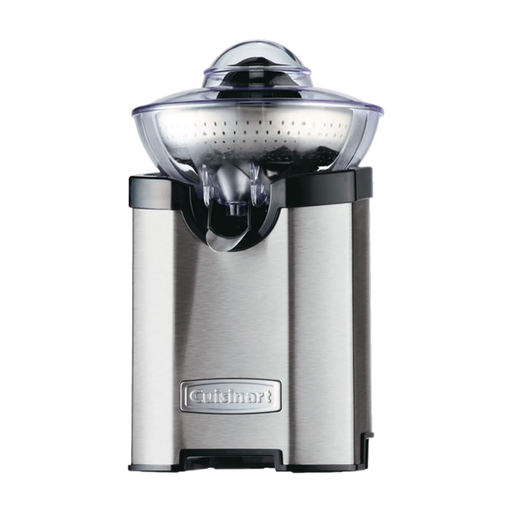 No image available
The product information lists lemons and removable parts that are dishwasher-safe.
The juicer has a 1-litre reservoir, a wide pouring spout and a drip stop. The stated power is 100 W.
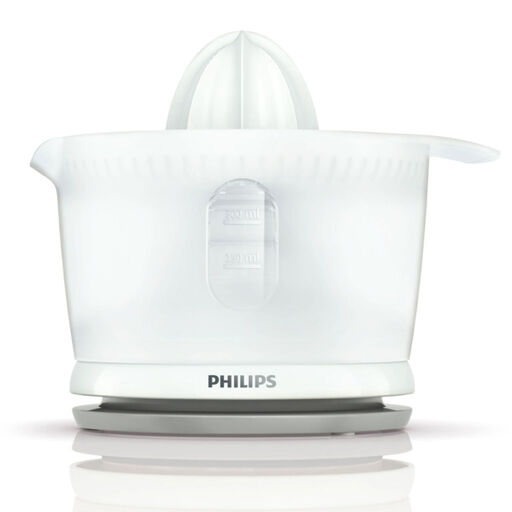 No image available
This compact juicer with a collecting jug is ideal for a small amount of lemon juice for a drink during a break.
The jug has a 500 ml capacity and the stated power is 25 W. The product information lists cord storage and removable dishwasher-safe parts. Do not immerse the motor unit; according to the description, continuous use is limited to 10 minutes.
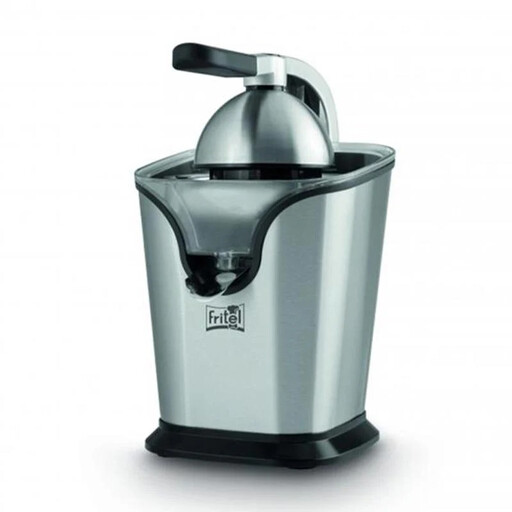 No image available
The lever arm and two reamer cones offer a different way to press lemons.
The product information lists a smaller cone for lemons, a pulp filter, a drip stop and removable dishwasher-safe parts. The stated power is 100 W. According to the description, the appliance is intended for domestic use only.
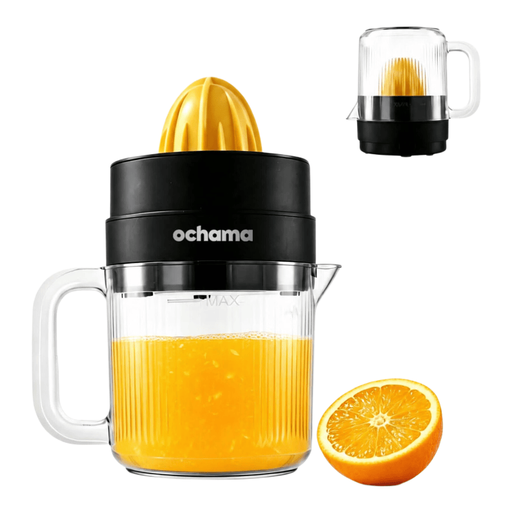 No image available
The product information lists lemons and pulp separation, for anyone who wants to separate the juice from the pulp.
The collecting capacity is 1.4 litres and the stated power is 30 W. The title describes the appliance as semi-automatic.
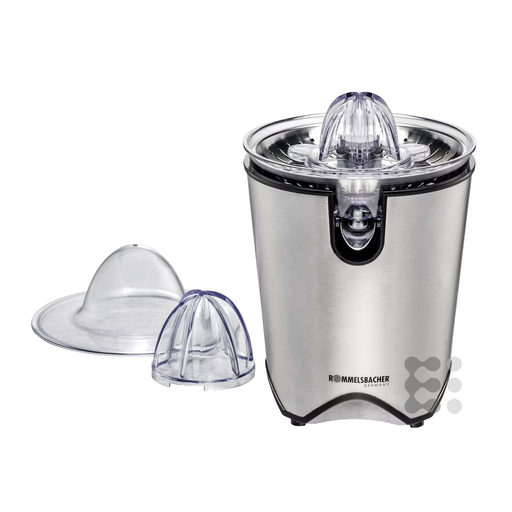 No image available
This compact juicer with a collecting reservoir is an option if you want to collect lemon juice and clean the removable parts after use.
The product information lists a 0.60-litre reservoir, automatic on/off, a drip stop and removable dishwasher-safe parts.
Only take apart the removable parts intended for this, and follow the manual for your exact model. For the MPZ9’s dishwasher-safe parts, Braun refers users to the manual; Bosch lists dishwasher-safe parts for the MCP3000N.
Voedingscentrum recommends keeping freshly squeezed lemon juice in the fridge for 3–7 days and says it can also be frozen in an ice cube tray. If you want to drink your lemonade straight away, you can juice the lemons just before serving.
In the Netherlands, you’re entitled to a product that meets the expectations you’re entitled to have of it; the Dutch government describes this as a statutory guarantee. A separate manufacturer’s or seller’s guarantee may also apply, but it doesn’t replace your statutory rights.
According to the NVWA, CE marking is compulsory for electrical products. Parts intended to come into contact with food must comply with the applicable rules for food contact materials. These general requirements don’t confirm that a specific product meets them, so check the product information and documentation.