
Vandaag of morgen in huis

Kwaliteit gegarandeerd

Welkomstaanbiedingen ontgrendelen: GRATIS bezorging | Tot 80% korting | Gratis 30 dagen JoyPlus-proefperiode
Download de app
An electric citrus juicer can make juicing oranges, lemons, limes and grapefruits much easier. However, not every model is equally practical for daily use. A low price or high wattage means little if the appliance wobbles, is difficult to clean, or only handles one size of citrus fruit well.
So pay particular attention to the build quality and ease of use. That way, you can avoid buying an appliance that ends up unused in a kitchen cupboard after just a few weeks.
A 100W citrus juicer sounds powerful, but wattage isn't the only deciding factor. The shape of the juicing cone, the gearing, and the way pressure is applied all affect how it performs. An electric orange juicer with a lever, for example, may require less hand strength than a model where you have to press the fruit down firmly yourself.
What's more, a higher power rating doesn't automatically mean the appliance is suitable for prolonged continuous use. Always check the instruction manual and allow the motor unit to cool down when recommended.
Lemons and limes are smaller than oranges and grapefruits. With just one juicing cone, the results can be inconsistent. A citrus juicer with 2 cones offers more flexibility: a smaller cone for lemons and limes, and a larger one for oranges and grapefruit.
Also consider the space available. A wide feed opening is handy, but a compact appliance fits more easily on a British kitchen worktop and can be stored away more simply.
Juice, pulp and pips quickly get trapped in the filter and around the pouring spout. A dishwasher-safe citrus juicer usually doesn't mean the motor unit can go in the dishwasher. Check which parts are removable and which may only be wiped clean by hand.
A citrus juicer with a drip-stop can also help to limit dripping onto the worktop. A pulp filter is useful if you want to pour clear juice, but check that the filter comes off easily and is easy to reach.
For regular home use, models with various power ratings are available. An appliance with 100W could be interesting for families who want to juice several glasses in a row. A lower power rating may be sufficient for occasional use. Alongside the wattage, look at the operation: a pressing arm or lever distributes the pressure and can make juicing less strenuous.
Check for each model:
An electric lemon juicer with two cones is practical when you use different fruits. The right size fits the fruit better and reduces unnecessary spillage. A pulp filter catches pips and some of the pulp. If you prefer pulp in your juice, look for a model with an adjustable pulp setting.
A drip-stop is especially handy when you want to remove the glass after juicing without any juice spilling onto the worktop. Do check that the pouring spout opens and closes smoothly and remains accessible during cleaning.
A stainless steel citrus juicer can look robust, but also look at the parts that come into contact with the juice. Plastic parts must be suitable for food contact according to the product information. Non-slip feet are important when you apply pressure with a lever.
Measure the available space beforehand. The Fritel CP 4177 has dimensions of 270 × 185 × 165 mm and a weight of 1.7 kg according to the product data. That makes it relevant to check whether the appliance fits under kitchen cabinets and can be easily moved after use.
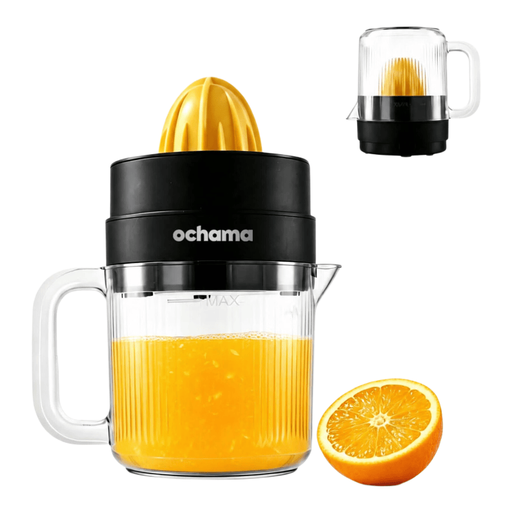
Why this fits the profile: The semi-automatic operation and 1.4-litre capacity suit households that want to make fresh juice occasionally without complicated settings.
The product description mentions removable parts for cleaning and a design without blades. Do check before purchase which parts are exactly dishwasher-safe.
1.4-litre capacity; pulp and juice separation; removable parts according to the product information.
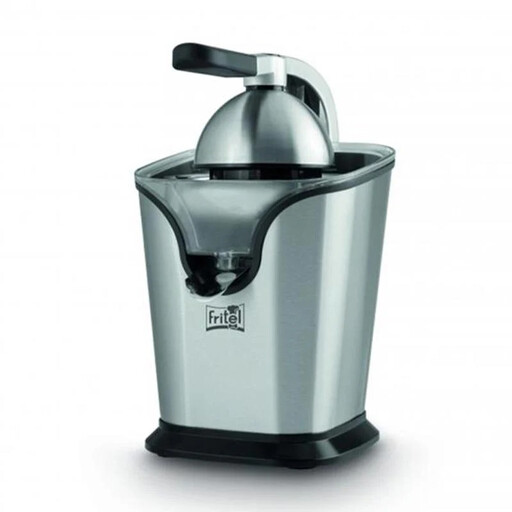
Why this fits the profile: If you value a metal housing, a pressing arm and clear controls, you get a model with several verifiable user features.
According to the product description, the press has two cones, a drip-stop, a pulp filter and non-slip feet. So you don't have to rely on just one marketing term.
100W power; two cone sizes; removable parts that can go in the dishwasher according to the product description.

Why this fits the profile: The wide feed opening and adjustable pulp settings are aimed at users who juice different citrus fruits more often and want to adjust their juice texture.
The product data lists a 110 mm feed opening, five pulp settings, non-slip feet and removable parts. For heavy use, check the recommended duty cycle.
Five pulp settings; 110 mm feed opening; a year? No: the product information states 24 months warranty.
We've put together a full, up-to-date list of products that fully meet these strict selection criteria and current European safety regulations.
Yes, provided the juicing cone is suitable for both sizes. A model with two cones generally offers more flexibility. Use the smaller cone for lemons and limes and the larger one for oranges or grapefruits, following the product instructions.
First, unplug it from the mains. Then disassemble the juicing cone, filter, juice container and pouring spout if those parts are removable. Wash them by hand or place them in the dishwasher when the product information allows it. The motor unit must not be submerged in water; wipe it clean with a slightly damp cloth.
The actual consumption depends on the usage time. A 100W appliance theoretically uses 0.1 kWh when running continuously for one hour. Because a juicer is usually only used for short periods, the consumption per juicing session is limited. Consult your energy tariff and the product specifications for an accurate calculation.
