Brands to consider
These brands offer models with different features for small quantities, pulp control, direct pouring or lever-assisted juicing. The features listed apply to the specific models mentioned, not necessarily to the entire range.
Philips
Philips lists a 0.5-litre jug for its compact Daily HR2738/00.
- An option to consider for smaller quantities and easy storage.
- The stated 25 W power rating doesn’t prove a higher or lower juice yield than other brands. The motor unit is not dishwasher-safe.
Braun
Braun lists pressure-activated operation and five adjustable pulp settings for the CitrusQuick 1 CJ3000WH.
- Worth considering if you want to control how much pulp you include.
- The two-way rotation listed by Braun is a product feature, not independent proof of a particular juice yield.
Tristar
According to Tristar, the CP-2268ER has a direct spout and two juicing cones for different sizes of citrus fruit.
- An option to consider if you juice lemons and other citrus fruits in different sizes.
- Check which juicing cone you’re using and whether your glass fits beneath the spout.
Princess
Princess lists a lever press, a universal cone and a direct spout for the 201851 Master Citrus Juicer.
- Worth considering if you want to use less hand pressure.
- Princess’s claims about noise and juice yield are manufacturer claims, not the results of independent comparative testing.
Citrus juicers at Joybuy
This Joybuy selection includes electric citrus juicers for lemons, with compact models, pulp settings, direct spouts and lever presses among the options.
 No image available
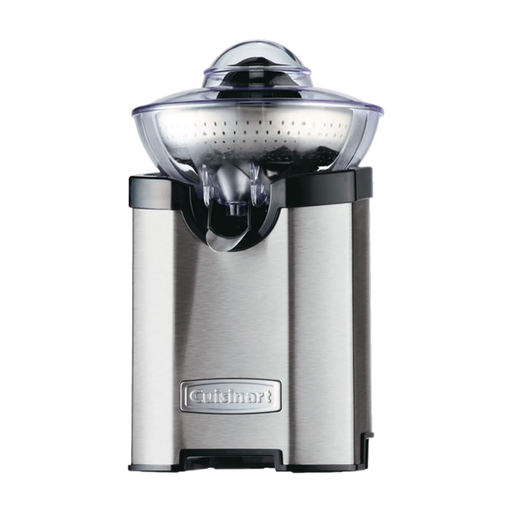
Cuisinart CCJ210E electric citrus juicer
An option if you want to pour juice straight into a glass and clean the removable parts after use.
Power: 100 W. Extra-wide spout with anti-drip system; removable parts are listed as dishwasher-safe. Stainless steel design.
View at Joybuy
 No image available
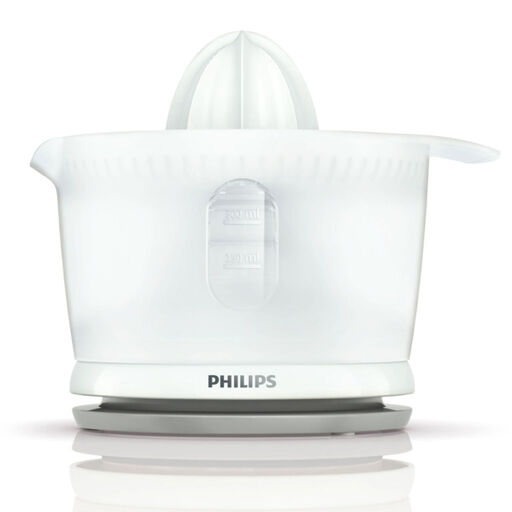
Philips Daily Collection HR2738/00
The compact design and 500 ml collection jug are well suited to juicing a small amount during a break.
Power: 25 W. The juicer starts when you press half a citrus fruit onto the cone. Removable parts are listed as dishwasher-safe; wipe the motor unit with a damp cloth and do not immerse it.
View at Joybuy
 No image available
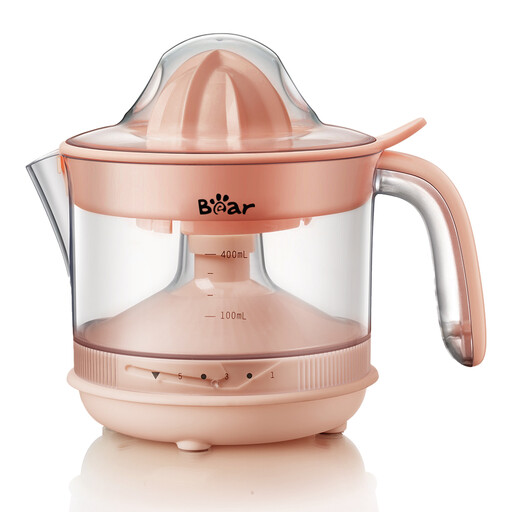
Bear CZJ-A04B1 citrus juicer
An option if you want to adjust the amount of pulp in your lemon juice.
Five adjustable pulp settings and a 110 mm feed opening. The product information lists one-button operation. Do not immerse the motor base, cord or plug in liquid.
View at Joybuy
 No image available
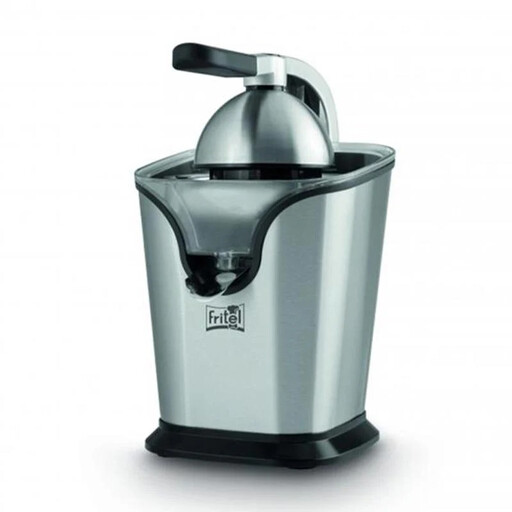
FRITEL CP 4177 citrus juicer
An option if you want to use less hand pressure when juicing lemons.
Power: 100 W. Lever press, two interchangeable juicing cones and an anti-drip spout. Removable parts are listed as dishwasher-safe; do not immerse the motor base in liquid.
View at Joybuy
Frequently asked questions
Which juicing cone is suitable for lemons?
Choose a juicing cone that the manufacturer says is suitable for small citrus fruits. Tristar lists two cones for different sizes, including lemons, for the CP-2268ER; Princess lists one cone for small and large citrus fruits for the 201851.
Can I put the whole citrus juicer in the dishwasher?
No, follow the cleaning instructions for the exact model. Philips says that the parts of the HR2738/00, except for the motor unit, can go in the dishwasher; clean the motor unit with a damp cloth.
What can I do if my citrus juicer breaks too soon during normal use?
In the Netherlands, you can contact the seller about your statutory guarantee if the product doesn’t perform as you could reasonably expect during normal use. ACM ConsuWijzer lists repair, replacement or a refund as possible free solutions; which option is appropriate depends on the circumstances.
What safety requirements apply to an electric citrus juicer?
Parts that come into contact with citrus fruit and juice must comply with the applicable Dutch and European requirements for food-contact materials. Electrical equipment covered by the EU Low Voltage Directive must also meet its requirements. A CE mark is not an independent approval from a central EU authority; check the product details and safety instructions for the exact model.


