
Vandaag of morgen in huis

Kwaliteit gegarandeerd

Welkomstaanbiedingen ontgrendelen: GRATIS bezorging | Tot 80% korting | Gratis 30 dagen JoyPlus-proefperiode
Download de app
An electric citrus juicer can make juicing oranges, lemons or limes much easier. However, not every model is suited to the same kitchen. A compact juicer for one glass each morning needs different features from a machine designed for a family.
Pay particular attention to three common pitfalls:
With a classic electric citrus juicer, you press half a fruit onto a rotating reamer. Some models start automatically as soon as you apply pressure. A lever-operated juicer works differently: you bring the pressing arm down, which means you don't have to push as hard with your hand.
The power of available models ranges from 20 to 100 watts for citrus juicers. A higher wattage can suit regular use, but also look at:
An electric citrus juicer is not the same as an electric juicer (centrifugal or masticating). A citrus juicer is designed for halved citrus fruits. A centrifugal juicer or slow juicer typically processes other types of fruit and vegetables too, but often has more parts and a larger housing.
A citrus juicer for oranges must also be able to handle larger fruits. So check whether one or two reamers are included. A smaller reamer usually suits lemons and limes; a larger reamer is more convenient for oranges and grapefruits.
A citrus juicer with two reamers is practical when you use different citrus fruits. A citrus juicer with a pulp filter partially catches flesh and pips, depending on the filter's design and the texture you want. If you prefer pulp in your juice, look for an adjustable filter. The Bear CZJ-A04B1, for example, boasts five pulp settings.
Bear in mind that marketing claims about juice yield or nutritional value don't automatically apply to every kitchen and every fruit. According to one brand's product description, certain designs can improve yield, but the result also depends on ripeness, size and how you cut the fruit.
A citrus juicer with an anti-drip system prevents juice from continuing to run out of the spout after you remove your glass. This is especially useful on a small kitchen worktop. Do check whether the spout needs to be open during juicing and must be closed manually afterwards.
With a dishwasher-safe citrus juicer, usually only the removable parts are suitable for the dishwasher. The motor base must never be submerged. A compact model like the Philips HR2738/00 measures 14.5 × 19.7 × 16.4 cm. The Fritel CP 4177 is slightly larger at 27 × 18.5 × 16.5 cm, but offers a pressing arm and two reamers.
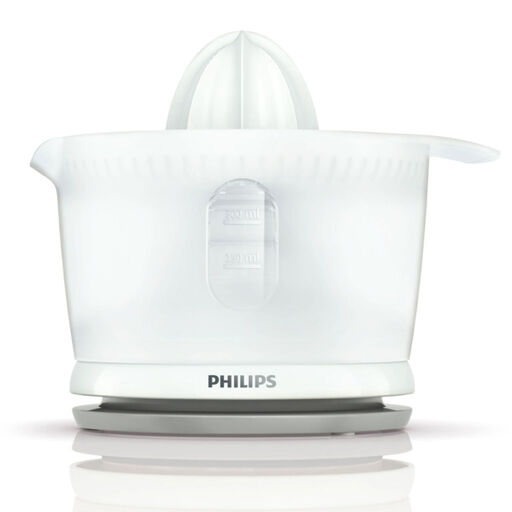
Why it fits this profile: This compact citrus juicer has a 500 ml jug, automatic start when pressure is applied and a 25-watt motor. It's ideal for one or a few glasses at a time.
The product specifications mention a compact size, cord storage and dishwasher-safe removable parts. Check the manual to confirm exactly which parts these are.
500 ml capacity, non-slip feet, cord storage and an automatic start mechanism.
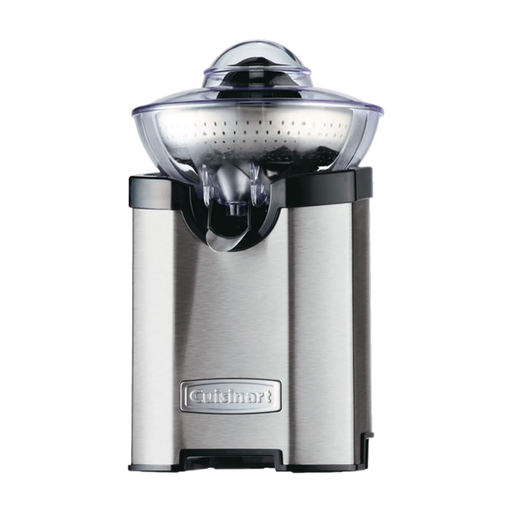
Why it fits this profile: This 100W model features a stainless steel housing, a 1-litre jug and an extra-wide spout for daily use.
The description mentions a drip-stop and dishwasher-safe removable parts. The motor base should be cleaned separately with a damp cloth.
100 watts, 1-litre capacity, stainless steel housing and, according to the product information, a three-year manufacturer's warranty.
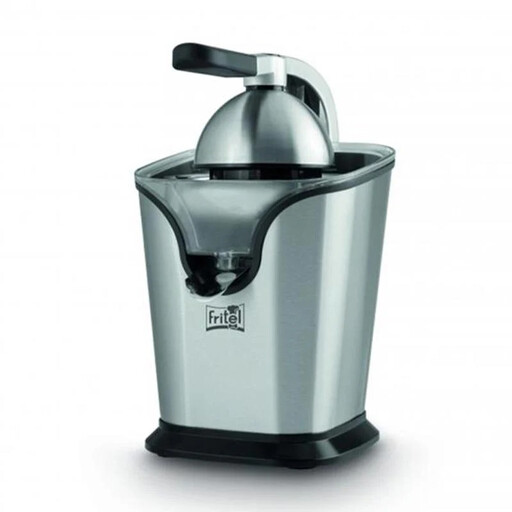
Why it fits this profile: The lever operation, 100 watts and two interchangeable reamers are designed for regular juicing of different citrus sizes.
The product information mentions a pulp filter, drip-stop and dishwasher-safe removable parts. This makes the key maintenance points clear upfront.
Two reamer sizes, 100 watts, non-slip feet and a pressing arm.
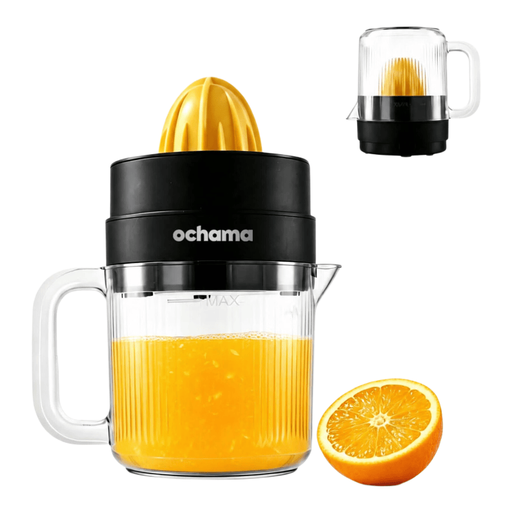
Why it fits this profile: According to the product description, this semi-automatic juicer has a 1.4-litre capacity and is designed for use with oranges, lemons, mandarins and more.
The parts are removable according to the product information. Check before purchase whether the parts you need are dishwasher-safe; this is not specified here.
1.4-litre capacity, electric juicing control and pulp separation according to the product description.
We've put together a full, up-to-date list of products that fully meet these strict selection criteria and comply with current European safety regulations.
Always follow the manual for your chosen model. Also pay attention to these points:
That depends on the reamer size. A small lemon juicer may work with small oranges, but for regularly making fresh orange juice, a larger reamer or a model with two reamers is more practical. Check the specifications and maximum fruit size.
The energy consumption per glass is usually low, because a citrus juicer typically runs for only a short time. The exact consumption depends on the wattage and total running time. For example, a 100-watt model running for a few minutes uses less energy than running the same appliance for a long period. The purchase price, cleaning and any replacement parts often have a greater impact on the overall cost.
The lifespan varies by model, frequency of use and maintenance. A citrus juicer used only for citrus fruits and cleaned according to the manual avoids unnecessary strain. When buying, look at the warranty, available spare parts and the stated maximum operating time. These give you more certainty than just the motor power alone.
