
Anyone preparing several glasses in advance
If you want to collect juice in a jug for guests and pour it afterwards, check the capacity and whether you’ll need to empty the jug part-way through. Philips lists a 0.5-litre jug for the HR2738/00.


If you want to collect enough juice for several glasses in advance, look for a citrus juicer with a collection jug. If you’re filling glasses one at a time, a direct-pour spout with a drip-stop is more practical. A press lever changes how you squeeze your oranges, while an adjustable pulp filter lets you choose how much pulp you want. For the specific model, also check the cleaning instructions and product information about safety and materials that come into contact with juice.
If you want to collect juice in a jug for guests and pour it afterwards, check the capacity and whether you’ll need to empty the jug part-way through. Philips lists a 0.5-litre jug for the HR2738/00.
If you want to fill glasses as you juice, look for a spout and drip-stop to help prevent drips when you change glasses. Braun describes these features on the CJ3050WH.
If you don’t want to press orange halves down by hand each time, weigh up the convenience of a lever against the space the juicer takes up and how easy it is to clean. Princess lists a press lever for the 201853.
First decide whether you want to collect juice in advance or fill glasses directly. Then consider cleaning and how the juicer works.
| What to consider | What should you check? | Who is this important for? |
|---|---|---|
| Collecting juice for several glasses | Check the capacity and whether the jug is removable. Philips lists a capacity of 0.5 litres for the HR2738/00. | If I’m making juice for guests in advance, I want to collect enough without having to stop often. Around 36% of consumers prioritise collecting juice for several glasses. |
| Pouring directly into a glass | Check whether the model pours straight into a glass, has a drip-stop and is compatible with your glasses. Braun lists this pouring method and an anti-drip system for the CJ3050WH. | If I’m filling glasses one at a time, I want to avoid pouring juice from a jug. Around 29% of consumers prioritise serving juice straight into each glass. |
| Cleaning | Check which parts can be removed and follow the manual for your model to find out whether they’re dishwasher-safe. Princess lists removable dishwasher-safe parts; Braun refers to the manual for the MPZ9. | After juicing, I want to know which parts are easy to clean and which can go in the dishwasher. Cleaning is the top priority for around 21% of consumers. |
| Juicing and pulp level | Compare how the specific model works and whether it has pulp settings. Braun lists five pulp settings for the CJ3000WH; Princess lists a press lever for the 201853. | If I’d rather use a lever or want to choose how much pulp I get, I’ll focus on those controls. Around 14% of consumers prioritise the juicing mechanism or pulp settings. |
The wattages of different citrus juicers aren’t a like-for-like measure of juice yield or speed.
First choose between a collection jug, direct pouring or a press lever. Don’t treat wattage as proof that a model will extract more juice from the same oranges.
Information about removable parts doesn’t necessarily apply to every part of the same model.
Check the manual to see which cone, filter, jug and spout can go in the dishwasher.
A jug collects juice before you pour it, while a spout fills glasses as you juice.
Think about how you want to serve juice to your guests, and if you want to pour directly into glasses, check whether the model has a drip-stop.
For the Daily Collection HR2738/00, Philips lists a 0.5-litre collection jug and cord storage. It could be a good fit if you want to collect juice in advance.
Braun describes different ways to use its models: pulp settings on the CJ3000WH, a collection jug on the MPZ9 and direct pouring on the CJ3050WH.
Princess lists a press lever, direct pouring and a drip-stop for the 201853.
According to Sage, the Sage Citrus Press Pro SCP800BAL4EEU1 has a press lever, safety switch and drip-stop.
These electric citrus juicers cater to different needs: pouring directly into a glass, adjusting the pulp, collecting juice or juicing with a lever. For the specific product, also check the information on applicable product safety requirements and materials that come into contact with juice; the NVWA explains the Dutch requirements.
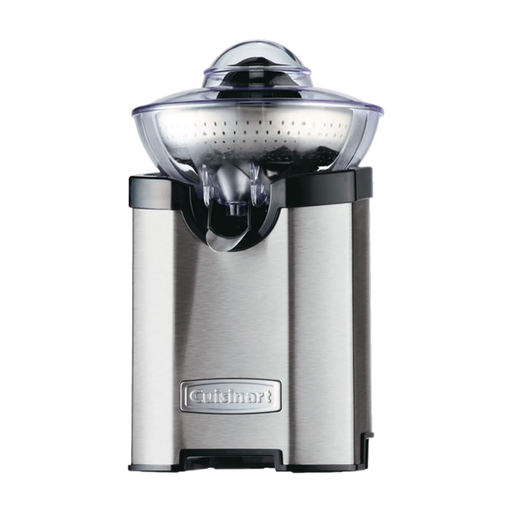 No image available
Suitable if you want to fill glasses directly; the product name mentions an extra-wide spout and anti-drip system.
The product name also mentions dishwasher-safe parts. Check the cleaning instructions for each part.
 No image available
Suitable if you want to adjust the amount of pulp; the product name mentions five adjustable pulp settings.
The product name lists a 110 mm feed opening. Check the cleaning instructions for the removable parts.
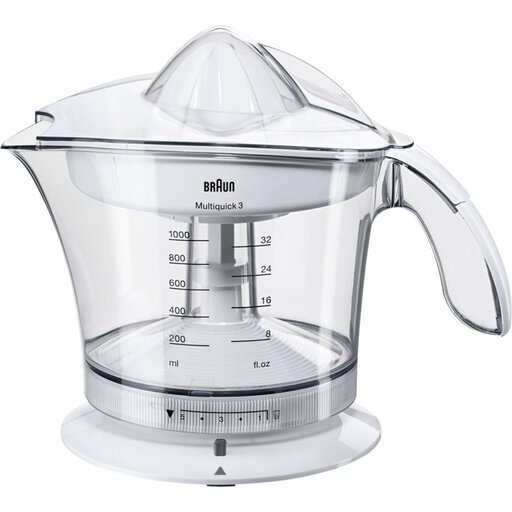 No image available
Suitable if you want to collect juice for several glasses; Braun describes the MPZ9 as a citrus juicer with a collection jug.
Check the manual for this model to see which parts are dishwasher-safe.
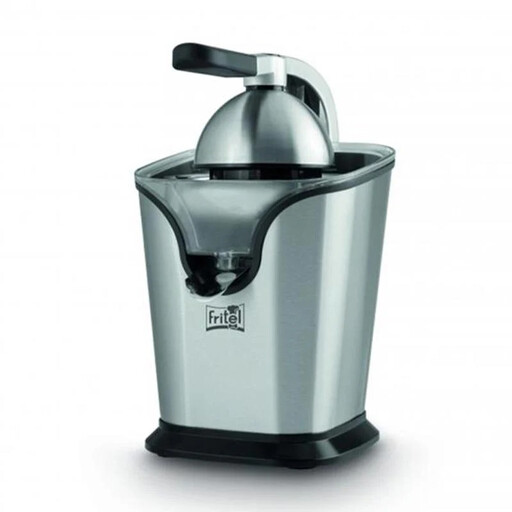 No image available
Suitable if you want to press oranges using a lever; the product description also mentions direct pouring with an anti-drip spout.
The product name lists two cone sizes and a power rating of 100W. Check which parts can be removed and how to clean them.
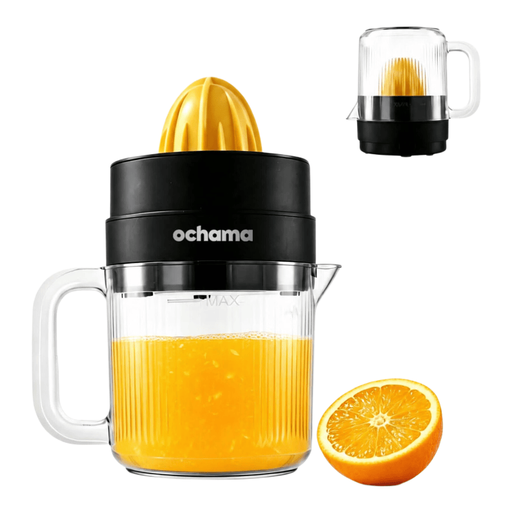 No image available
Suitable if you want to juice oranges for several glasses; the product name lists a capacity of 1.4 litres.
The product name also lists a power rating of 30W. The stated capacity doesn’t measure how much juice you’ll get from oranges.
Look for a model with a collection jug and compare its stated capacity with the amount you want to serve. Philips lists a capacity of 0.5 litres for the HR2738/00; this doesn’t guarantee anything about speed or juice yield.
It depends on the model and the part. For the MPZ9, Braun refers to the manual to find out which parts are dishwasher-safe. Always follow the cleaning instructions for the specific model.
Voedingscentrum advises keeping opened fresh orange juice in the fridge for 1–2 days. Ideally, only make as much juice as you need, and follow the storage advice if you have any left over.
The NVWA states that CE marking is required for an electric citrus juicer placed on the Dutch market. Parts that come into contact with juice must meet the applicable requirements for food-contact materials; check the information for the specific model.
Contact the seller. According to the Dutch government, there’s no fixed statutory warranty period in the Netherlands; the lifespan you can reasonably expect depends on the product and the circumstances. A manufacturer’s warranty doesn’t replace your statutory rights.