
Vandaag of morgen in huis

Kwaliteit gegarandeerd

Welkomstaanbiedingen ontgrendelen: GRATIS bezorging | Tot 80% korting | Gratis 30 dagen JoyPlus-proefperiode
Download de app
An electric citrus juicer can make squeezing oranges, lemons and limes much easier. However, models vary greatly in operation, capacity and how easy they are to clean. A compact electric orange press is ideal for one or two glasses, while a larger citrus juicer is a better fit for a family.
Marketing descriptions often emphasise power or "maximum juice yield". But that doesn't tell the whole story. Be sure to look out for the following pitfalls before you make a purchase.
A 1,000-watt model might seem more powerful than a 40-watt citrus press, but the two appliances aren't always designed for the same purpose. A classic press uses a cone for citrus fruits. A centrifugal juicer for citrus often works with a blade, sieve and feeding tube, and is also designed for harder fruits and vegetables.
For just oranges, lemons and grapefruits, a citrus press with a reamer cone is usually sufficient. Higher power can be more relevant for larger quantities or an all-purpose juicer.
Check which parts are removable and whether they are actually dishwasher-safe. A filter with lots of small holes can be time-consuming to clean by hand, even if it's a removable design. With electric appliances, the motor base must not be submerged in water.
In practice, an easy-to-clean citrus juicer means few loose parts, an accessible pulp filter and clear instructions.
Not every electric lemon squeezer has an adjustable pulp sieve. Some models only partially separate the pulp, while others offer multiple settings. A spout with an anti-drip system isn't a given, either. On models without an anti-drip feature, juice can run onto the worktop after pouring.
For daily citrus juicing, models between about 20 and 100 watts are often designed for domestic use. A lever mechanism can take care of the pressure, so you don't have to constantly apply force with your hand. On a model with automatic rotation, the motor usually starts when you press the fruit onto the reamer cone.
An electric citrus juicer with two reamer cones is practical if you want to juice small lemons and limes as well as oranges or grapefruits. Check the product specifications to see what each cone is designed for.
A reservoir of around 0.7 litres is suitable for several glasses, so you don't have to empty it straight away. For families, 1 litre or more can be more convenient. Don't just look at the reservoir's capacity, but also at the dimensions. A tall juicer might be difficult to fit under your kitchen cupboards.
That's why you should measure the available space beforehand. According to the product information, a compact model like the Nedis has dimensions of 15 × 20 × 19 cm. A larger, all-purpose juicer can take up considerably more room.
A citrus juicer with a pulp filter is ideal if you prefer smoother juice. If you like to keep the pulp, you'll benefit from an adjustable sieve or pulp setting. Also, look for:
According to Philips' own product information, the HR1919/70 with FiberBoost offers a choice between a clear and a thicker juice texture. This is a brand claim about the technology; the product specification also lists a power of 1,000 watts, a feeding tube of 8 cm and a 1.25-litre reservoir.
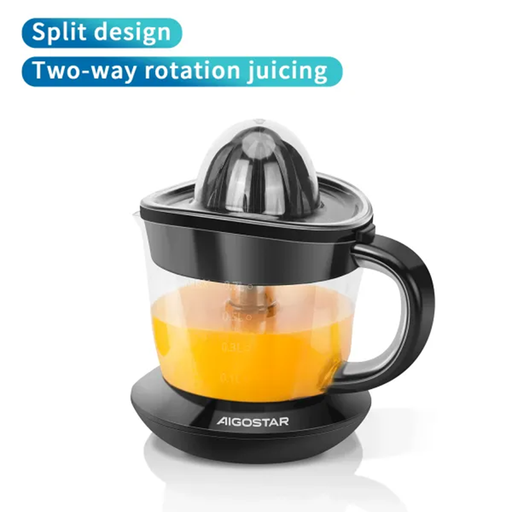
Why it's a good match: The 0.7-litre capacity is suitable for daily use, and the two cones are designed for different sizes of citrus fruit.
The product information mentions automatic left-right rotation, an adjustable filter and removable parts. Before buying, do check which parts are dishwasher-safe.
40 watts, two reamer cones, 0.7-litre reservoir and a BPA-free material specification.
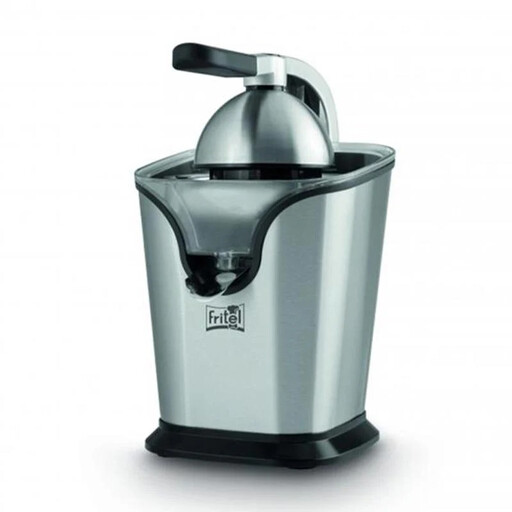
Why it's a good match: The lever operation and stainless steel elements are geared towards regular juicing without having to squeeze hard by hand every time.
The specifications mention a pulp filter, an anti-drip system and two cones. According to the product description, the removable parts are dishwasher-safe.
100 watts, compact dimensions of 270 × 185 × 165 mm, two cones and a spout with a drip stop.
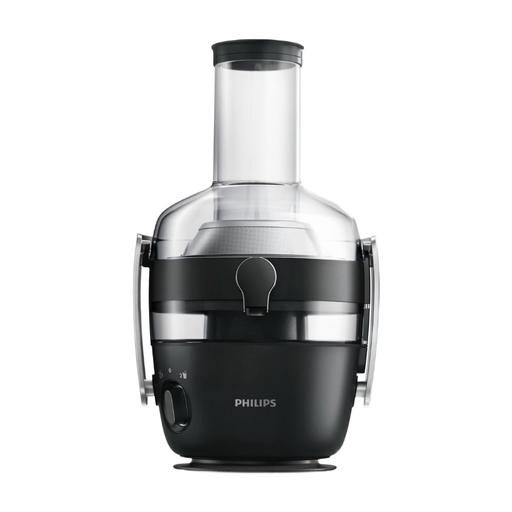
Why it's a good match: This is an all-purpose juicer for fruit and vegetables, with a wide feeding tube and a larger capacity for households that process more than just citrus fruits.
The product information mentions an integrated drip stop, removable dishwasher-safe parts and a pre-clean function. The appliance does use a sieve and sharp parts that must be handled with care.
1,000 watts, 8 cm feeding tube, 1.25-litre reservoir and adjustable juice texture, according to the product description.
We've put together a complete, up-to-date list of products that fully meet these strict selection criteria and comply with current European safety regulations.
Always follow the manual for your chosen appliance. Pay particular attention to these points:
A standalone citrus press with a reamer cone is often easier to clean than an all-purpose centrifugal juicer. On the other hand, an all-purpose juicer can process more types of ingredients.
For oranges, lemons and grapefruits, a power of between about 20 and 100 watts is sufficient for many domestic models. An all-purpose centrifugal juicer for citrus, vegetables and harder fruits can have 1,000 watts. In addition to the wattage, look at the pressing mechanism, capacity and recommended operating time.
The lifespan depends on the frequency of use, cleaning and correct assembly. Rinse away pulp and fruit acid after use, avoid overloading the motor, and store the appliance in a dry place. Also, check the legal guarantee and any additional manufacturer's warranty. Some of the models mentioned list a two-year warranty period; Cuisinart states three years in its product information.
The electricity cost per juicing session is usually minimal, as citrus presses run for a relatively short time. The main cost is usually the oranges, lemons or grapefruits themselves. A 0.7 to 1-litre reservoir can help you make several glasses in one go, without having to restart the appliance each time.
