
Vandaag of morgen in huis

Kwaliteit gegarandeerd

Welkomstaanbiedingen ontgrendelen: GRATIS bezorging | Tot 80% korting | Gratis 30 dagen JoyPlus-proefperiode
Download de app
An electric citrus juicer can be a handy addition if you regularly make orange, lemon, lime or grapefruit juice. However, models vary considerably in how they work, how much they hold and how easy they are to clean. A low price doesn’t always tell you how well a juicer will perform day to day, while a higher wattage alone is no guarantee of getting more juice.
So the most important question isn’t just how much a citrus juicer costs, but how you plan to use it. Will you be making one glass at a time, or juicing for the whole family? Do you like pulp, or would you prefer a smoother result? Below, you’ll find the key points to consider, along with a selection of models for different needs.
An electric orange juicer with more power may provide plenty of strength for regular juicing, but wattage doesn’t tell you everything. The shape of the juicing cone, how you apply pressure and the direction of rotation all play a part. A compact 25 or 40-watt model may be suitable for making a few glasses, while a 100-watt model with a lever offers more support when juicing larger fruit.
As well as checking the wattage, find out:
Not all citrus juicers handle pulp in the same way. A citrus juicer with a pulp filter catches pips and some of the pulp. Other models let you adjust how much pulp passes through, so you can choose the texture you prefer.
A fixed filter can be practical if several people in your household like smooth juice. If you prefer a more pulpy drink, an adjustable setting may be a better choice. Check whether the product description specifies how many settings are available. For example, the Bear CZJ-A04B1 has five pulp settings.
Juice can quickly dry around the juicing cone, spout and filter. Parts that can’t be removed make cleaning more difficult. Check whether the removable parts are dishwasher-safe, and whether the motor base should only be wiped clean with a damp cloth.
A drip-stop citrus juicer can also help keep your worktop clean. Check whether it has a spout that actually closes, or simply one that directs juice neatly into a glass. For example, the MELISSA 16230042 specifically states that it doesn’t have a drip-stop function.
For occasional use, a 25 to 40-watt citrus juicer may be enough. If you’re making several glasses one after another, a more powerful model with a lever or a larger motor may be more comfortable to use. Always check the instructions for the maximum continuous running time. For example, the Philips HR2738/00 specifies a limit of 10 minutes without a break.
More power doesn’t automatically mean the appliance is suitable for every type of fruit. Citrus juicers are generally designed for oranges, lemons, limes and grapefruits. Don’t use one for hard pips, frozen ingredients or other foods unless the manufacturer says it’s suitable.
If you juice different types of citrus fruit, two interchangeable juicing cones can be useful. The smaller cone is usually suited to lemons and limes, while the larger one is designed for oranges and grapefruits. If you’re buying a lemon juicer, check that the cone fits securely and is easy to change.
A wide opening is especially handy if you want to spend less time cutting fruit beforehand. According to the product description, the Bear CZJ-A04B1 has an opening of 110 mm. This may reduce preparation time, but always cut fruit according to the instructions provided and don’t force it into the opening.
For one or two glasses, a 500 to 700 ml reservoir is often practical. Families may prefer a larger juice container, or a citrus juicer that lets you pour the juice straight into a glass or jug.
Also measure the space available on your worktop. A compact model is easier to store, but one with a lever may be taller. Look out for:
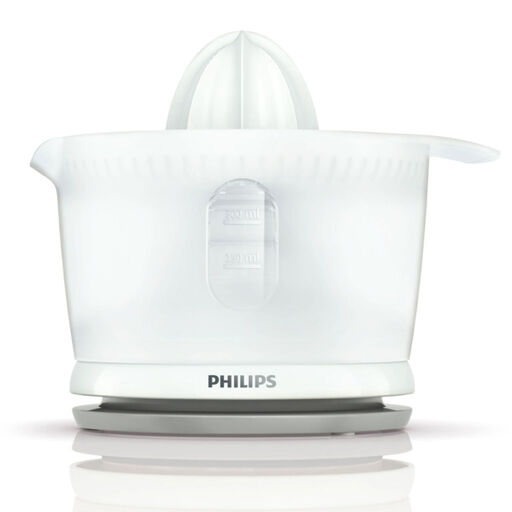
Why it suits this type of user: This 25W citrus juicer has a 500 ml reservoir and a compact design, making it suitable for everyday use when you’re making a few glasses of juice.
The product information lists dishwasher-safe removable parts, cord storage and a drip-free spout. The stated wattage and running time are clearly specified.
500 ml juice container, automatic start, two directions of rotation, non-slip feet and a compact design.
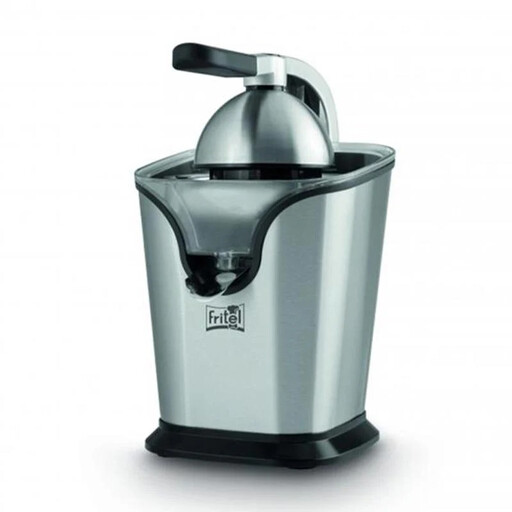
Why it suits this type of user: This 100W electric citrus juicer with a lever is designed to make juicing different sizes of citrus fruit more comfortable.
The two juicing cones mean you don’t have to use one all-purpose size for every fruit. The closable drip-stop spout helps prevent spills when you remove the glass.
100W power, lever operation, pulp filter, two cones, dishwasher-safe removable parts and non-slip feet.
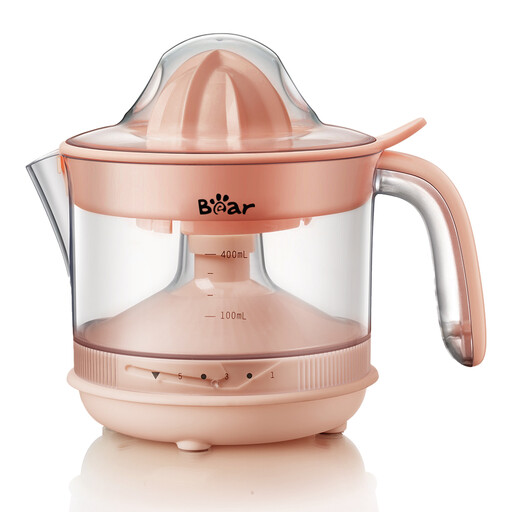
Why it suits this type of user: The wide opening and five pulp settings are useful for households where people have different preferences about the texture of their juice.
The pulp adjustment is clearly specified, with five levels to choose from. The removable parts make it easier to clean the citrus juicer after use.
110 mm opening, one-button operation, five pulp settings, pulp and juice separation, and non-slip feet.
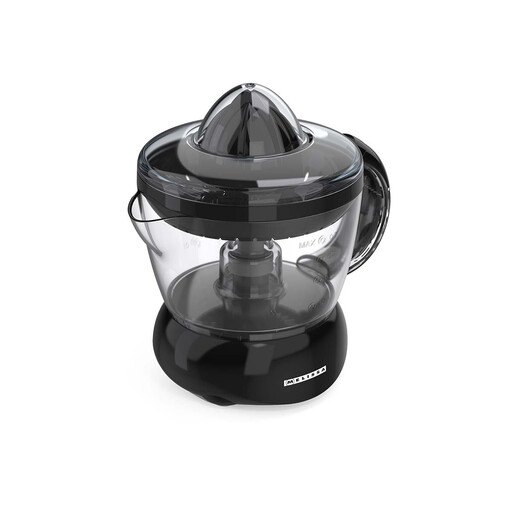
Why it suits this type of user: The 0.7-litre reservoir and compact housing are well suited to making juice every day for one or a few people.
The specifications clearly state that it doesn’t have a drip-stop function. This means you can take that into account before buying, rather than finding out afterwards.
0.7-litre capacity, two cones, rotation in both directions, dust cover, non-slip base and dishwasher-safe parts.
We’ve put together a complete, up-to-date list of products that meet these strict selection criteria and the applicable European safety regulations.
The cost of electricity depends on the wattage and how long you use the juicer. A 25-watt model uses little energy when you’re juicing for a short time; a 100-watt model uses more electricity per minute. As citrus juicers usually only run for a short time, the difference to your energy bill is generally small. For many households, the purchase price, capacity and ease of cleaning matter more.
Its lifespan depends on the materials, how often you use it and how well you maintain it. Rinse or wash the juicing cone, filter and reservoir after use to prevent dried-on acid and pulp from building up. Never leave the motor base standing in water, and follow the recommended running time. If you use your juicer frequently, a sturdy model with a stable base and replaceable or readily available parts can be a practical choice.
You can, as long as the manufacturer lists these fruits and the juicing cone is suitable. Models with two sizes are more versatile: the smaller cone is generally designed for lemons and limes, and the larger one for oranges and grapefruits. Check the instructions before use, and cut larger fruits in half to fit if necessary.
