
Vandaag of morgen in huis

Kwaliteit gegarandeerd

Welkomstaanbiedingen ontgrendelen: GRATIS bezorging | Tot 80% korting | Gratis 30 dagen JoyPlus-proefperiode
Download de app
An electric citrus juicer can make juicing oranges, lemons, limes and grapefruits much easier. However, not all models are the same. A compact electric citrus juicer is useful for making one glass of juice, while a high-capacity citrus juicer is better suited to a family. Appliances also vary in pulp control, cleaning, stability and juicing method.
As a Joybuy Product Recommendation Officer, I filter product information based on practical considerations. This helps you see which specifications can be verified and which marketing claims should not be taken at face value.
Higher power may sound appealing, but when it comes to an orange juicer, the design is at least as important. A manual pressing function, a suitable juicing cone and a stable base can have more impact on everyday use than the wattage alone.
Also consider the type of appliance. A citrus juicer generally uses a rotating cone and is designed for citrus fruit. A centrifugal juicer or slow juicer works in a different way and is more suitable for foods such as apples, carrots or leafy greens. If you only want to juice citrus fruit, a larger juicer may include features you do not need and simply cost more.
Check whether the stated capacity refers to the juice reservoir, pulp container or mixing chamber. An appliance with a 1-litre reservoir is suitable for several glasses, while a model without an integrated collection container may dispense juice directly into a glass.
Also look at the dimensions and the space available on your worktop. A wide opening is convenient, but it often takes up more room. A model with a 110 mm opening can process whole oranges according to the product description, whereas smaller openings may require you to halve or prepare the fruit more often.
An appliance is only practical if the parts that come into contact with juice and pulp can be removed easily. Check whether the pulp filter, juicing cone, juice reservoir and spout are removable. “Dishwasher-safe citrus juicer” also does not always mean that the motor base can go in the dishwasher. Always consult the manual for this information.
A drip-stop system helps prevent drips, but check how it works. On some models, you close the spout manually; on others, you activate the function with a button.
For normal household use, citrus juicers typically range from around 20 to 100 watts. A model with pressure-start operation switches on when you press the fruit onto the cone. This avoids the need for extra buttons and makes short juicing sessions simple.
A lever or pressing arm can reduce the amount of hand pressure required. This is useful if you regularly make several glasses. However, pay attention to the recommended operating time and allow the motor to cool down if the manual advises you to do so.
If you prefer smooth juice, a fine filter is useful. Others may want to retain more pulp. A citrus juicer with a pulp filter and several settings gives you greater control. Check how many settings are available and whether the adjustment is mechanical or merely mentioned as a general product claim.
The Bear CZJ-A04B1 is listed with five pulp settings and separate pulp and juice compartments. According to the product description, the appliance is designed for oranges, lemons, grapefruits and other citrus fruit.
Look for food-contact materials, a sturdy non-slip base and clear operating instructions. The models mentioned include BPA-free components, among other specifications. This is a product specification; if in doubt, check the manual and the manufacturer's information.
A visible CE marking in the product information is one point to check, but it does not replace safe use. Never put your fingers or kitchen utensils into a rotating opening, unplug the appliance before dismantling it and do not immerse the motor base in water. Also check the warranty, manufacturer details and the responsible party within the EU.
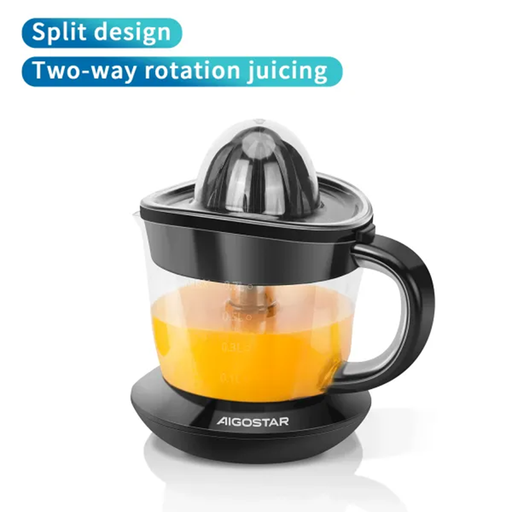
Why it suits this profile: The 700 ml capacity is practical for making several glasses of juice without taking up too much space on your worktop.
The specifications list 40 watts, two juicing cones, two-way rotation and an adjustable filter. This allows you to compare the relevant features more effectively than by wattage alone.
700 ml capacity, BPA-free materials according to the product information, automatic pressure-start operation and removable components.
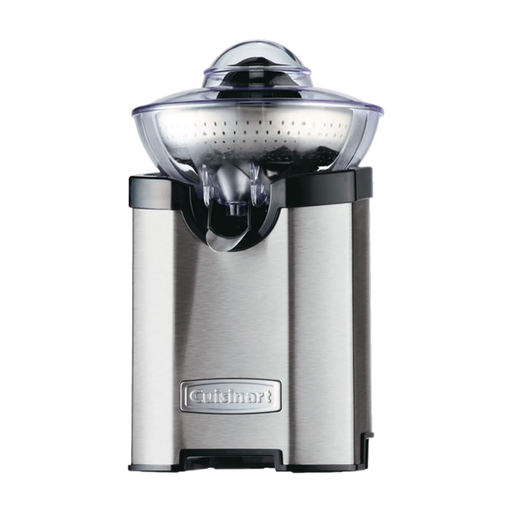
Why it suits this profile: This model combines a stainless-steel housing with a generous collection capacity for regular use in the kitchen.
The product details mention a drip-stop system, an extra-wide spout and removable dishwasher-safe components. Check the manual to confirm exactly which components these are.
100 watts, 1-litre juice reservoir, BPA-free specification and a three-year manufacturer's warranty according to the product page.
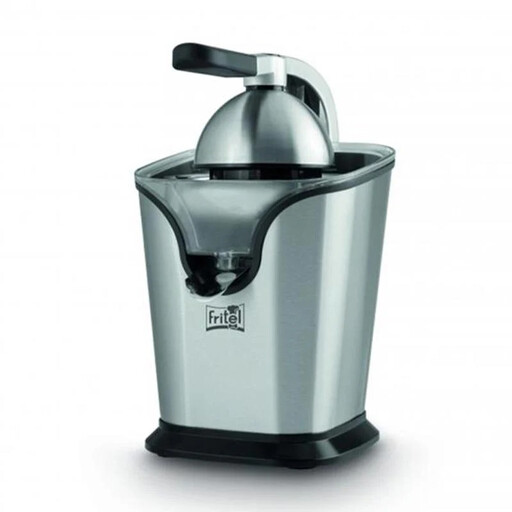
Why it suits this profile: The lever, two cone sizes and 100 watts make it suitable for households that regularly juice different types of citrus fruit.
The product description specifies an integrated pulp filter, a drip stop and two interchangeable juicing cones. This makes the relevant features easy to verify.
Stainless-steel and plastic construction, non-slip feet, compact dimensions and removable dishwasher-safe components according to the product information.
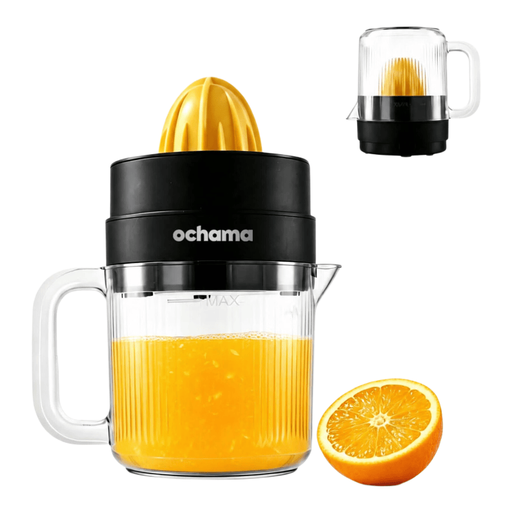
Why it suits this profile: The stated 1.4-litre capacity is designed to make several glasses of juice in a single session.
The product information mentions simple dismantling and pulp separation. Before buying, check whether all components are dishwasher-safe according to the manual.
1.4-litre capacity, electric pressing function, blade-free design according to the product description and removable components.
We have put together a complete, up-to-date list of products that fully meet these strict selection criteria and the applicable European safety requirements.
A few habits are important for ensuring a long service life:
That depends on the model and how long you use it. An electric citrus juicer generally has a simple motor and is designed specifically for citrus fruit. A centrifugal juicer can process a wider range of fruit and vegetables, but it often has additional components and requires a different cleaning process. Choose based on what you actually want to juice.
For household use, models ranging from around 20 to 100 watts are common. As well as power, consider the juicing cone, pressure operation, stability and recommended operating time. Higher wattage alone does not guarantee a better juice yield.
Its service life depends on the materials, maintenance, frequency of use and whether you follow the manual. A model with removable components, sturdy non-slip feet and accessible warranty information is generally easier to maintain. Before buying, also check the service details and statutory warranty in the European Union.
