
Vandaag of morgen in huis

Kwaliteit gegarandeerd

Welkomstaanbiedingen ontgrendelen: GRATIS bezorging | Tot 80% korting | Gratis 30 dagen JoyPlus-proefperiode
Download de app
An electric citrus juicer seems simple: halve the fruit, press it down and pour the juice. Yet many purchases end in disappointment. The appliance may only be suitable for citrus fruit, create more mess than expected or end up at the back of a kitchen cupboard after a few weeks.
Joybuy Product Recommendation Officer therefore looks beyond marketing terms. Pay particular attention to the type of juicer, capacity, cleaning and the features you genuinely need.
A 1,000-watt motor sounds powerful, but that does not automatically mean you will get more juice from every orange. With a traditional citrus juicer, the juicing cone, pressure distribution and rotation have the greatest influence on the experience. A 20 to 100-watt citrus juicer can be perfectly adequate for oranges and lemons.
A powerful motor is mainly relevant if you also want to process hard vegetables and fruit. In that case, check whether the appliance is a centrifugal juicer, electric juicer or slow juicer. A standard orange juicer is not designed for this.
Juice residue dries quickly in filters, sieves and narrow openings. So do not just read the product description; check:
A rounded design, removable pulp filter and short pre-cleaning function can make everyday use more practical.
A 1-litre jug is unnecessary for one glass of juice. For a family, a small collection container may mean that you have to empty it several times. Also pay attention to the dimensions. A tall juicer can be difficult to store in a low kitchen cupboard.
A compact citrus juicer is suitable for everyday use in small kitchens. If you also want to process vegetables and soft fruit, it is better to look for a centrifugal juicer for fruit and vegetables or a slow juicer with separate juice and pulp containers.
An electric citrus juicer works with halved oranges, lemons, limes and grapefruits. The juicing cone rotates or is pressed down mechanically. Some models have two cones for small and large fruit.
A centrifugal juicer uses a rapidly rotating sieve and is intended for ingredients such as apples, carrots and cucumber. A slow juicer presses ingredients at a lower speed using a juicing screw. Always check the permitted ingredients in the manual. Replacing a citrus juicer with an electric juicer does not automatically work the other way round.
Not everyone wants the same texture. A juicer with pulp control offers several settings for more or less pulp. With some citrus juicers, you adjust this manually using a filter; other models use a fixed pulp separator.
Pay attention to the wording in the product description. A brand claim about juice yield or nutritional value, for example, is not a universal guarantee. A brand’s own research may have measured certain results under specific conditions. Therefore, focus mainly on verifiable information: number of settings, filter type, capacity and controls.
Useful points to check include:
Always unplug the appliance before assembling, disassembling and cleaning it. Do not touch rotating cones, sieves or juicing screws while the appliance is in use.
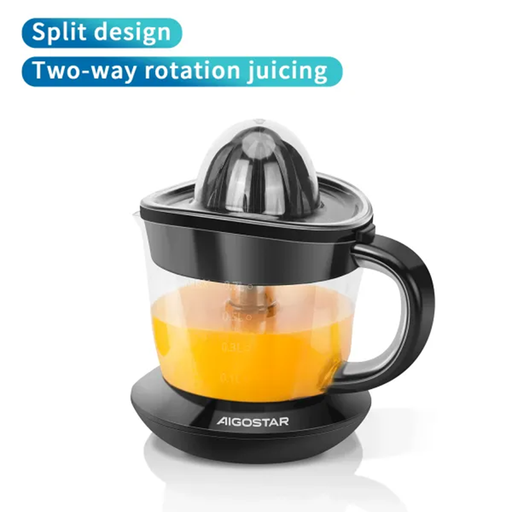
Why it suits this profile: The 700 ml capacity is practical for several glasses of juice. It starts when you apply light pressure, and its compact housing takes up little space.
The product information clearly states 40 watts, two rotation directions and use with citrus fruit. So do not expect an appliance for hard vegetables.
700 ml capacity, two juicing cones, adjustable filter and removable design.
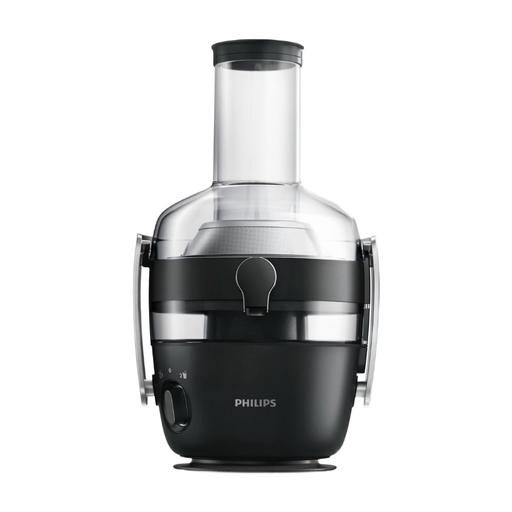
Why it suits this profile: This model is designed for households that want to process citrus fruit as well as other vegetables and fruit, while enjoying a choice of juice textures.
The 8 cm-wide feed tube reduces the need for chopping. The stated QuickClean and pre-cleaning functions address a common cleaning pitfall.
1,000 watts, FiberBoost for adjustable texture, integrated drip stop and dishwasher-safe removable parts according to the product information.
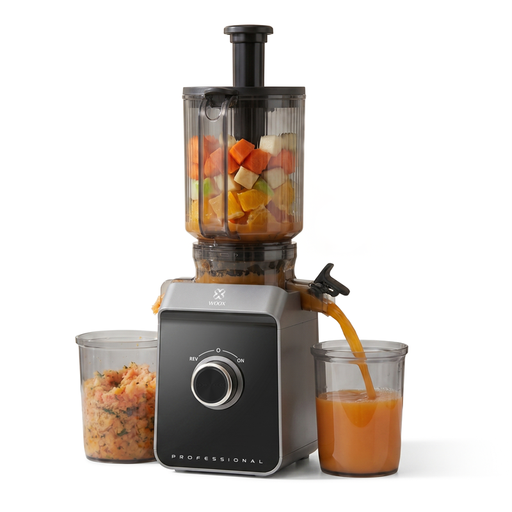
Why it suits this profile: This slow juicer is intended for users who want to process vegetables and fruit as well as citrus fruit, and who consider a separate pulp container important.
The product details state that it has overheating protection, a 10-minute usage limit and instructions for dealing with ingredients that become stuck. This makes the usage limits clearer.
150 watts, 1.8-litre chamber, 726 ml juice cup, 836 ml pulp container and a stated noise level below 72 dB.
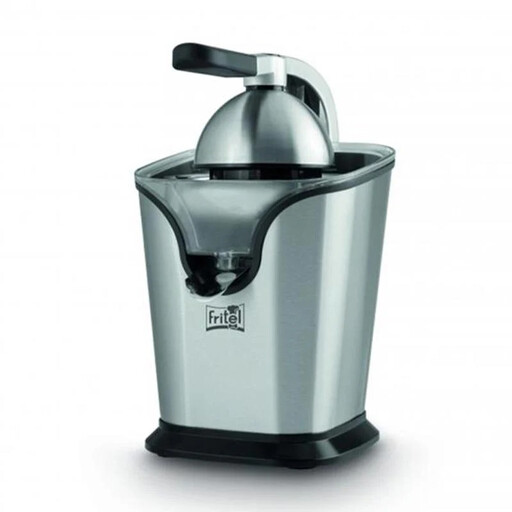
Why it suits this profile: The lever operation and two juicing cones are practical for regularly juicing oranges, lemons, limes and grapefruits.
The correct juicing cone is matched to the size of the fruit. The drip-stop spout and dishwasher-safe removable parts help reduce mess and cleaning time.
100 watts, two cone sizes, pulp filter, lever and non-slip feet.
We have put together a complete, up-to-date list of products that fully meet these strict selection criteria and the applicable European safety regulations.
The electricity consumption of a citrus juicer with a 20 to 100-watt motor is generally limited per use. The actual cost depends on how long you use it and your electricity tariff. For short periods of juicing, the difference compared with juicing by hand is mainly about convenience, not significant energy savings.
Its lifespan depends on the motor, the quality of the juicing cone and how carefully you clean the appliance. Remove pulp immediately after use, avoid overloading it and follow the recommended usage time in the manual. Stop if you notice an unusual smell, vibration or noise, and check the appliance before continuing.
Usually not. A citrus juicer is designed for soft citrus fruit. For carrots, apples, leafy greens and other fruit, you need a centrifugal juicer for fruit and vegetables or a slow juicer. Check the product specifications before adding ingredients; using the appliance incorrectly can put strain on the motor or juicing components.
