
Vandaag of morgen in huis

Kwaliteit gegarandeerd

Welkomstaanbiedingen ontgrendelen: GRATIS bezorging | Tot 80% korting | Gratis 30 dagen JoyPlus-proefperiode
Download de app
An electric citrus juicer may seem like a simple appliance, but the differences in everyday use are noticeable. A small collection bowl can quickly prove too small for a family. An awkward spout can leave drips on the worktop, while parts that are difficult to remove make cleaning a chore.
As a Joybuy Product Recommendation Officer, I focus mainly on verifiable specifications: power, capacity, cones, stability and cleaning. This helps you avoid relying solely on words such as “powerful” or “efficient” in a product description.
Higher wattage does not automatically mean that a citrus juicer will extract more juice from every fruit or be more pleasant to use. For oranges, lemons and limes, the shape of the cone is also important. A 40-watt citrus juicer can be perfectly adequate for everyday use at home, while a 100-watt model is often designed for faster juicing or lever operation.
As well as checking the power, consider how the motor starts, how long you can juice continuously and whether the juicer remains stable during use.
Not every citrus juicer has an anti-drip system. With a standard spout, you need to move the collection bowl or glass carefully to minimise dripping. A citrus juicer with an anti-drip function can be more convenient when pouring directly into a glass.
Also check that the product description actually mentions “anti-drip”, “drip stop” or “drupstop”. If this is not listed in the specifications, do not assume that the function is included.
With a dishwasher-safe citrus juicer, this usually means only that certain removable parts can go in the dishwasher. The motor base, cable and plug must not be immersed. Check the manual to see which parts are dishwasher-safe and which programme or temperature is recommended.
In practice, a model with fewer parts can be quicker to clean than a more elaborate appliance with several filters and containers.
A small collection bowl is practical for a single glass. Families will benefit more from a reservoir with a capacity of 0.7 to 1 litre. The MELISSA Citrus Press has a capacity of 0.7 litres and, according to the product specifications, is suitable for up to five servings. The Cuisinart CCJ210E has a collection capacity of 1 litre.
Pay attention to the difference between the capacity of the juice reservoir and that of a pulp container. Some appliances list both separately.
An electric citrus juicer with two cones is more versatile. A smaller cone is generally suitable for limes and lemons, while a larger cone is intended for oranges and grapefruits. Check that the cones are actually included and can be changed.
A citrus juicer with two directions of rotation can press the fruit alternately clockwise and anticlockwise. The MELISSA, Aigostar and Braun MPZ9 list this function. It is a practical feature, but the final amount of juice also depends on the type and ripeness of the fruit, as well as how you press it.
An anti-slip base helps keep the appliance in place while juicing. This is particularly relevant when pressing down on the fruit or using a lever. Also measure the space available. A compact appliance is convenient in a Dutch kitchen, but a larger citrus juicer may offer a bigger collection bowl or lever operation.
Finally, check whether the parts are removable. An electric orange juicer that comes apart easily is likely to be used more regularly than a model where pulp is difficult to remove from small openings.
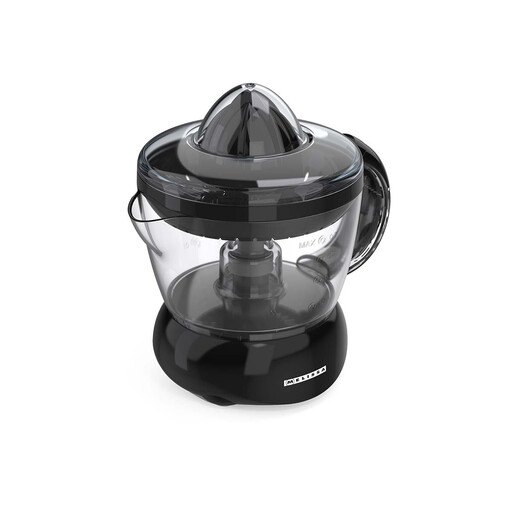
Why it suits this profile: This compact model is designed for everyday juicing without complicated controls. The motor starts when you apply pressure to the cone.
The specifications clearly list 40 W, 0.7 litres, two cones and an anti-slip base. Please note that no anti-drip system is mentioned.
Two directions of rotation, two cone sizes and dishwasher-safe removable parts; dust cover included.
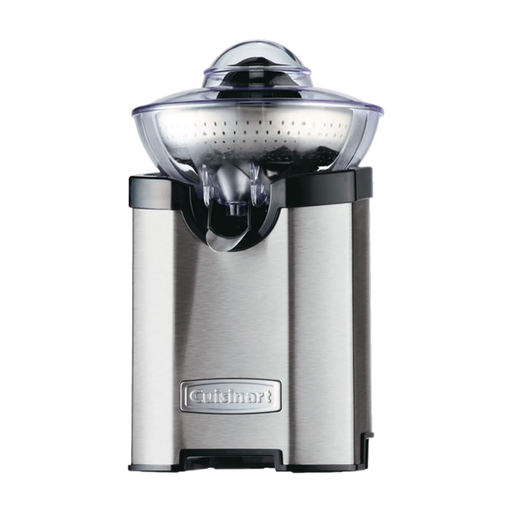
Why it suits this profile: This model combines a stainless steel housing with controls for citrus fruits of different sizes and a generous collection capacity.
The anti-drip system is explicitly stated in the product details. The removable parts are also dishwasher-safe according to the description.
100 W power, 1-litre reservoir, extra-wide spout and a three-year manufacturer's warranty according to the product information.
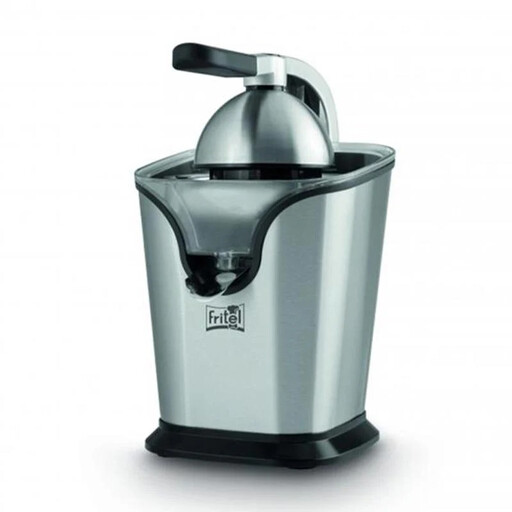
Why it suits this profile: The lever operation and 100 W motor are ideal when you want to juice several oranges, grapefruits or lemons one after another.
The two cones make it suitable for both small and larger citrus fruits. The drip stop is explicitly mentioned, so you do not have to guess based on the spout.
100 W, stainless steel and plastic construction, anti-slip feet, built-in pulp filter and dishwasher-safe removable parts.
We have put together a complete, up-to-date list of products that fully meet these strict selection criteria and the applicable European safety regulations.
Wash the citrus fruits first and cut them in half. Use the small cone for limes and lemons and the larger one for oranges or grapefruits, if supplied. Apply even pressure and do not force the motor.
After use, unplug the appliance before removing any parts. Do not wait several hours before rinsing away the pulp: dried fibres are more difficult to remove. Wipe the motor base with a slightly damp cloth and keep it away from water. For the maximum usage time per session, always follow the instructions in the manual.
For normal home use, models of around 20 to 40 watts are often designed for straightforward juicing of citrus fruits. A 100-watt model may be worth considering if you use it more frequently or prefer a lever mechanism. Always compare wattage with the juicing method, capacity and stability; wattage alone does not tell you enough about the juice yield.
The cost depends on the power and how long the appliance is used. A 40-watt appliance running for ten minutes theoretically consumes around 0.0067 kWh. A 100-watt model uses approximately 0.0167 kWh in the same time. Calculate the exact cost by multiplying this consumption by your current electricity tariff.
A fixed lifespan cannot be guaranteed in advance. Cleaning the appliance regularly, avoiding overloading the motor and following the safety instructions will help prevent unnecessary wear. Store a compact model in a dry place and check the warranty and service details before buying.
