
Vandaag of morgen in huis

Kwaliteit gegarandeerd

Welkomstaanbiedingen ontgrendelen: GRATIS bezorging | Tot 80% korting | Gratis 30 dagen JoyPlus-proefperiode
Download de app
Juicing fresh oranges, lemons or grapefruits can be quick and easy with an electric citrus juicer. Yet many models look similar, even though they can differ considerably in use. A cheap citrus juicer, for example, may have a small collection jug, an awkward spout or a filter that’s difficult to clean. As a result, the appliance can end up at the back of the kitchen cupboard after just a few weeks.
So when comparing models, don’t focus only on the wattage or an attractive product photo. These three common pitfalls are worth watching out for:
For everyday juicing of oranges and lemons, the way the juicer works is what matters most. A lever-operated electric orange juicer can apply pressure evenly. That’s useful when you want to juice several fruits one after another. A model that starts as soon as you press the fruit onto the cone is often more compact and easier to use.
Citrus juicers vary considerably in power. According to the product information, the Philips HR2738/00 has a 25-watt motor, the Aigostar has 40 watts and the FRITEL CP 4177 has 100 watts. Compare these figures with the design and intended use, but don’t assume that wattage guarantees a particular amount of juice.
An electric lemon juicer needs to work with small fruits, while an orange or grapefruit juicer needs a larger cone. Two interchangeable cones are therefore useful for households that juice different types of citrus fruit.
Pay attention to the pulp filter, too. A citrus juicer with a pulp filter separates pips and pulp as you pour. Some models let you adjust the amount of pulp. The Bear CZJ-A04B1, for example, has five pulp settings. That’s useful when members of the household have different preferences, from relatively smooth juice to juice with more pulp.
A filter doesn’t automatically make an appliance suitable as a centrifugal juicer for citrus fruit and other ingredients. A traditional citrus juicer is designed for citrus fruit. Check the usage restrictions before trying to process hard vegetables or other fruit.
A 500–700 ml jug may be enough for one or two glasses. A model with a capacity of 1 litre or more is better suited to families or to filling several glasses at once. Also check whether the spout fits directly over a glass.
A citrus juicer with an anti-drip spout helps reduce drips on the worktop. Check how the spout works on the specific model: some have a spout you close by hand, while others simply have a long spout. That’s not the same as a drip-stop feature.
For easy maintenance, removable parts and dishwasher-safe components are practical advantages. Always check the manual to see which parts can go in the dishwasher. Non-slip feet, cord storage and compact dimensions are particularly useful in smaller Dutch kitchens.
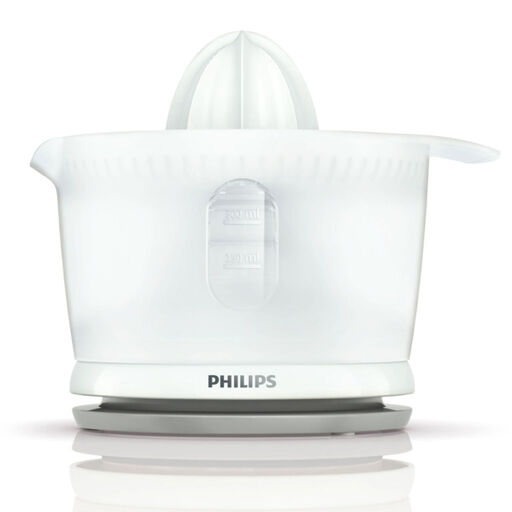
Why it suits this profile: This compact white citrus juicer has a 500 ml capacity and is designed for everyday use without complicated controls.
The product information lists automatic start when pressure is applied, a drip-free spout and removable, dishwasher-safe parts.
25 watts, 500 ml capacity, cord storage, non-slip feet and automatic shut-off, according to the product description.
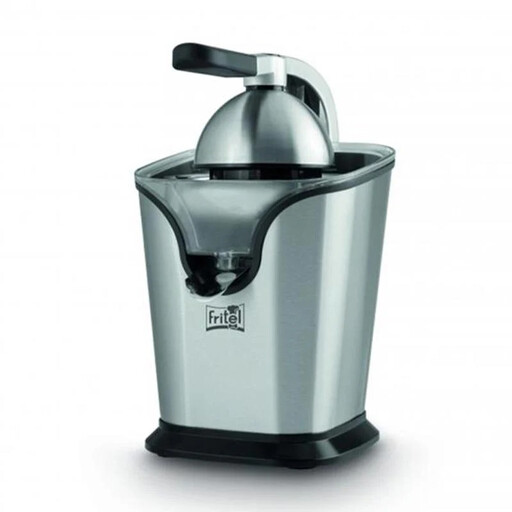
Why it suits this profile: Designed for regular juicing, this model combines lever operation with two cone sizes.
The listed anti-drip spout and built-in pulp filter address two common problems when pouring.
100 watts, two cones, stainless steel, non-slip feet and removable, dishwasher-safe parts, according to the product specifications.

Why it suits this profile: The wide feed opening and five pulp settings are well suited to households that juice often and want to adjust the texture of each glass.
The specifications list pulp and juice separation, a wide 110 mm opening and removable parts for cleaning.
One-button operation, five pulp settings, non-slip feet and, according to the product information, BPA-free materials for food contact.
Before buying, check that the appliance is suitable for 220–240 volts and 50 Hz, as is standard in Dutch households. A visible CE mark can show that the manufacturer declares the product complies with relevant European regulations, but it isn’t a quality rating or a guarantee of a particular juicing yield.
Use a citrus juicer on a flat surface and keep fingers, loose clothing and children away from moving parts. Unplug it before assembly, disassembly and cleaning. The motor base should only be wiped with a damp cloth.
Also check the recommended operating cycle. Some compact models shouldn’t run continuously for more than about ten minutes. If you make large quantities of juice every day, it’s worth choosing a model with a suitable capacity and clear overheat protection.
We’ve put together a full, up-to-date list of products that meet these strict selection criteria and comply with the applicable European safety regulations.
Electricity use per glass is usually low, but varies according to the motor’s power and how long it runs. A 25-watt appliance uses less energy in theory than a 100-watt model if both run for ten minutes. Actual consumption depends on the motor and how long the appliance is running. When it comes to energy costs, short juicing sessions usually matter more than a small difference in wattage.
Look for a jug with a capacity of around 700 ml to 1 litre or more, depending on how many glasses you want to make at once. An orange juicer with a wide spout, pulp filter and removable parts can be handy for everyday family use. If everyone has different preferences, adjustable pulp settings are useful.
Its lifespan depends on the materials, how it’s cleaned, how often it’s used and whether you follow the recommended operating cycle. Let the motor cool down when instructed in the manual, and don’t force hard or unsuitable ingredients through the appliance. A citrus juicer that’s easy to clean is generally easier to maintain properly than a model that allows pulp to collect in hard-to-reach areas.
