
Vandaag of morgen in huis

Kwaliteit gegarandeerd

Welkomstaanbiedingen ontgrendelen: GRATIS bezorging | Tot 80% korting | Gratis 30 dagen JoyPlus-proefperiode
Download de app
A glass of freshly squeezed orange juice with breakfast, or a splash of lime in a cocktail. The very thought is refreshing. A good electric citrus juicer makes this effortless, but the wrong choice often leads to frustration and an unused appliance collecting dust in a kitchen cabinet.
Many models look great at first glance but hide design flaws that only become apparent after a few weeks of use. Before you buy a citrus juicer, it's wise to know what to look for. We'll cover the most common pitfalls and the specifications that truly matter.
Marketing jargon can make a mediocre product seem appealing. Watch out for these three common issues to avoid wasting money on an appliance that will quickly fail.
A common complaint is a motor that overheats or simply stops working after a short period. This is often due to low wattage combined with plastic internal components. A weak motor has to work too hard for a firm orange or grapefruit, causing it to wear out quickly.
If cleaning your citrus juicer takes more time than enjoying your juice, you won't use it often. Models with numerous nooks, crannies, and non-removable parts are a nightmare to clean. Pulp and sticky residue build up, which is unhygienic and can damage the appliance.
Nothing is more annoying than a spout that continues to drip after you've removed your glass. A poorly designed spout without an anti-drip feature is a guaranteed recipe for a sticky countertop and wasted juice.
To avoid the problems mentioned above, there are a few technical specifications that should guide your choice.
A solid electric citrus juicer should have a motor with at least 80 watts of power. This is powerful enough to effortlessly extract juice from both small lemons and large grapefruits without getting overloaded.
The material of the housing and the juicing cone is just as important. A stainless steel citrus juicer is not only more durable and stable than a plastic model, but it's also easier to keep clean and often looks sleeker in a modern kitchen.
Look for features that make your life easier. An anti-drip system is essential for a clean kitchen. Also, check if the removable parts (cone, filter, juice reservoir) are dishwasher-safe. This will save you a significant amount of time and effort. Some models, like a Fritel citrus juicer, come with two different-sized cones. This is convenient, as it gives you an efficient lemon press and electric orange juicer in one appliance.
Based on objective specifications that address the most common pitfalls, we have selected a product that fits a specific user profile.
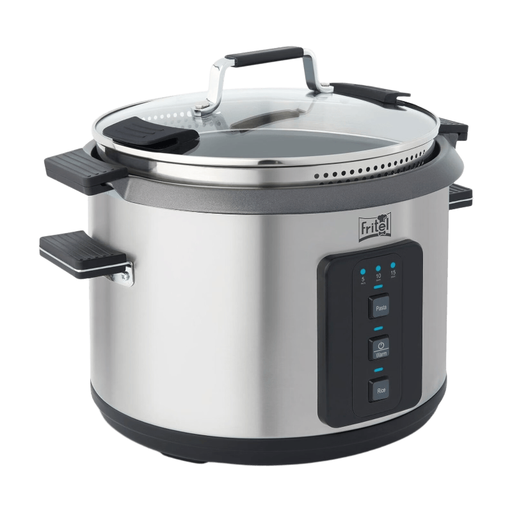
Why This Fits Their Persona: This model is ideal for those who press fresh juice daily or weekly and seek a reliable, durable appliance. The stainless steel finish and powerful motor are designed for long-term, intensive use, perfect for families or home chefs who value quality and design.
The 100W motor is powerful enough for all citrus fruits. The stainless steel housing and filter are robust and durable. The anti-drip spout prevents messes, and the removable parts are dishwasher-safe, which simplifies cleaning.
Comes with 2 cones for small and large fruits, ensuring maximum juice efficiency. The appliance is also relatively quiet during operation.
A great juicer starts with great fruit. For the most flavourful juice, the choice of citrus is essential. Explore our selection for the perfect foundation for your next fresh juice.
For home use, a motor with a power rating between 80 and 160 watts is a good guideline. This provides enough power to juice efficiently without overloading the motor, even with daily use. A model with less than 60 watts may struggle with larger or harder fruits.
Yes, in most cases. A stainless steel citrus juicer is generally sturdier, more stable, and lasts longer than plastic alternatives. Stainless steel is also more hygienic, as it doesn't absorb odours or flavours and is easy to clean. Although the initial purchase price is often higher, it's an investment in durability.
The easiest method is to choose a model whose removable parts (the cone, filter, and juice collector) are dishwasher-safe. If you don't have a dishwasher, rinse the parts under warm water immediately after use. This prevents sugars and pulp from caking and hardening. The motor housing should never be submerged in water; you can wipe it down with a damp cloth.
