
Vandaag of morgen in huis

Kwaliteit gegarandeerd

Welkomstaanbiedingen ontgrendelen: GRATIS bezorging | Tot 80% korting | Gratis 30 dagen JoyPlus-proefperiode
Download de app
An electric citrus juicer can make it much easier to prepare orange, lemon or grapefruit juice. However, not all models work in the same way. A compact appliance with a small jug is ideal for making one glass at a time, while a lever-operated juicer with a pulp filter and anti-drip system is better suited to everyday use by several people.
When comparing models, don’t look only at the wattage or an attractive product photo. These three common pitfalls in particular can mean you use your citrus juicer less often after just a few weeks.
More power doesn’t automatically mean an appliance is easier or more pleasant to use. For an orange juicer, the controls, reamer and stability are just as important. A 25 W model may be suitable for a few glasses, while a 100 W lever press puts more emphasis on controlled pressing.
A 1,4-litre reservoir sounds convenient, but it also takes up more space and needs cleaning after use. For one or two glasses, a citrus juicer with a capacity of 500 to 700 ml may be enough. Also check whether the jug has clear measurement markings and whether the juice can flow straight into a glass.
Marketing copy often promises easy maintenance, but it’s worth checking the details. Can the parts be removed? Are they dishwasher-safe? Does pulp get left around the reamer or spout? A citrus juicer that’s easy to clean is one that leaves you with few parts to wash by hand after use.
Power is measured in watts. For a typical electric orange juicer for home use, the stated power in this selection ranges from 25 to 100 W. This gives you an indication of the motor, but doesn’t tell you exactly how much juice you’ll get from each piece of fruit.
Always check the instructions. Some appliances shouldn’t be run continuously for longer than a set period. For example, the Philips HR2738/00 has a maximum continuous operating time of 10 minutes. Let the appliance cool down if the manual says to.
A universal reamer is handy if you regularly juice limes, lemons, oranges and grapefruits. Models with two reamers have separate sizes for smaller and larger fruit. This can be more convenient than using one reamer for everything.
A wide feed opening, such as the 110 mm feed opening on the Bear CZJ-A04B1, means less preparation for suitable fruit. Always check the manual, though, and cut the fruit if necessary. A traditional citrus juicer usually works with a halved piece of fruit pressed onto the reamer.
If you prefer smooth juice, look for a citrus juicer with a pulp filter. Some models offer several pulp settings. According to its product specifications, the Bear has five adjustable pulp settings, so you can choose the texture of your juice.
A citrus juicer with an anti-drip system helps stop juice dripping from the spout after you remove your glass. This helps keep your worktop clean, but check that the spout closes securely and is easy to open when you want to pour.
Look for removable parts, dishwasher-safe components, non-slip feet and cord storage. The motor base of an electric appliance must never be submerged in water. Wipe it with a damp cloth, and always unplug the appliance before taking it apart or cleaning it.
A compact citrus juicer for home use is handy if you have limited worktop space. So measure the space available in a cupboard or on your worktop, too. A larger lever-operated model may be more stable, but it needs more storage space.
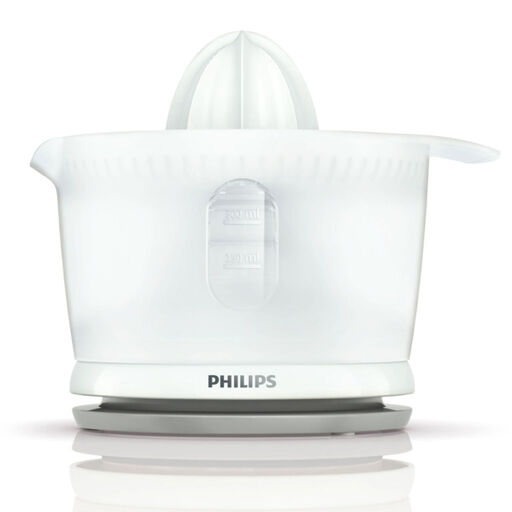
Why it suits this type of user: This compact model has a 500 ml jug and is ideal if you occasionally press fresh citrus fruit but don’t want a large appliance on your worktop.
The specifications are clear: 25 W, 500 ml, cord storage and removable dishwasher-safe parts. So you won’t pay for features you may not use.
500 ml capacity, anti-drip spout, automatic shut-off, non-slip feet and removable dishwasher-safe parts.
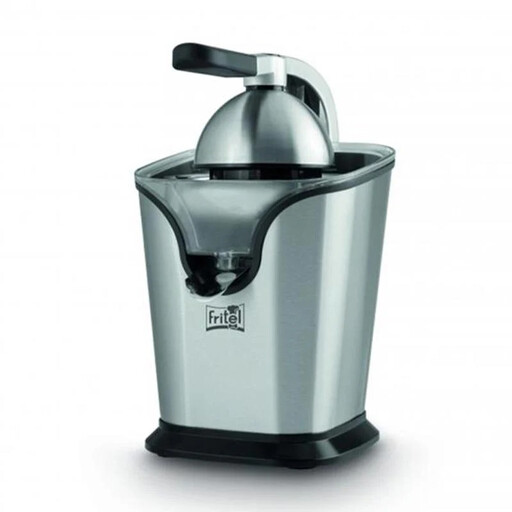
Why it suits this type of user: The lever and two interchangeable reamers make this a good choice if you regularly juice different citrus fruits and value controlled operation.
The product specifications clearly list a built-in pulp filter, anti-drip spout and two sizes of reamer. This makes these features easier to assess than general claims about efficient juicing.
100 W power, two reamers, stainless steel and plastic housing, anti-drip system and removable dishwasher-safe parts.

Why it suits this type of user: Families with different preferences can adjust the pulp texture. The wide feed opening and one-button controls are designed for everyday use.
The five pulp settings let you choose the texture you prefer. The product features also include pulp and juice separation, removable parts and non-slip feet.
110 mm wide feed opening, five pulp settings, one-button operation, BPA-free food-contact materials and a 24-month warranty according to the product information.
We’ve put together a complete, up-to-date list of products that meet these strict selection criteria and the applicable European safety regulations.
A juice extractor for citrus fruit isn’t always the same as a traditional citrus juicer. A citrus juicer usually uses a rotating reamer for halved fruit. A juice extractor often works with a sieve and is designed for several types of fruit and sometimes vegetables. These appliances are generally larger and have different parts to clean.
If you mainly want to juice oranges, lemons and grapefruits, choose an electric citrus juicer. If you’re looking for one appliance for apples, carrots and other ingredients, compare the type of juicing system, the feed opening and how easy it is to clean. A fruit juicer with a wide feed opening isn’t automatically suitable for every ingredient, so follow the manufacturer’s usage restrictions.
Unplug the appliance, remove the detachable parts and rinse off any residue as soon as possible. Check whether the parts are dishwasher-safe for your particular model. Clean the motor base with a damp cloth and never submerge it in water.
Its lifespan depends on how often you use it, how well you clean it and whether you follow the maximum operating time. Let the motor cool down if the manual says to, and don’t use any damaged parts. Also check the statutory warranty and any additional manufacturer’s warranty for each product.
A citrus juicer is usually switched on for just a few minutes at a time. The stated power varies by model: for example, 25 W, 40 W, 60 W or 100 W in this selection. Actual energy use depends on how long you use it. So a higher wattage doesn’t automatically mean higher costs every time you use it.
