
Vandaag of morgen in huis

Kwaliteit gegarandeerd

Welkomstaanbiedingen ontgrendelen: GRATIS bezorging | Tot 80% korting | Gratis 30 dagen JoyPlus-proefperiode
Download de app
An electric citrus juicer can make it easier to juice oranges, lemons, limes and grapefruits. Yet the range often looks more straightforward than it really is. An inexpensive model may prove inconvenient when preparing several glasses of juice, while a larger machine can take up unnecessary space in a Dutch kitchen.
As a Joybuy Product Recommendation Officer, I focus primarily on verifiable specifications. So do not look only at wattage or terms such as “efficient”. Pay attention to capacity, controls, cleaning and how the pulp is separated.
A higher wattage may sound appealing, but on its own it says little about ease of use. A basic electric orange juicer with 25 or 40 watts may be perfectly suitable for a few glasses a day. A 100-watt lever press is more interesting if you regularly process larger quantities or bigger fruit.
According to the product descriptions of several brands, the pressing cone, rotation direction and pressing method also affect performance. Compare the overall design rather than looking only at motor power.
A 1-litre jug or larger is convenient for families, but check how the capacity is measured. Some models use a collection jug, while others let the juice flow directly into a glass. The Braun MPZ9, for example, lists a 1-litre jug, while its specifications also mention direct collection and a removable pulp container.
For everyday use, a compact jug of around 0.7 litres is often sufficient. A large-capacity citrus juicer is better suited to preparing several glasses in succession, but it also requires more storage space.
Removable parts make cleaning easier, but check which components are actually dishwasher-safe. For some products, this applies only to selected parts, with the manufacturer referring users to the manual for details. The motor base must not be submerged in water.
In practice, a model with only a few loose parts may be quicker to clean than a larger citrus fruit juicer with multiple filters, cups and pulp containers.
A standard cone usually works well for oranges and lemons. If you also want to juice grapefruits or larger citrus fruit, choose a model with two cone sizes. The FRITEL Citrus Press CP 4177 lists a smaller cone for lemons and limes and a larger version for oranges and grapefruits.
Also check the product limitations. A citrus juicer is not the same as a universal slow juicer. An electric citrus juicer is designed for halved citrus fruit, while a centrifugal juicer can often process other types of fruit and vegetables as well.
A citrus juicer with pulp settings gives you greater control over the texture of the juice. According to its product specifications, the Bear CZJ-A04B1 has five pulp settings and a separate system for separating pulp from juice. This is practical when household members have different preferences.
With traditional pressing cones, the adjustment usually concerns the strainer. Check whether the setting is continuously variable or available in fixed stages. “Less pulp” does not necessarily mean completely clear juice.
A citrus juicer with an anti-drip system can help reduce spills on the worktop, but check how the system operates. The FRITEL CP 4177, for example, lists a closable pouring spout. According to its product information, the Cuisinart CCJ210E also features a drip-stop system and a wide spout.
An anti-drip system is particularly useful when juicing directly into a glass. With models that use a separate jug, it is less decisive because you generally remove the jug in one movement.
Check that the product is suitable for the Dutch power grid: 220–240 volts and 50 Hz. Also look for a visible CE marking, the supplied manual and the contact details of the manufacturer or responsible party within the EU.
If a product is marketed as a BPA-free citrus juicer, base your choice on the stated product specification. Several models in this selection list BPA-free materials. This is a material claim taken from the product information, not a medical or health claim.
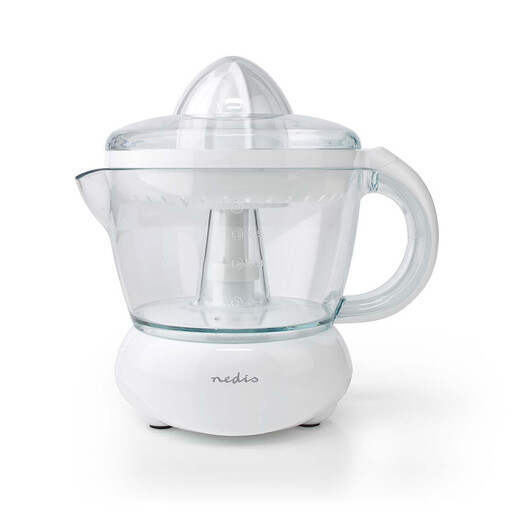
Why it’s a good fit: A compact fruit juicer for home use with a jug of approximately 0.7 litres. Suitable for everyday juice without taking up the space of a large appliance on the worktop.
The product information lists a removable jug and automatic alternating rotation. However, check the recommended maximum operating time of one minute.
25 watts, a compact design, automatic operation and a transparent jug with measurement markings.
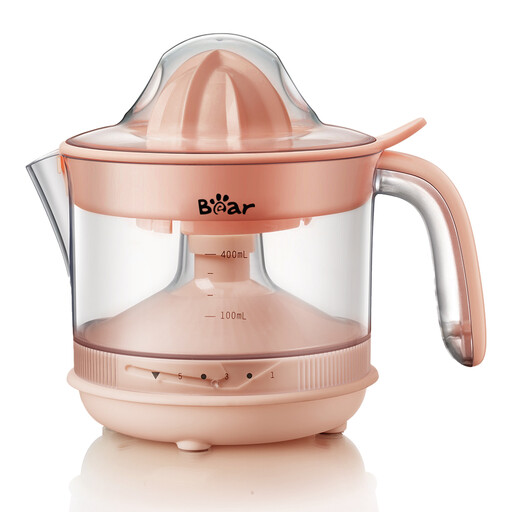
Why it’s a good fit: For households with different preferences regarding juice texture, and for users who want to minimise preparation.
The extra-wide 110 mm feeding opening and five pulp settings turn the relevant specifications into tangible features rather than vague marketing language.
One-button operation, separate pulp and juice collection, BPA-free food-contact materials according to the product specification, and removable parts.
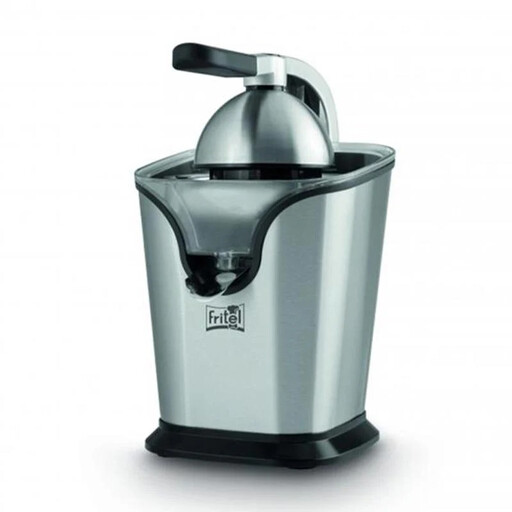
Why it’s a good fit: A lever press for families who regularly juice oranges, grapefruits, lemons and limes.
The product specification lists two cone sizes, a built-in pulp filter and a closable pouring spout. This makes fruit size and spills easier to manage.
100 watts, a stainless-steel housing, non-slip feet and dishwasher-safe removable parts according to the product information.
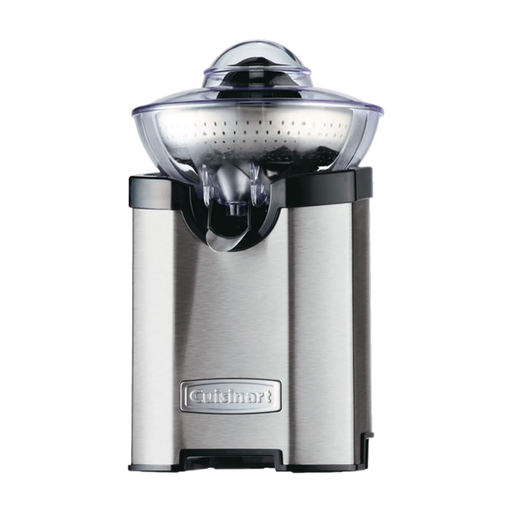
Why it’s a good fit: For users who want to pour directly into a glass and appreciate a metal design with straightforward cleaning.
The listing mentions a drip-stop system, a wide pouring spout and dishwasher-safe parts. Before purchasing, check exactly which components this applies to.
100 watts, a stainless-steel finish, a stated capacity of 1 litre and a three-year manufacturer’s warranty according to the product information.
Wash citrus fruit before juicing and cut larger fruit according to the instructions. Do not insert fingers or utensils into a feeding opening. Switch off the appliance and unplug it before removing any parts.
Rinse away pulp and fruit flesh immediately. Dried residue is more difficult to remove. With intensive use, check the recommended operating cycles; a compact citrus juicer is generally not designed for prolonged continuous operation.
Explore a current selection of electric juicers and compare models by capacity, controls, cleaning and intended use.
Yes. Most models are designed for citrus fruit such as oranges, lemons, limes and grapefruits. For larger fruit, check whether the appliance includes a wide pressing cone or a second cone.
Its lifespan depends on usage, cleaning and following the recommended operating cycles. Allow the motor to cool whenever the manual instructs you to do so, and do not use the juicer for fruit it was not designed to process.
Citrus juicers generally have relatively low power ratings, such as 25, 40 or 100 watts. Actual consumption depends on how long the appliance runs. A model that operates briefly for a single glass will generally use less electricity than one used continuously for an extended period.
