What should you look for when buying?
Start with the amount of juice you usually make. For a dressing, a compact container is handy; for several people at breakfast, the way juice is collected or poured makes more of a difference. Also check the cleaning instructions for the exact model.
| What to consider |
What to look for |
Who is it important for? |
| Small quantities and pulp |
Check whether the juicer is suitable for lemons and limes, how the sieve works and whether the exact model has a pulp setting. |
If you mainly make juice for a dressing, you’ll want to keep pips and unwanted pulp out of your food. Around 33% of consumers are particularly interested in controlling the amount of juice and pulp. |
| Several servings at breakfast |
Compare a collection jug with pouring straight into glasses. The jug’s capacity doesn’t guarantee a particular juice yield. |
If you make juice for several family members, you’ll want to know whether you need to pour it out between servings or can fill glasses one after another. Around 27% of consumers are particularly interested in how juice is collected for multiple servings. |
| Cleaning after use |
Check the cleaning instructions for the full model number; don’t assume the motor unit is dishwasher-safe. |
If you juice regularly, you’ll want to know which parts can be removed and how to clean them safely. Around 20% of consumers prioritise easy, correct cleaning. |
| Pouring without spills |
Check whether your glass or dressing container fits under the spout and whether the model has a drip-stop feature. |
If you fill glasses one after another at breakfast, you’ll want to minimise drips and spills. Around 20% of consumers are particularly interested in pouring straight into glasses and having a drip-stop feature. |
Joybuy products for dressings and breakfast servings
These electric citrus juicers are suited to making lemon or lime juice for dressings and, potentially, several breakfast servings. Compare how each one collects juice, its spout, pulp filter and cleaning requirements against the way you’ll use it. For the appliance on offer, check for the CE mark and that its food-contact materials comply with the relevant rules. The Netherlands Food and Consumer Product Safety Authority explains the CE marking, while the European Commission outlines the rules for food-contact materials, including Regulation (EC) No 1935/2004.
 No image available
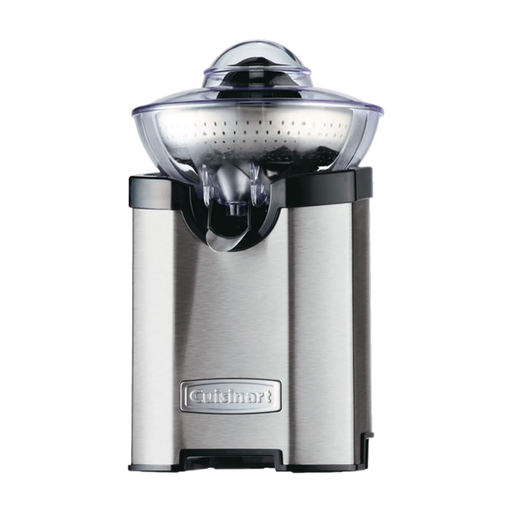
Cuisinart CCJ210E Electric Citrus Juicer 100W
Ideal if you want to make lemon or lime juice for a dressing and pour it straight into a glass.
The product name lists 100 W, an extra-wide spout, an anti-drip system and dishwasher-safe parts.
View at Joybuy
 No image available
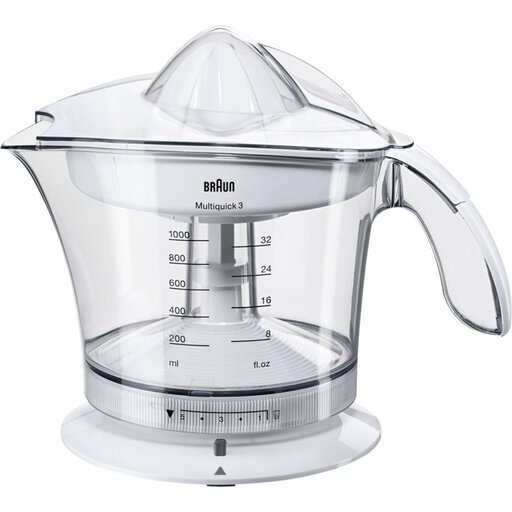
Braun MPZ9 Citrusquick 1 Juicer
Ideal if you want to collect juice for breakfast before pouring it out.
Braun describes the MPZ9 as having a 1-litre jug with a measuring scale.
View at Joybuy
 No image available
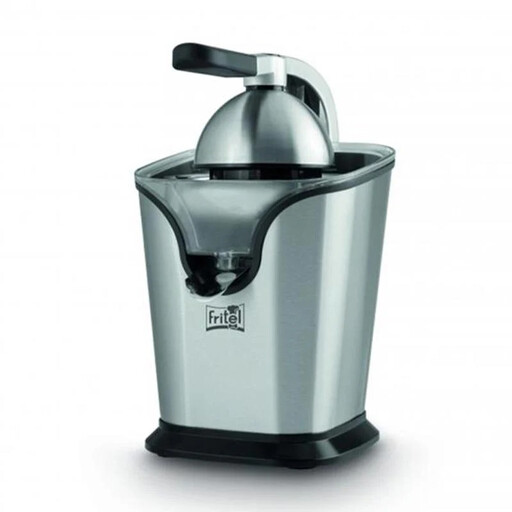
FRITEL Citrus Press CP 4177 Electric 100W
Ideal if you want to juice small citrus fruits for a dressing and pour juice straight into glasses at breakfast.
The product name lists two reamer sizes, an anti-drip system and 100 W. The motor base must not be submerged in water; follow the guidance on supervising children when using the appliance.
View at Joybuy
 No image available
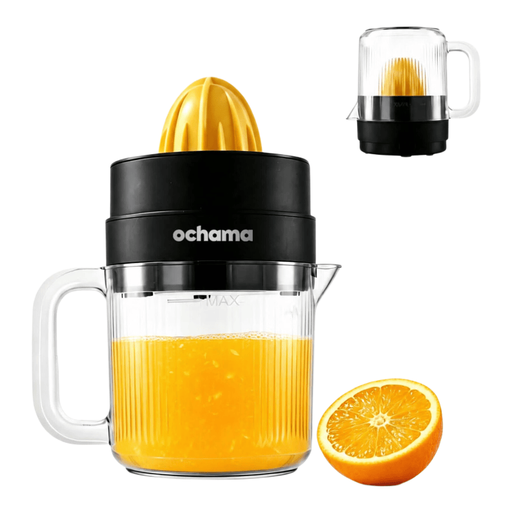
ochama Electric Citrus Juicer 1.4L 30W
Ideal if you want to juice lemons for a dressing as well as citrus fruits for several servings, collecting the juice as you go.
The product name lists a 1.4-litre capacity, 30 W and pulp separation.
View at Joybuy
Frequently asked questions
Can I use the same electric juicer for dressings and breakfast?
Yes, as long as the reamer is suitable for the citrus fruits you use and the collection or pouring method works for both quantities. The Princess 201852 version reviewed is listed as suitable for fruit from limes to grapefruit; according to Braun, the CJ5050WH has a universal reamer.
Can I put the whole citrus juicer in the dishwasher?
No. Follow the cleaning instructions for the exact model, and don’t put the motor unit in the dishwasher without checking. Philips says that the parts of the HR2738/00, apart from the motor unit, can go in the dishwasher; clean the motor unit with a damp cloth.
Who should I contact if my juicer develops a fault, and how long do statutory rights last in the Netherlands?
Contact the retailer if a product develops a fault sooner than you could reasonably expect under normal use. ACM ConsuWijzer explains that statutory consumer rights in the Netherlands don’t have a fixed two-year limit: what you could reasonably expect from the product is what matters. A manufacturer’s guarantee doesn’t replace these rights.
What rules apply to an electric citrus juicer sold in the Netherlands?
CE marking is compulsory for electrical consumer products, according to the Netherlands Food and Consumer Product Safety Authority. Materials intended to come into contact with food must comply with the relevant EU rules, including Regulation (EC) No 1935/2004, as outlined by the European Commission. These general rules don’t confirm that a specific model on sale demonstrably meets every requirement.
Where can I take my old electric citrus juicer?
When you buy a new, similar appliance, you can return your old one to the retailer free of charge as a private customer. According to the Dutch government, the take-back scheme also applies to online purchases. You can also take it to a collection point or your local council.


