
Vandaag of morgen in huis

Kwaliteit gegarandeerd

Welkomstaanbiedingen ontgrendelen: GRATIS bezorging | Tot 80% korting | Gratis 30 dagen JoyPlus-proefperiode
Download de app
An electric citrus juicer can make everyday life easier, but not every model is right for every kitchen. A compact 25-watt juicer is handy for making one or two glasses, while an electric orange juicer with a larger jug is better suited to family use. Also look out for features that product descriptions sometimes give less attention to, such as pulp settings, cleaning, dripping and how you need to prepare the fruit.
More power doesn’t automatically mean an appliance is better suited to your needs. A 20 to 40-watt citrus juicer may be enough for oranges, lemons and limes. A 100-watt model with a pressing lever may be more convenient if you’re juicing several fruits in a row. So look at the combination of power, controls and recommended operating time.
A standard citrus juicer is also different from a centrifugal juicer for citrus fruit and vegetables. A centrifugal juicer with cutting blades and a sieve is designed for a wider range of ingredients. If you’re only juicing citrus fruit, a rotating cone is usually easier to clean.
A 500 ml jug is practical for one or two glasses and takes up little space. For a family, a large-capacity citrus juicer holding 0.7 to 1 litre may be more convenient. Check that it will fit on your worktop and that the jug is easy to remove.
A large feed chute may mean less preparation, but it doesn’t always mean that whole pieces of fruit will fit inside. With models that use a pressing cone, you’ll generally need to halve the fruit. So check the instructions rather than relying on the phrase “large opening” in an advert.
A citrus juicer usually consists of a motor base, pressing cone, sieve and juice container. Only removable parts can go in the dishwasher if the product information explicitly says so. Never immerse the motor base in water.
A citrus juicer with a pulp filter can produce smoother juice, but a fine filter may clog more quickly when used with fibrous fruit. If you prefer to keep the pulp in your juice, an adjustable sieve or several pulp settings will be more useful.
For occasional use, a compact 20 to 40-watt citrus juicer is often sufficient. If you’re making several glasses in a row, a sturdier motor, non-slip feet and a pressing lever are useful features. A lever reduces the pressure you need to apply, but it often makes the appliance heavier and taller.
Also check the operating time. Some models can only run for short periods at a time. Let the motor cool down when instructed to do so in the manual.
A fixed sieve is fine if you usually drink clear juice. An adjustable-pulp citrus juicer gives you more control if members of your household have different preferences. For example, the Bear CZJ-A04B1 lists five pulp settings and a pulp-and-juice separation system. This is a product specification; the final texture also depends on the fruit and the setting you choose.
A citrus juicer with a drip-stop system helps keep your worktop clean when you remove the glass. Check that the spout really does close and that juice can flow straight into a glass.
A stainless steel body can feel sturdy, while plastic models are often lighter. More important than the material alone are stable non-slip feet, well-fitting parts and a way to store the cord. If it matters to you when choosing a product, also check whether parts that come into contact with juice are listed as BPA-free.
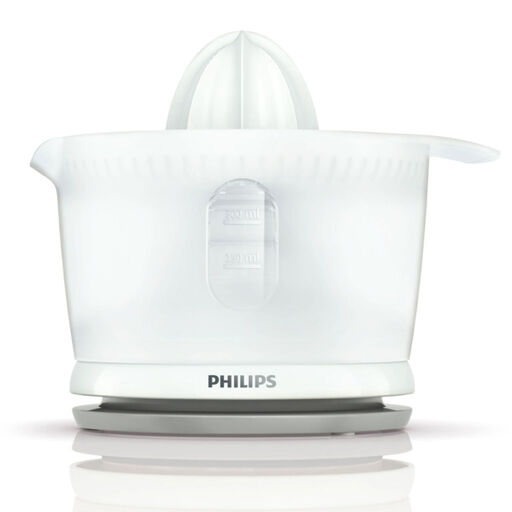
Why it suits this type of user: The 500 ml jug and compact dimensions make it a good fit for smaller households and everyday use, without taking up much storage space.
The product specifications list 25 watts, automatic start when pressed and a maximum continuous operating time of 10 minutes. This makes it clear what the juicer is designed for.
500 ml container, non-slip feet, cord storage and removable dishwasher-safe parts, according to the product information.
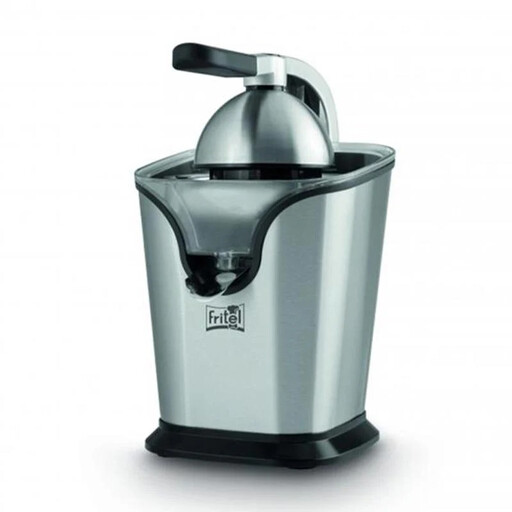
Why it suits this type of user: The metal finish, pressing lever and two cone sizes are designed for people who regularly juice different types of citrus fruit.
The 100-watt motor, pressing lever, drip-stop system and built-in pulp sieve address the main practical considerations.
Two pressing cones for small and large fruit, 100 watts of power and removable dishwasher-safe parts, according to the listed specifications.
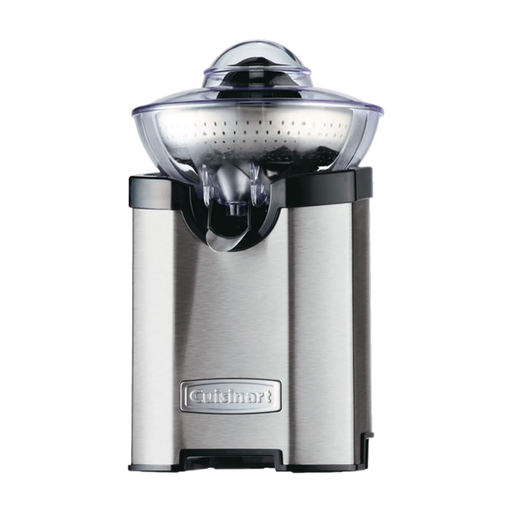
Why it suits this type of user: The 1-litre capacity, extra-wide spout and stainless steel body make it a good choice for regular use and serving juice straight away.
The stated 100 watts, drip-stop system and removable dishwasher-safe parts mean less manual work and less mess when juicing several batches.
1-litre juice and pulp container, stainless steel body and a stated 3-year manufacturer’s warranty.
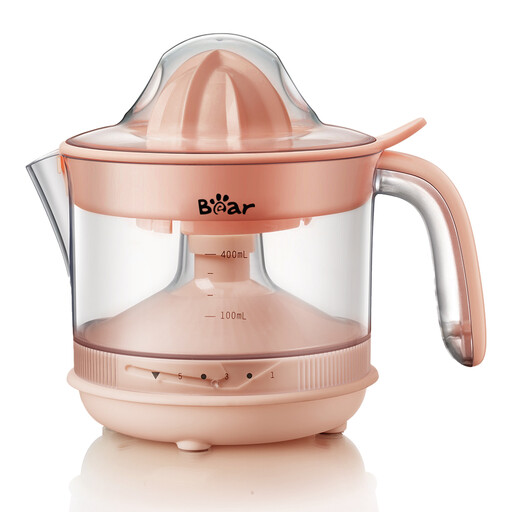
Why it suits this type of user: Five pulp settings let you adjust the texture of the juice to suit different tastes within one household.
The pulp settings and pulp-and-juice separation give you more choice than a fixed filter with no adjustment options.
110 mm-wide feed chute, one-button operation, five pulp settings and removable parts, according to the product description.
We’ve put together a complete, up-to-date list of products that meet these strict selection criteria and the applicable European safety regulations.
For the occasional glass of orange juice, around 20 to 40 watts is often suitable. If you’re juicing several fruits in a row, consider a model with 60 to 100 watts or a pressing lever. Always check the maximum operating time in the manual.
Its lifespan depends on how you use, clean and store it. Rinse off juice residue after use, clean the filters straight away and keep the motor base dry. Don’t run the appliance for longer than the recommended time. The statutory guarantee and any manufacturer’s warranty vary by product, so check the details on the product page.
Electricity use is generally low because you only use the appliance for a short time. A 40-watt model running for five minutes uses approximately 0.0033 kWh theoretically. The actual cost depends on your energy tariff and how often you use it. The purchase price, dishwasher-safe parts and any replacement parts needed often have a greater impact on the total cost of ownership.
