
Vandaag of morgen in huis

Kwaliteit gegarandeerd

Welkomstaanbiedingen ontgrendelen: GRATIS bezorging | Tot 80% korting | Gratis 30 dagen JoyPlus-proefperiode
Download de app
An electric citrus juicer can quickly make a glass of orange, lemon, lime or grapefruit juice. However, models vary considerably in how they work, their capacity and how easy they are to clean. A low price tells you little about how convenient an appliance will be for everyday use. And a high wattage doesn’t automatically mean more juice or less pulp.
So the key question isn’t just how much a citrus juicer costs, but whether it suits the way you’ll use it. Do you make one glass every morning, or do you want to juice several servings at once for the whole family? The points below will help you avoid buying a citrus juicer that ends up unused in the kitchen cupboard after a few goes.
An electric orange juicer rated at 100 watts sounds more powerful than a 25 or 40-watt model. In practice, the cone, drive mechanism, pressure and how you use the juicer also affect how much juice you get from each fruit. For a few glasses a day, a compact, lower-powered model may be enough.
A model with a lever can be more comfortable if you want to use less force. A simple citrus juicer that starts as soon as you press the fruit onto the cone is often more convenient for occasional use.
A citrus juicer with a pulp filter catches some of the flesh and pips, but every filter produces a different texture. If you expect completely smooth juice, you may be disappointed if the filter lets some pulp through.
Look for adjustable pulp control. A citrus juicer with several settings gives you more choice than a model with just a fixed filter. Also check whether the filter can be removed, as dried-on pulp is harder to clean off.
A spout without an anti-drip system can continue to drip onto the worktop after you’ve filled your glass. It may seem like a small detail, but it can quickly become annoying with daily use. Also check whether the removable parts are dishwasher-safe.
The motor base of an electrical appliance must not be submerged in water. So the whole appliance isn’t dishwasher-safe, even if the jug, cone and filter can go in the dishwasher.
A small cone is usually handy for lemons and limes. A larger cone is better for oranges and grapefruits. A citrus juicer with two cones is therefore more versatile if you use different types of fruit.
Also check how the cone is fitted and removed. A simple design saves time when switching cones and cleaning the juicer.
A reservoir of around 500 to 700 ml is often enough for one or two glasses. Families may want to look for a capacity of 1 litre or more. A large jug means you won’t have to empty it halfway through, but it also takes up more space on the worktop.
A measurement scale is useful if you want to measure out juice for breakfast, recipes or a jug of drinks. Bear in mind that the stated capacity doesn’t always match the amount you can pour without spilling.
A citrus juicer for oranges and lemons should stay firmly in place when you apply pressure. Non-slip feet help with this. A spout with a closable drip stop keeps the juice in the reservoir temporarily and helps prevent spills when you move your glass.
If you prefer smooth juice, choose an adjustable filter. If you like some pulp, multiple pulp settings are more useful than extra motor power.
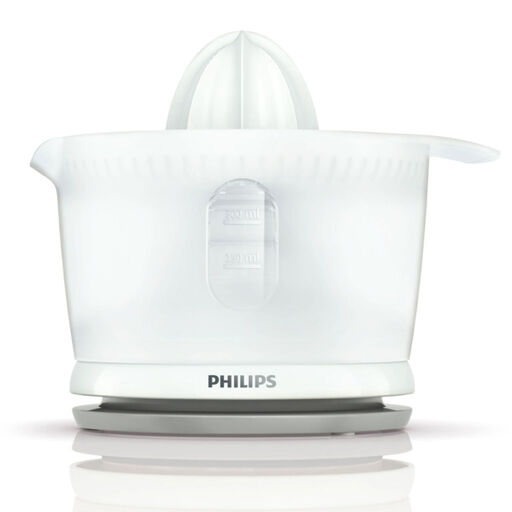
Why it suits this profile: This compact model has a 25 W motor, a 500 ml reservoir and starts automatically when you press fruit onto the cone. It’s a good fit if you occasionally make fresh juice for one or a few people.
The specifications make it clear that this is a compact model for everyday home use, not a large citrus juicer for making juice in bulk.
500 ml capacity, cord storage, non-slip feet and dishwasher-safe removable parts, according to the product information.
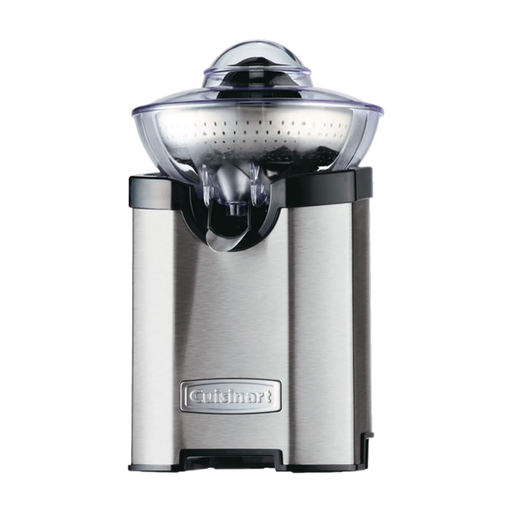
Why it suits this profile: This 100W citrus juicer has a stainless steel casing, a 1-litre reservoir and a wide spout. It’s a good choice if you make juice every day and value fuss-free operation.
The anti-drip system and dishwasher-safe removable parts tackle two common frustrations with daily use.
1-litre capacity, 100 W power, stainless steel casing and a stated 3-year manufacturer’s warranty.
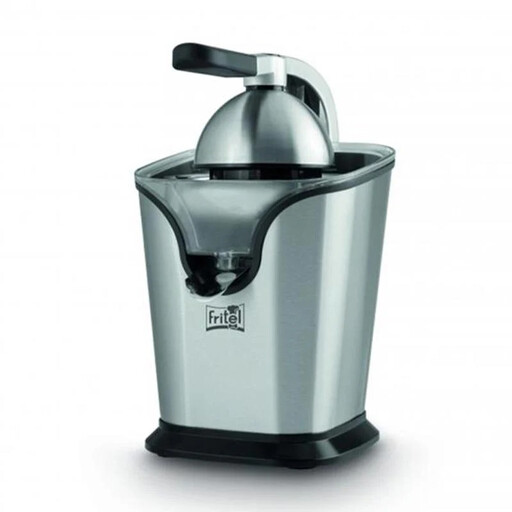
Why it suits this profile: The lever, 100W motor, two cones and capacity for different-sized citrus fruits make this model suitable for regular use at home.
The different cones mean you don’t have to use the same size for every fruit. The drip stop helps prevent spills when pouring.
100 W power, lever, pulp filter, anti-drip system and dishwasher-safe removable parts, according to the product description.

Why it suits this profile: One-button operation, a wide 110 mm opening and five pulp settings are handy when family members have different preferences.
The five pulp settings mean everyone can choose the texture they prefer. Removable parts also make cleaning easier to manage.
110 mm feed opening, five pulp settings, pulp and juice separation, non-slip feet and a 24-month warranty, according to the product information.
We’ve put together a complete, up-to-date list of products that meet these strict selection criteria and the applicable European safety regulations.
A standard citrus juicer is designed for citrus fruits. If you also want to process hard vegetables, apples or fibrous ingredients, you’ll be better off with a separate slow juicer or centrifugal juicer. An electric lemon or orange juicer isn’t automatically suitable for all types of fruit.
Electricity use per glass is usually low, especially for models rated at 20 to 40 watts. A higher-powered appliance may use more electricity, but the overall cost depends mainly on how often you use it and the price of the citrus fruits. So it’s worth considering capacity and cleaning time too.
Choose a model with an adjustable pulp filter or several pulp settings. If you want a smoother result, you can strain the juice again. Also check whether the product description says the filter catches pips and fruit flesh; performance can vary between models.
Its lifespan depends on the materials, how often you use it, how you clean it and whether you follow the manual. Don’t run the appliance for longer than the recommended continuous operating time, and don’t force the cone. A sturdy base, well-fitting parts and easy cleaning all help reduce wear and tear.
