
Vandaag of morgen in huis

Kwaliteit gegarandeerd

Welkomstaanbiedingen ontgrendelen: GRATIS bezorging | Tot 80% korting | Gratis 30 dagen JoyPlus-proefperiode
Download de app
An electric chopper can take much of the preparation work off your hands. Vegetables, herbs, nuts and cooked ingredients can be processed faster, while some models can also mince meat or grind coffee beans. However, not every compact kitchen grinder is suitable for every task. A mini chopper for onions, for example, works differently from an electric meat grinder for mince.
If you focus only on wattage or the number of accessories, you may end up with a device that proves awkward after just a few uses. Below, you’ll discover which specifications really matter, which marketing claims deserve a critical look and which models suit different usage scenarios.
Higher power does not automatically mean that a chopper will process every ingredient more effectively. The result also depends on the blade design, bowl capacity, pulse control and maximum operating time. A 170- or 200-watt coffee grinder is designed for small quantities of coffee beans. An electric meat grinder, by contrast, uses a different drive system, feed opening and grinding plate.
Always check what the appliance is intended for according to the product description. Do not simply use a coffee grinder as a spice grinder if the manufacturer does not specify that this is suitable.
A 1-litre bowl may seem larger than necessary, but the usable quantity can be lower. Liquid mixtures often have different limits from solid ingredients. If you overfill a chopper, the pieces at the top may be processed less evenly and the motor may be placed under greater strain.
Pay attention to three details:
Some appliances have removable parts that must be washed by hand. The motor base must never be immersed in water or placed in the dishwasher. Look specifically for the term dishwasher-safe chopper and check exactly which parts this applies to.
Sharp blades also require careful handling, even when the bowl and lid are dishwasher-safe.
For onions, herbs, soft vegetables and cooked ingredients, a compact model with a single button is often sufficient. If you regularly process raw carrots, nuts or meat, a model with two speeds or a pulse function will be more useful. Short pulses give you greater control over the texture.
Also check the operating time stated in the manual. The Cecotec TitanMill 200, for example, specifies a maximum of one minute of continuous use, followed by a cooling period between cycles. According to its product description, the IAGREEA chopper is intended for pulse operation of up to 30 seconds per cycle. This kind of information is more relevant than the wattage figure alone.
A chopper with stainless-steel blades is practical for everyday use and easy to rinse clean. Check whether the blades are removable and whether the appliance includes one universal blade unit or several specialised blades.
A glass bowl is less likely to absorb odours or discolour than some plastic bowls, but it is heavier and may break if dropped. Plastic is often lighter and easier to store. Choose based on your worktop, available storage space and cleaning routine.
A multifunctional chopper can be appealing if you prepare a variety of dishes, but accessories take up space and also need to be cleaned. Think about your main use case in advance:
An appliance that promises to do everything is not necessarily suitable for every task. A specialised meat grinder or coffee grinder may make more sense if you use one function frequently.
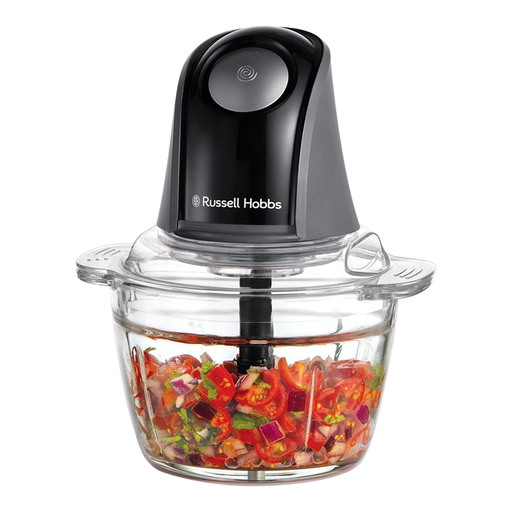
Why it’s a good fit: For everyday small portions of vegetables, herbs, nuts or meat, this model offers simple one-button operation and a 500 ml capacity.
The stated capacity and 200 watts are clearly specified. According to the product information, the removable parts are dishwasher-safe.
Stainless-steel blades, a non-slip base and cord storage; ideal for simple portions.
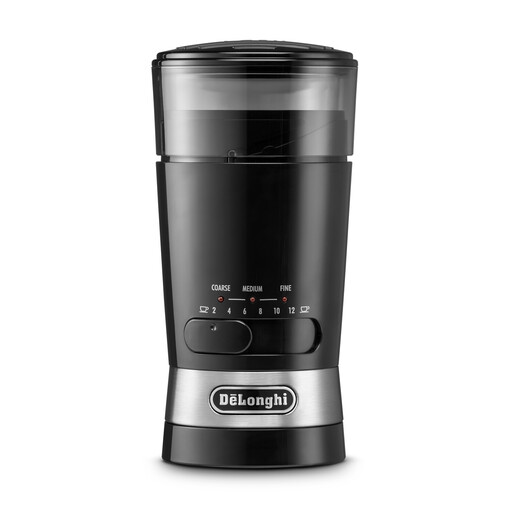
Why it’s a good fit: This model is designed for coffee beans, with a 90-gram hopper, three grind settings and a selector for up to 12 cups.
The product information limits its use to coffee beans. You therefore do not have to guess whether the appliance is suitable for other hard ingredients.
170 watts, a compact design and three settings for different coffee preparations.
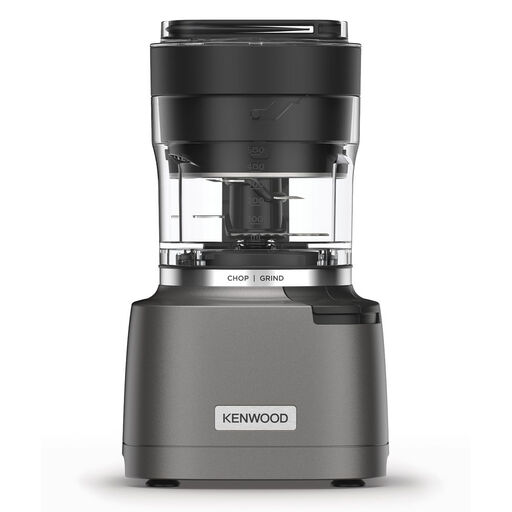
Why it’s a good fit: The combination of chopping and grinding takes up little space and suits households that process vegetables as well as coffee, herbs or other hard ingredients.
The two bowls keep chopping and grinding tasks separate. According to the product description, the bowls, lids and spatula are dishwasher-safe.
800 watts, two speeds and a 500 ml bowl capacity in a stackable design.
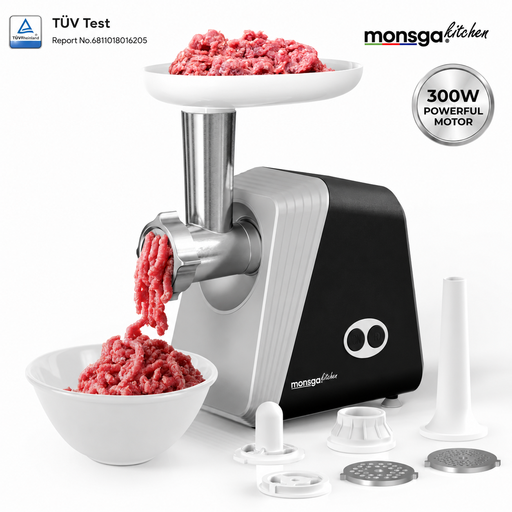
Why it’s a good fit: For home meat grinding with different textures and accessories for sausages and kibbeh.
The three grinding plates allow fine, medium and coarse grinding. The reverse function and overheating protection are listed among the product specifications.
300 watts of rated power, up to 1,200 watts according to the product listing, plus accessories for sausages and kibbeh.
Browse a current selection of electric kitchen grinders with different capacities, functions and applications.
No. Use a model whose product description explicitly states that it is suitable for meat or grinding. An electric meat grinder typically has a feed mechanism and grinding plates designed for raw meat. A standard vegetable chopper is not automatically suitable for large quantities or tough cuts of meat.
Its lifespan depends on how often it is used, the ingredients processed, cleaning and compliance with the maximum operating time. Allow the motor to cool whenever the manual instructs you to do so, process ingredients in small batches and regularly check the blades and attachments. In the European Union, consumers are entitled to at least the statutory guarantee under the applicable rules; some brands offer additional warranty terms.
Power consumption is usually limited because a chopper only runs for a short time. A 500-watt appliance used for five minutes consumes approximately 0.042 kWh. The actual cost depends on your energy tariff. Cleaning, replacing parts and using the appliance correctly often have a greater impact on total running costs than a small difference in wattage.
