
Vandaag of morgen in huis

Kwaliteit gegarandeerd

Welkomstaanbiedingen ontgrendelen: GRATIS bezorging | Tot 80% korting | Gratis 30 dagen JoyPlus-proefperiode
Download de app
An electric chopper can save you time when chopping vegetables, herbs and nuts, or making dips and sauces. However, not every compact appliance is suitable for everyday use. A small bowl can quickly become overfilled, a motor can overheat, and impressive marketing claims mean little if key specifications are missing.
For UK households, three pitfalls are particularly worth watching out for:
The wattage indicates how much electrical power an appliance draws, but it does not tell you on its own how well it chops. An 450- or 500-watt electric food chopper may be suitable for vegetables, herbs, nuts or cooked ingredients. For harder foods, clear instructions from the manufacturer are more important.
Check the maximum operating time. According to the product information, the Kenwood CHP61 should not be used for more than 30 seconds at a time and should then be left to cool for two minutes. The Philips HR1501/00 also has a stated maximum continuous operating time of 30 seconds. These models are therefore best suited to short pulses rather than prolonged, continuous processing.
Choose a bowl to suit how you plan to use it:
The bowl’s maximum capacity is not the same as the recommended fill level. Cut larger ingredients into smaller pieces first and do not fill the bowl above the marked line. If you regularly cook for several people, a food chopper with a generous bowl is more useful than a very compact mini chopper.
Check the blade material and number of blades. A chopper with stainless steel blades is practical for ingredients such as herbs, vegetables and nuts. Four blades can reach ingredients from several directions, but the result still depends on the quantity, size of the pieces and processing time.
Several speed settings give you more control over the texture. A low setting can help you chop ingredients more coarsely, while a higher setting may be better for finer results. A pulse function is useful if you prefer to control the processing time yourself.
Also look for:
A chopper with a glass bowl is a good option if you want a bowl that, according to the product description, is resistant to staining and can be used to serve food straight to the table. Glass is heavier than plastic, though, so check the appliance’s weight too.
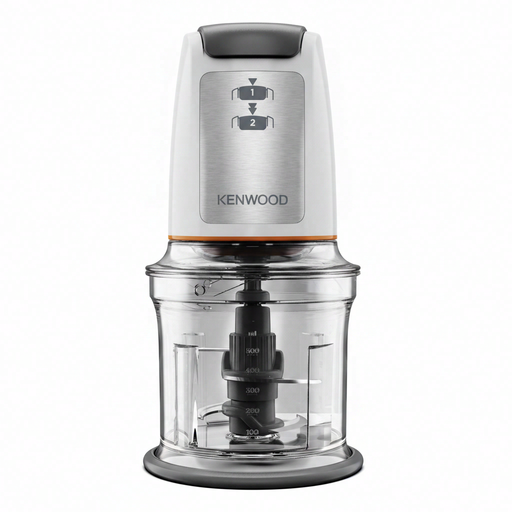
Why it suits this profile: This compact model has a 500 ml capacity, 500 watts of power and two speed settings. It is well suited to small preparations in a flat or first kitchen.
The specifications list four stainless steel blades, an interlock safety feature and overheat protection. Bear in mind that the stated maximum operating time is 30 seconds per use.
500 watts, two speed settings, 500 ml capacity, compact design and a stated two-year warranty period.
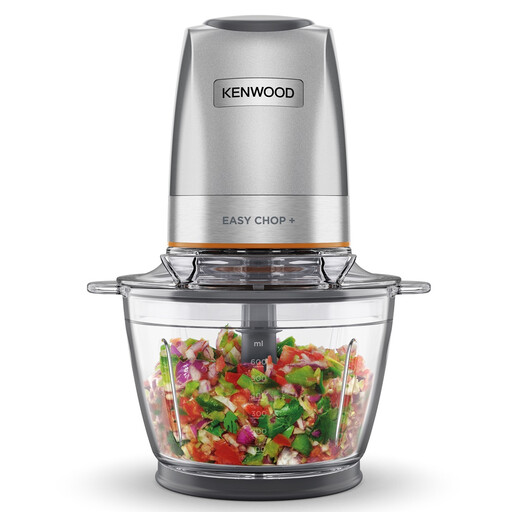
Why it suits this profile: The 600 ml glass bowl, two speed settings and four-layer blades are ideal for home cooks who regularly process herbs, vegetables, dips or ice.
The bowl has a non-slip ring, and the product information describes a design for preparing and serving food in the same bowl. This can mean less transferring between dishes.
500 watts, 600 ml glass bowl, two speed settings, non-slip ring and a stated statutory warranty of at least two years.
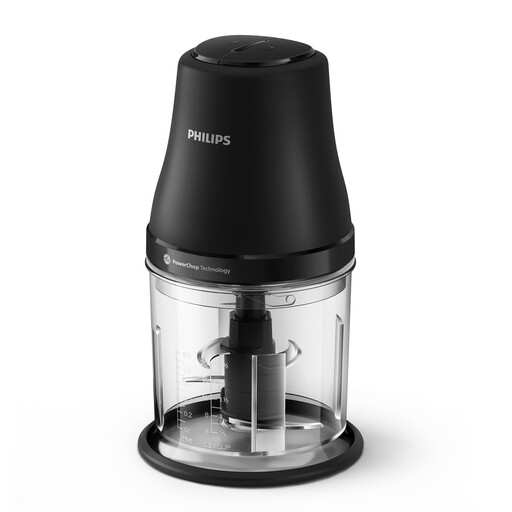
Why it suits this profile: The 1-litre bowl provides more room for families and keen cooks making larger portions of sauce, pesto, guacamole or chopped vegetables.
The product information lists a maximum fill line, two speeds plus pulse, non-slip feet, and a dishwasher-safe bowl, blades and lid. The manufacturer also states a maximum operating time of 30 seconds per use.
1-litre capacity, 450 watts, two speeds with pulse function, stainless steel blades and a stated two-year warranty.
We’ve put together a complete, up-to-date list of products that meet these strict selection criteria and the applicable European safety regulations.
An electric chopper is handy if you often process ingredients or prepare several portions. It takes less effort, and you can usually operate it with just one button. A manual option, such as the Alpina Manual Chopper Speedy, has no motor, making it lightweight and easy to store. This type of model may suit occasional chopping of herbs, nuts and vegetables, but you will need to operate it by hand.
A vegetable chopper or manual slicer is a different category. It is mainly designed for slicing or grating, and may not be suitable for mixing, puréeing or making dips. So before you order, check whether you want to chop, slice, grate or purée.
That depends on the product information and the manufacturer’s instructions. Some models are described as suitable for meat, but always cut the meat into small pieces, remove any hard parts and do not process more than the recommended quantity. Also check whether the appliance is suitable for raw ingredients, and clean the bowl and blades thoroughly straight away.
Its lifespan depends on how often you use it, the maximum fill level, cooling time and cleaning. Not running the motor for longer than instructed helps reduce the risk of overloading it. Store sharp blades safely and check the bowl, locking mechanism and cable regularly for damage. The statutory warranty period is separate from the appliance’s lifespan.
A short preparation usually uses little energy because the appliance only runs for a brief time. The wattage, such as 450 or 500 watts, indicates the appliance’s power consumption while in use; it is not a fixed cost per preparation. The actual cost depends on how long it runs and your electricity tariff.
