
Vandaag of morgen in huis

Kwaliteit gegarandeerd

Welkomstaanbiedingen ontgrendelen: GRATIS bezorging | Tot 80% korting | Gratis 30 dagen JoyPlus-proefperiode
Download de app
An electric chopper can save a lot of chopping time. Onions, herbs, vegetables, nuts, sauces and sometimes meat can be processed faster than with a chef’s knife. Yet many models look similar, while the differences in capacity, operation, materials and usage time can be significant.
If you only look at the wattage or a long list of features, you risk falling into some common traps. Below, you’ll find out what to look for in 2026 before buying a mini chopper, food chopper or multi-function chopper.
A 600-watt motor sounds more powerful than a 300 or 400-watt model. However, the blade shape, bowl capacity, maximum usage time and how you add ingredients also determine the result. A motor can also overheat if you process too many hard ingredients at once.
Always check:
For example, the Rommelsbacher MZ 600 lists a motor power of 600 watts, but also a short usage time of a maximum of 0.5 minutes per cycle. That’s relevant information that’s less obvious in a marketing headline.
A 1.2-litre bowl doesn’t automatically mean you can process 1.2 litres of ingredients. With many models, the practical fill quantity is lower to prevent splashing, uneven chopping and overloading.
For one or two people, a mini chopper of 500 to 900 ml may be sufficient. Families and meal preppers usually need a kitchen chopper of 1 to 2 litres. Also pay attention to the shape of the bowl: a wide bowl can be more convenient for vegetables, while a compact model takes up less cupboard space.
A multi-function chopper may claim to chop, mix, purée or grind according to the product description. That doesn’t mean every model is suitable for every preparation. A small food chopper with a single blade, for example, is practical for herbs and onions, but less suitable for large quantities of meat.
So look at the concrete specifications:
For soft ingredients such as fruit, cooked vegetables and herbs, a lower power may suffice. For hard vegetables, nuts or meat, a suitable blade design and short pulses are more important than just the wattage.
A vegetable chopper of 200 to 300 watts is often compact and simple. Models of 400 to 600 watts generally offer more scope for heavier tasks, but always check the manual for the permitted usage time. A meat grinder is a separate category: it is specifically designed to feed meat through a plate and is not the same as a regular chopper for vegetables and meat.
A chopper with stainless steel blades is practical for regular use. Stainless steel is hard-wearing and easy to clean, but the blades remain sharp and must be handled with care.
A chopper with a glass bowl has the advantage that glass doesn’t absorb odours or colours in the same way as some plastics. Glass is heavier, though, and can break if given a hard knock or sudden temperature change. So check whether the bowl is suitable for the preparation you have in mind. Don’t pour boiling liquid into a bowl if the product information doesn’t allow it.
A pulse function gives you more control over the texture of salsa, nuts, onions and herbs. Two or more speeds can be useful when you process both soft and firmer ingredients. For daily use, cleaning is at least as important as the number of functions.
Look for removable blades, dishwasher-safe parts and a non-slip ring or base. The motor base, plug and cable must not be submerged in water. Unplug the appliance before removing the blade or cleaning it.
The choices below are based on the stated product specifications. Check the current product page, capacity and usage instructions before purchasing.
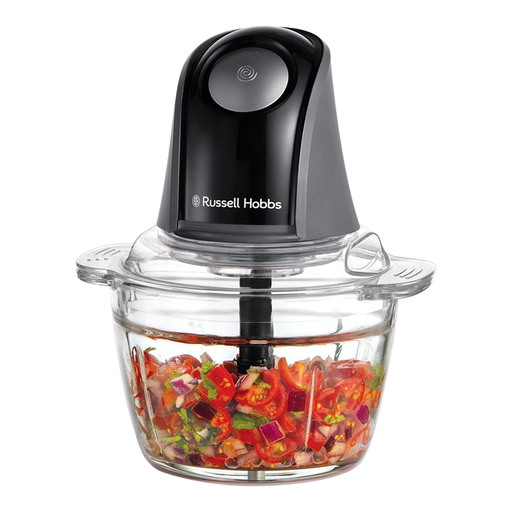
Why this fits: A simple choice for small portions of vegetables, herbs, nuts or meat in a household with limited kitchen space.
The product specification states a fill capacity of 500 ml, so you don’t just look at the larger bowl capacity.
200 watts, stainless steel blades, non-slip base, measurement markings and dishwasher-safe parts.
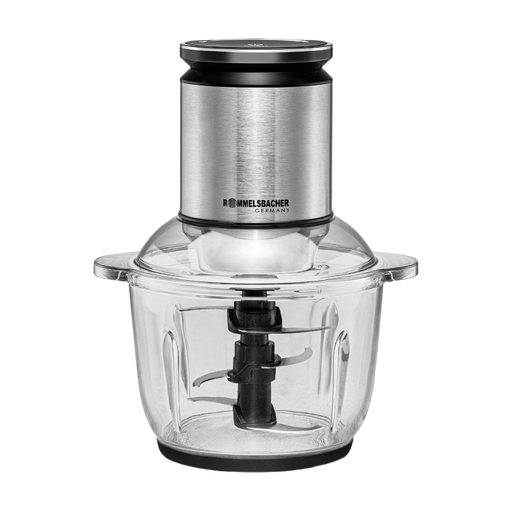
Why this fits: Suitable for families and home cooks who want a larger bowl for dips, pesto, raw vegetables and multiple portions.
The specifications list 22 speed settings and a maximum usage time of 0.5 minutes per cycle.
600 watts, 2-litre glass bowl, six stainless steel blades, overheating protection and dishwasher-safe removable parts.

Why this fits: The two bowls are handy when you want to prepare small quantities and larger portions separately.
The product information specifies two bowls of 0.6 and 2 litres and two blade sets, rather than a single general capacity claim.
300 watts, two speeds, glass bowls and a concealed safety lock.
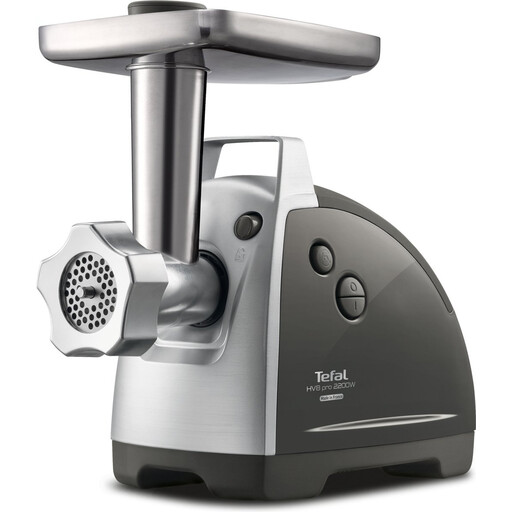
Why this fits: A targeted choice for anyone who regularly makes mince, sausages, meat preparations and additional cutting tasks.
This is a specific meat grinder with three plates for fine, medium and coarse processing; its application is therefore clearer than with a general chopper.
2200 watts starting power, three stainless steel plates and accessories for sausages and additional preparations.
Browse a current selection of electric choppers with different capacities, power levels, materials and features.
That depends on the model. Some kitchen choppers list meat as a suitable application, while others are mainly intended for vegetables, herbs and soft ingredients. For regular processing of raw meat, a meat grinder with plates and a feed tube is usually more appropriate. Cut meat into smaller pieces beforehand and follow the maximum usage time in the manual.
Use short pulses, don’t overfill the bowl and cut large pieces smaller beforehand. Start on a low speed if one is available. Stop in between to check the texture. Onions, herbs and soft vegetables in particular change quickly from roughly chopped to purée.
The electricity consumption depends on the power and the short usage time. A 500-watt model running for one minute theoretically uses about 0.008 kWh. In practice, several short cycles are needed, and standby consumption and pauses can add up. So don’t just look at wattage, but also at the number of portions and how often you use it.
