
Vandaag of morgen in huis

Kwaliteit gegarandeerd

Welkomstaanbiedingen ontgrendelen: GRATIS bezorging | Tot 80% korting | Gratis 30 dagen JoyPlus-proefperiode
Download de app
An electric chopper seems like a simple purchase—until the appliance gives out after just three months. Many models promise the world but leave you with a noisy motor, a plastic bowl that permanently smells of onions, or blades that can't even handle a soft tomato. Before you invest in a new kitchen assistant, it's wise to understand the most common pitfalls.
Many buyers fall for these traps:
meat grinder requires a different mechanism than a coffee grinder.To find a model that truly suits your needs, it's helpful to look beyond the marketing claims. Pay attention to the following objective features.
A high wattage isn't everything. The quality of the motor and the drive design determine the actual power. For chopping vegetables or making a sauce, a motor of 300-500 watts is often sufficient. If you plan to regularly process harder ingredients like nuts or grind meat for your own meat grinder creations, a model with a robust motor and higher power (from 500 watts) is a better choice. A reverse function can be useful in a meat grinder to release any stuck pieces.
The bowl material directly impacts usability and hygiene.
spice grinder or coffee grinder.The blades should always be made of stainless steel for durability and sharpness.
The required capacity depends on your household size. For one or two people, a 0.5 to 1-litre bowl is usually sufficient. For families or if you enjoy cooking in larger batches, a capacity of 2 litres or more is more practical.
Multiple speed settings give you control. A low speed is ideal for a coarse texture, such as for an onion chopper or vegetable slicer. A high speed is used for finely grinding ingredients into a smooth paste or purée.
To help you with your choice, we have highlighted several models that suit specific needs, based on their specifications.
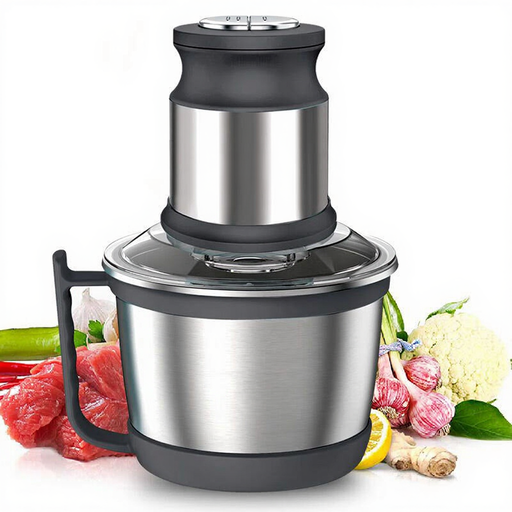
Why This Fits Their Persona: Perfect for families or cooks who like to plan ahead. The spacious 3-litre bowl and 800W motor make it possible to chop large quantities of vegetables, prepare sauces, or even make ground meat in one go.
This model combines a large capacity with a powerful motor, making it a true all-rounder and avoiding the 'false versatility' trap for general kitchen tasks. It's not a specialised meat grinder, but it can handle the job perfectly well for home use.
Large 3-litre capacity and an 800W motor, suitable for various daily preparations.
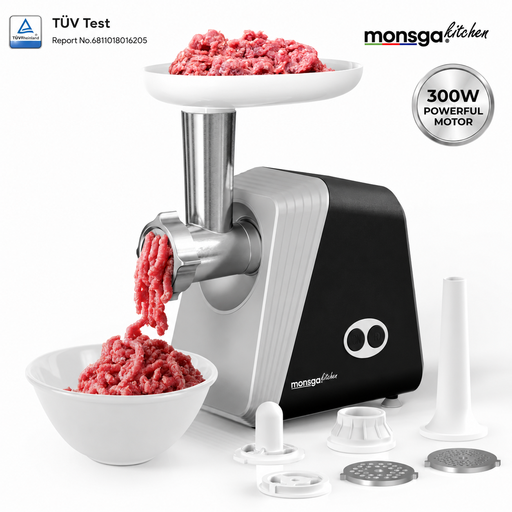
Why This Fits Their Persona: Specifically designed for grinding meat. With three different grinding plates (fine, medium, coarse), you have complete control over the texture of your ground meat for burgers or chilli. The included attachments for sausage and kibbeh make it a complete kit for the enthusiast.
This is not a 'jack-of-all-trades', but a specialist. It focuses on one task—grinding meat—and does it well. It avoids the pitfall of having a motor too weak for heavy-duty tasks by using a high-torque motor designed for meat.
Includes 3 grinding plates and accessories for making sausage and kibbeh, allowing for great control and creativity.
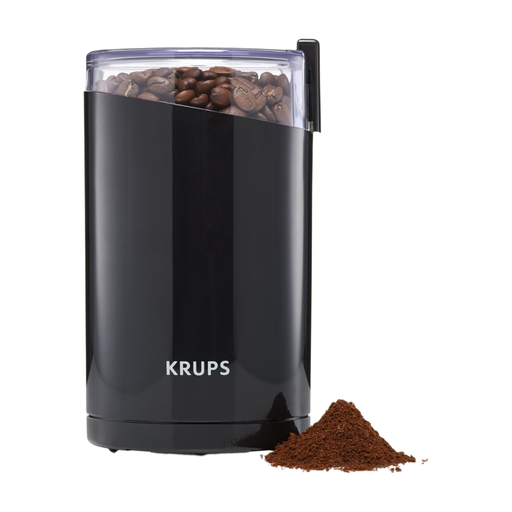
Why This Fits Their Persona: Compact and efficient for grinding coffee beans, spices, and nuts. The one-touch system is simple to use, and its small footprint takes up little counter space. Ideal for those who want to start their day with freshly ground coffee or enhance dishes with homemade spice blends.
This appliance does exactly what it promises: it grinds. It doesn't try to be a vegetable slicer. By focusing on dry ingredients with a sharp blade system, it delivers a consistent result without overloading the motor.
Compact design and specifically optimised for grinding dry ingredients like coffee and spices.
We have curated a complete, up-to-date list of products that meet these selection criteria and current safety regulations.
This depends on the model. In most cases, the detachable parts like the bowl, lid, and blades are dishwasher-safe. The motor unit, which houses the electronics, must never come into contact with water and should be cleaned with a damp cloth. Always consult the manufacturer's manual for specific cleaning instructions.
An electric chopper is typically more compact and primarily designed for chopping, grinding, and puréeing. A food processor is a larger, more versatile appliance, often supplied with multiple attachments for tasks like slicing, shredding, kneading dough, and sometimes even juicing. For quick, daily chopping and grinding tasks, a chopper is often more practical.
Don't be guided by wattage alone. For most daily tasks, like chopping an onion or making pesto, a model with 300 to 500 watts is more than sufficient. If you plan to regularly make things with hard ingredients, like nut butters, or grind meat, look for a model with at least 500 watts combined with robust build quality.
