
Vandaag of morgen in huis

Kwaliteit gegarandeerd

Welkomstaanbiedingen ontgrendelen: GRATIS bezorging | Tot 80% korting | Gratis 30 dagen JoyPlus-proefperiode
Download de app
An electric car charger may seem simple at first glance: connect the plug and charge. In practice, the charging capacity, connection and safety features determine whether an EV charger is suitable for your car and electrical installation. This applies to households in both the Netherlands and Belgium.
Many buyers focus mainly on a high number of kilowatts. This can lead to three common purchasing mistakes:
The right choice therefore starts not with the brand, but with the car’s technical specifications, the electrical connection and the intended usage scenario.
A 7 kW EV charger generally uses one phase and requires a suitable dedicated circuit at 32 amps. An 11 kW EV charger and 22 kW charging station usually work with a three-phase connection. The car’s inverter or built-in charger also determines how much power can actually be used.
A 22 kW charging station will therefore not automatically charge faster than an 11 kW model if the car accepts a maximum of 11 kW. Check the following:
Ideally, have a fixed wallbox for an electric car assessed and connected by a qualified installer.
Type 2 in accordance with IEC 62196-2 is common on many European electric cars and plug-in hybrids. Pay attention to the difference between:
A Schuko connection is practical for occasional charging, but the maximum power is lower than with a fixed three-phase connection. Also check the cable length. A 5-metre cable is often suitable for a driveway, but may not always be long enough when the charging port is at the rear of the car.
Look for features such as overcurrent, overheating, earth-leakage and overvoltage protection. Some models specify a combination of Type B AC 30 mA + DC 6 mA leakage protection. Always check that this protection is compatible with the existing installation; product safety features do not replace a correctly installed electrical system.
An IP rating provides information about protection against dust and water. IP65 or IP66 does not mean that every component can be used outdoors without restriction. The installation location, cable connections and instructions remain decisive.
The recommendations below are based on verifiable specifications from the product descriptions. Where a statement is a brand claim, this is clearly indicated.
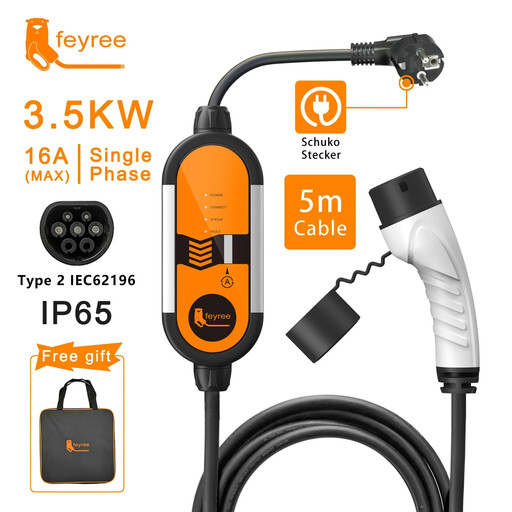
Why it suits this profile: This portable EV charger is intended for anyone who mainly wants to charge at home or at a family member’s house using a standard 230V socket. The current can be adjusted from 8A to 16A.
The product information clearly states the maximum capacity of approximately 3.5 kW and the Schuko plug. This makes the difference compared with a 7 kW or 11 kW charger clear before you buy.
5-metre cable, OLED status display, adjustable charging current and Type 2 compatibility according to the product description.
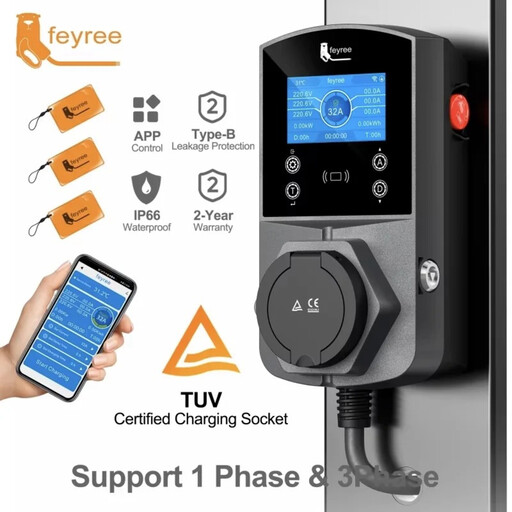
Why it suits this profile: For anyone looking for a fixed charging solution with adjustable power and app control. According to the product description, this model supports 1.4 to 22 kW and both single-phase and three-phase installations.
The adjustable power setting makes it clear that 22 kW is the maximum. The actual charging speed still depends on the installation and the car’s built-in charger.
Wifi and Bluetooth control, charging schedules, adjustable current and an IP66-rated enclosure according to the product information.
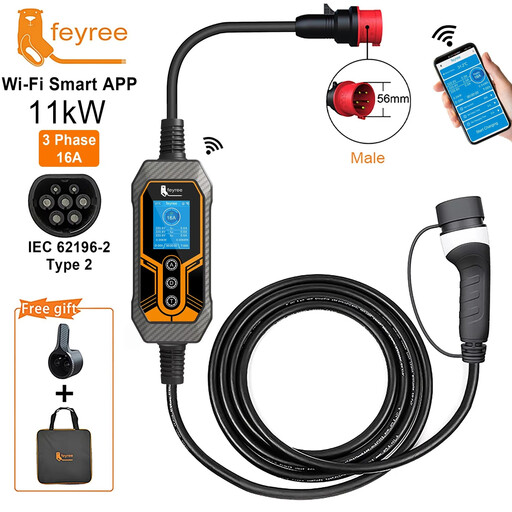
Why it suits this profile: A practical choice for users with access to a suitable CEE connection who want to charge flexibly at home, at work or on the move.
The product description explicitly states that a CEE socket is required. This prevents confusion with charging from a standard domestic socket.
Up to 11 kW, adjustable charging current from 8A to 16A, LCD screen and control via wifi, Bluetooth or the buttons on the charging box.

Why it suits this profile: This fixed 7 kW solution is designed for a garage or parking space with a single-phase installation and a cable reach of 5 metres.
The product information lists single-phase, 32A and 7 kW separately. This allows you to compare these specifications with your consumer unit before professional installation takes place.
Type 2 according to IEC 62196-2, 5-metre cable, automatic shut-off according to the product description and IP65 protection.
Before ordering an electric car charger, check the following:
According to the product descriptions of the portable models, safety features such as earth-leakage, overheating and overcurrent protection are built in. Always check this information on the current product page and use the charger in accordance with the manual.
We have put together a complete, up-to-date list of products that fully meet these strict selection criteria and the applicable European safety regulations.
Yes, with a suitable portable EV charger with a Schuko plug. The charging capacity is usually lower than with a fixed wallbox. Do not use an extension lead unless this is permitted in the manual, and have the electrical installation checked if you charge regularly.
You can calculate the energy cost easily using: kilowatt-hours charged × your electricity tariff. An 11 kW charger does not directly determine the cost; the amount of energy stored by the car is what matters. An app or timer can help you schedule charging sessions during cheaper periods, but the available tariff varies between energy suppliers.
Its service life depends on how often it is used, storage conditions, moisture, temperature and the quality of the electrical connection. Check the cable and plugs regularly for damage, discolouration or unusual heat. Stop charging if you notice any damage and have the device assessed. Consumers in the EU also continue to benefit from the applicable statutory guarantee in accordance with the terms of sale.
