Choose based on the size of your loaf, the slice thickness you want and how many loaves you plan to slice in one go. Then check the carriage, food holder and cleaning instructions for the exact model. A folding bread slicer may suit a small workshop where you only slice bread, while a multi-purpose slicer may be suitable for other foods too. For commercial or extended use, check that the model is suitable for your needs: manufacturers’ specifications are not independent slicing tests.
Who is this relevant for?
Workshop host serving homemade bread
Wants to serve bread sliced to a chosen thickness and checks in advance that the loaf’s height and shape will fit on the carriage. FRITEL, ritterwerk and DOMO list model-specific slice thickness or size information.
Host running a busy slicing session
Slices several loaves in a row and checks the permitted operating time, not just whether the appliance has a continuous-on switch. ritterwerk lists a 5-minute operating cycle for the E 16; GRAEF’s professional ranges include models for different slicing volumes and working times.
Organiser sharing a work surface
Wants to know how bread is fed into the slicer and which parts can be removed for cleaning, according to the manual. The NVWA outlines food safety obligations for businesses that prepare, process or sell food.
What should you look for when buying?
Folding bread slicer
Suitable for: a small workshop where you only slice bread and are considering a folding model. FRITEL lists a serrated blade and a 0–15 mm setting for the SL 3070.
Bear in mind: FRITEL states that the SL 3070 is for bread only. Also check that your loaf fits on the carriage and that your planned session falls within the manual’s guidelines.
Domestic multi-purpose slicer
Suitable for: non-commercial use when you want to slice other foods permitted by the manufacturer as well as bread, or need a wider thickness range. ritterwerk lists a setting of up to around 20 mm and a removable carriage for the E 16.
Bear in mind: ritterwerk restricts the E 16 to domestic use and lists a 5-minute operating cycle. A continuous-on switch does not remove this limit.
Model for professional use
Suitable for: a commercial workshop or a slicing session that exceeds the capacity of a domestic model. GRAEF distinguishes its professional ranges from its domestic multi-purpose slicers.
Bear in mind: GRAEF also lists professional models for small slicing volumes and short working times. Check the exact model and intended use rather than relying on the product description alone.
Measure your loaf and decide on your preferred slice thickness first. Then check that the model’s operating time and suitability match your workshop plans.
| What to consider |
What to check before buying |
Who should pay particular attention? |
| Slice thickness and loaf size |
Compare your preferred thickness with the adjustment range and measure whether the loaf will fit on the carriage. |
I want to serve homemade bread at my preferred thickness and first need to know whether it will fit on the carriage. Around 36% of consumers prioritise evenly sliced pieces above all else. |
| Operating time |
Check the operating and cooling instructions for the exact model and your planned session. |
If I need to slice several loaves in a row, I want to know how long the appliance can run according to the manual. Around 29% of consumers prioritise the capacity to handle a session. |
| Operation and cleaning |
Check the food holder and safety controls; follow the model’s instructions for switching off and cleaning. |
At a shared work surface, I want to feed the bread into the slicer safely and know how to clean the appliance. Around 21% of consumers prioritise ease of operation and cleaning. |
| Working and storage space |
Measure the available space and compare it with the appliance dimensions and the movement of the carriage. |
I want to leave enough room to operate the appliance and store it afterwards. Around 14% of consumers prioritise working and storage space above all else. |
Common buying pitfalls
-
Mistaking a continuous-on switch for unlimited operating time
For the ritter E 16, ritterwerk lists both a continuous-on switch and a 5-minute operating cycle, and states that it is for domestic, non-commercial use only.
Match the number of loaves and the type of workshop to the manual for the exact model.
You may need to take breaks during a session; if you also want to slice other foods, you may need a second appliance.
-
Relying on a broad product name instead of the model instructions
Despite its broader product name, FRITEL states that the SL 3070 is for slicing bread only.
Check which foods are permitted for each model; do not use the SL 3070 for products that FRITEL excludes for this model.
If you also want to slice other foods, you may need a different appliance.
Brands to compare
FRITEL
According to FRITEL, the SL 3070 is a folding slicer for bread only.
- FRITEL lists a serrated blade, a food holder and a 0–15 mm setting for the SL 3070.
- FRITEL does not permit this model to be used for cheese, cold meats or vegetables.
ritterwerk
According to ritterwerk, the E 16 is a metal domestic multi-purpose slicer; its operating limits are important for workshop use.
- ritterwerk lists a removable carriage, a serrated blade and a setting of up to around 20 mm.
- The manufacturer restricts the E 16 to domestic use and specifies a 5-minute operating cycle.
GRAEF
GRAEF offers the domestic Classic C20 and separate ranges for professional kitchens.
- According to GRAEF, the Classic C20 has a 170 mm serrated blade and a 0–20 mm setting.
- Some professional models are also designed for small slicing volumes and short working times; check the model and intended use.
DOMO
DOMO describes the MS171/N as a basic multi-purpose slicer designed, among other things, for bread.
- DOMO lists an adjustment range of 0–15 mm, a maximum food height of 15 cm, finger protection and a food holder.
- Compare the height of your loaf with the stated measurement; this measurement is not an independent assessment of slicing performance.
SEVERIN
According to SEVERIN, the AS 3915 is a metal multi-purpose slicer with a removable blade.
- SEVERIN lists a 0–15 mm setting, a carriage with finger protection and a food holder.
- Check which blades are included with the exact version and how long the manufacturer permits it to be used.
Slicers at Joybuy
This selection includes electric bread and multi-purpose slicers for slicing homemade bread. For the exact model, check the loaf size, operating time and whether the version on offer carries the required CE marking; the NVWA states that CE marking is mandatory for electrical products.
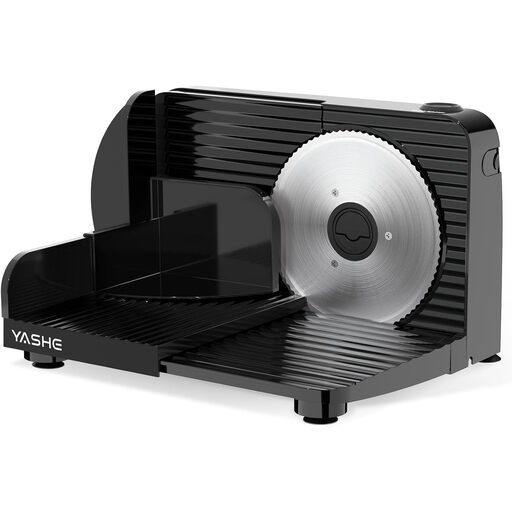 Image unavailable
YASHE SL-5801D23B3 electric slicer
May be suitable for slicing bread if the loaf fits the model and your preferred slice thickness is within the adjustment range.
Adjustable from 0–15 mm; 17 cm serrated stainless steel blade; folding design.
Check the manual for the permitted operating time and suitability for your workshop.
View at Joybuy
 Image unavailable
ritter serano⁷ Professional
The product description mentions slicing bread; the Professional name alone does not confirm that the planned session length or commercial use is permitted.
Slice thickness up to 23 mm; 24 cm cutting path; serrated blade, collection tray and removable carriage.
Check the instructions for the permitted operating time and intended use.
View at Joybuy
 Image unavailable
ritter sono¹ electric multi-purpose slicer
The product description lists bread as a food that can be sliced; compare your preferred slice thickness with this model’s adjustment range.
Slice thickness up to 20 mm; serrated blade and removable carriage; 18 cm cutting path.
Check the manual for operating time, permitted foods and cleaning instructions.
View at Joybuy
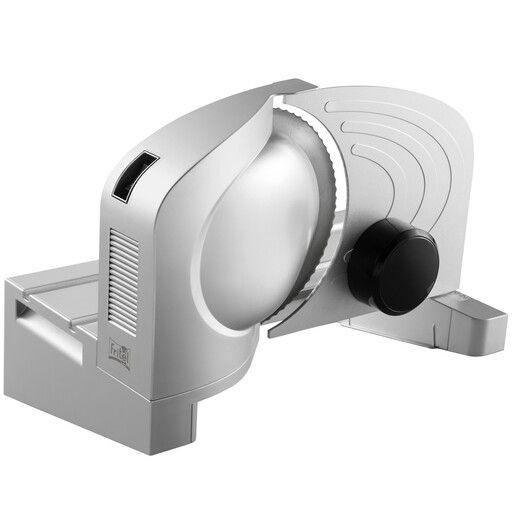 Image unavailable
FRITEL SL 3655
The product information mentions slicing bread; check the loaf size and whether your planned session complies with this model’s instructions.
Adjustable from 0–20 mm; 17 cm serrated blade; 15° angled carriage; food holder and pulse and continuous-on switches.
A continuous-on switch alone does not confirm the permitted operating time.
View at Joybuy
 Image unavailable
FRITEL SL 3110
The product description mentions homemade bread; check that the loaf dimensions fit on the carriage.
Adjustable from 0–15 mm; 17 cm serrated blade; folding design with food holder and safety switch.
Check the manual for the permitted operating time and how to clean the removable parts.
View at Joybuy
Frequently asked questions
Can I slice any homemade loaf with a slicer?
Not without checking the size first. Compare the height and shape of your loaf with the carriage and the space around the blade; DOMO, for example, lists a maximum food height of 15 cm for the MS171/N. The slice thickness setting does not indicate the maximum loaf height.
Is a slicer with a continuous-on switch suitable for a long workshop?
You can’t tell from the switch alone. ritterwerk lists a 5-minute operating cycle and domestic use only for the E 16; for any other model, check the manual and plan your session within the stated operating limits.
How should I operate and clean a slicer during a workshop?
Follow the instructions for the exact model and never push bread towards the blade with your bare hands. Use the food holder if one is supplied with the appliance; switch it off and unplug it before dismantling or cleaning. The manufacturer states that the ritter E 16 must not be used by children.
Do I need a food safety plan for a commercial cookery workshop?
If you prepare, process or sell food as a business, the NVWA requires you to work with an HACCP food safety plan or the applicable approved hygiene code. Don’t assume this requirement applies just because an activity is called a workshop; the nature of the activity is what matters.
Is CE marking required, and does it prove that the slicer cuts bread well?
The NVWA states that CE marking is mandatory for electrical products; check the version on offer. CE marking is not an independent comparative test of slicing quality.


