
Home baker with limited cupboard space
You want to slice homemade bread to your preferred thickness, then put the machine away. Fritel lists folding models, including the SL 3070 and SL 3110.


For a small household that occasionally slices homemade bread and wants to put the machine away afterwards, a folding model with adjustable slicing thickness is a sensible choice. For example, Fritel lists a range of 0–15 mm for the SL 3070. If you want thicker slices or have a permanent spot for your slicer, you could compare models with a greater stated range, such as the Graef SKS100 and Ritter sono², which their manufacturers say can slice up to around 20 mm. These specifications are not the result of a comparative slicing test, so also check the space required, cleaning instructions and any restrictions on use for the exact model.
You want to slice homemade bread to your preferred thickness, then put the machine away. Fritel lists folding models, including the SL 3070 and SL 3110.
You can leave the machine out and want to compare the blade, slicing range and cleaning options. Graef and Ritter list a slicing range of up to around 20 mm for the models mentioned.
You’re looking for one machine for bread and other suitable foods. Fritel and Bomann list these uses for specific models; check the instructions for the food you’re slicing and for cleaning.
For a small household that slices homemade bread, the main considerations are slice thickness, storage, safe cleaning and any extra uses.
| What to consider | What should you check? | Who is this important for? |
|---|---|---|
| Bread and slice thickness | Check the type of blade supplied, the maximum slicing thickness and whether your bread fits on the carriage. | I want to slice my own bread to suit the way I use it; around 40% of consumers prioritise slicing the bread itself. |
| Storage | Measure the available worktop and cupboard space, and check the dimensions of the model. | If I have limited cupboard space, I want to know whether I can put the machine away after use and store it safely. Around 30% of consumers give storage their highest priority. |
| Operation and cleaning | Check the food holder, finger guard, switch and cleaning instructions; unplug the machine before cleaning. | I want to operate the appliance safely and remove crumbs without touching the sharp blade unnecessarily. Around 20% of consumers prioritise safe operation and cleaning. |
| Other foods | Check which foods the manufacturer lists and which blades are supplied as standard. | If I want to slice sandwich fillings as well as bread, I’ll look at the stated uses and how to clean the machine between different foods. Around 10% of consumers give versatility their highest priority. |
Without comparable slicing tests, the power rating and blade size don’t show which model will slice your bread most neatly.
Start by comparing the blade type, slicing range, space for the bread and controls. Treat manufacturers’ claims about ease of slicing as something other than independent test results.
Fritel states that the removable blade on the SL 3110 is not dishwasher-safe.
Check the cleaning instructions for the exact model and allow for hand-washing if required.
Hand-washing takes time. Handle the sharp blade with care.
For the Clatronic MA 3585, the Joybuy listing states 500 W in the title and 150 W in the specifications table; Clatronic lists 150 W.
If information conflicts, check the model number and compare the manufacturer’s details with the seller’s before relying on a specification.
The models listed differ in areas such as storage, slicing range and restrictions on use. Features apply to the specific models, not automatically to the brand as a whole.
The folding SL 3070 and SL 3110 are options if you want to put the machine away after use.
The SKS100 is a non-folding option with a wavy-edged blade and a stated range of up to 20 mm.
The sono² is a cantilevered metal model for those with a permanent spot for their slicer.
The MA 451 CB is a metal multi-purpose slicer for households that want to slice foods listed by the manufacturer as well as bread.
The AS 3915 is a metal model with an angled feed, for those comparing slicers with a permanent spot.
This selection includes bread slicers with adjustable slicing thickness, including the folding Fritel SL 3070 and models with a greater stated range. Compare the space required, cleaning instructions and any restrictions on use for each model.
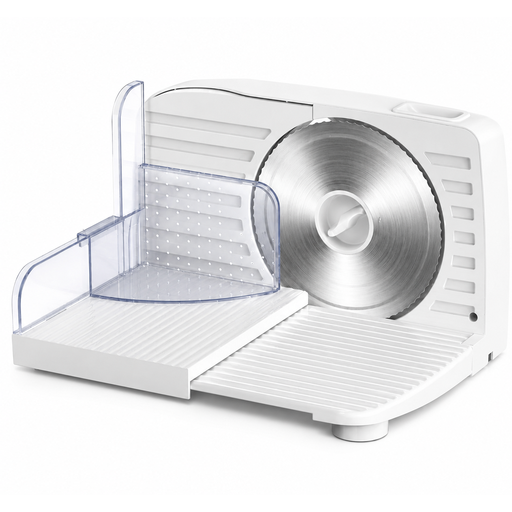 No image available
A model to compare if you’re looking for an electric machine for slicing bread.
The product name lists 250 W, an adjustable slicing thickness of 0–15 mm and 2 blades.
 No image available
An option to compare if you want to slice bread with a serrated blade and a greater stated slicing range.
Serrated blade; slicing range up to 20 mm; removable carriage.
 No image available
A model to compare if you want to cut bread into thicker slices.
Serrated bread knife; slicing thickness up to 23 mm; removable carriage with a 24 cm slicing path.
 No image available
An option if you want to slice bread and other listed foods with the same machine.
Slicing range 0–20 mm; blade diameter 19 cm; 150 W; universal blade; 15° angled carriage. Use the motor for no more than 10 minutes at a time, then let it cool for 30 minutes.
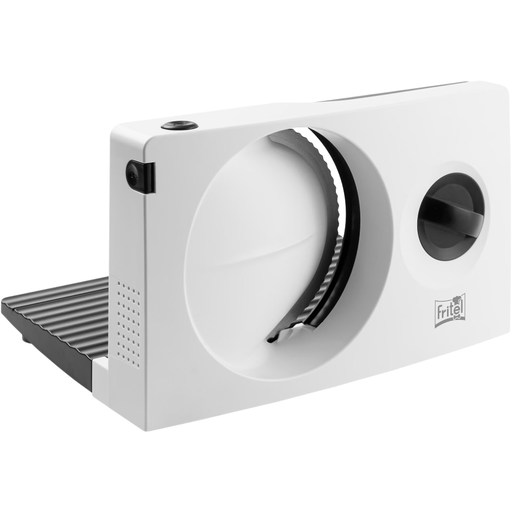 No image available
A folding model to consider if you slice bread and want to put the machine away afterwards.
Serrated blade; slicing range 0–15 mm; blade diameter 17 cm; 100 W; food holder and pusher. Use the food pusher for small pieces, and unplug the machine before cleaning or changing parts.
Start with the type of blade supplied and the maximum slice thickness you need. Then check whether your bread fits on the carriage; model specifications aren’t measurements of your loaf.
Switch off the machine and unplug it before cleaning the blade or other parts. Follow the instructions for your chosen model. For example, Fritel states that the removable blade on the SL 3110 is not dishwasher-safe.
No. In the Netherlands, the statutory guarantee has no fixed duration, according to the Dutch Government. If a product is faulty, the seller is your first point of contact; what you could reasonably expect from the product and the cause of the problem are taken into account.
CE marking is mandatory for electrical equipment covered by the Dutch Commodities Act Decree on Electrical Equipment. According to the Netherlands Food and Consumer Product Safety Authority, the manufacturer uses it to show that the product meets applicable European legislation; a mention in a listing does not, by itself, confirm that an individual item is compliant.
If you buy a new, similar appliance as a private individual, you can hand in the old one to the seller free of charge, according to the Dutch Government. It also outlines options through collection points and your local authority.