
Vandaag of morgen in huis

Kwaliteit gegarandeerd

Welkomstaanbiedingen ontgrendelen: GRATIS bezorging | Tot 80% korting | Gratis 30 dagen JoyPlus-proefperiode
Download de app
An electric blanket can be a real comfort on a chilly evening on the sofa or in an unheated bedroom. Many models look similar, yet they can differ significantly in size, controls and safety features. A low price doesn’t say much about usability either: a blanket that’s too small, a controller you can’t detach or a missing timer can quickly disappoint after purchase.
So pay particular attention to these common pitfalls:
An electric blanket for bed use can serve two roles. An underblanket is laid flat on the mattress and provides warmth from underneath. A standard heated blanket or electric throw is usually used over the body, for example on the sofa.
Keep these points in mind:
Also check whether the cord and controller are positioned conveniently. With an underblanket, the connection needs to be accessible without the cord ending up under the mattress.
An electric blanket with temperature control gives you more control than a model with only one setting. Three heat settings are a practical starting point for many users; nine settings offer finer adjustment, but can make operation a bit more involved.
An electric blanket with a timer is useful when you want the heat to switch off after a set period. Available times vary by model:
A timer is not a substitute for safe use. Switch the blanket off and unplug it when you’re not using it, unless the manual advises otherwise.
An electric blanket uses heating elements. Only use the product fully unrolled and flat. Folding, creasing or covering it with heavy objects can, according to the safety instructions, lead to overheating.
Before buying, check whether the product page provides information on:
The English term for a European plug is usually EU plug or European plug. A British plug is a UK plug, while an American plug is a US plug or an American plug. Other terms you may come across include Australian plug, Chinese plug and Swiss plug. “EU standard plug” isn’t always sufficient information: check the plug shape and voltage in the specifications.
For the Ruianbao, for example, a power supply of 220–240 V, 50–60 Hz and a VDE plug are listed. The product information also mentions two fuses in the controller, overheat protection and overcurrent protection. Use such information as a cross-check, but always follow the supplied manual.
A soft electric blanket feels more comfortable during extended use. Polyester, fleece and sherpa fleece are common. The Medisana HB 417 lists polyester with a faux fur or sherpa fleece surface. The manufacturer also mentions an Oeko-Tex Standard 100 label. This says something about the stated textile certification, but not automatically about warmth, lifespan or suitability for you personally.
A washable electric blanket is more practical when the controller can be removed. Check:
The product information for the Ruianbao mentions machine washing with a detachable connector. For the Medisana HB 417, washing at 30 °C is stated. Not every electric blanket can be ironed, bleached or dry-cleaned.
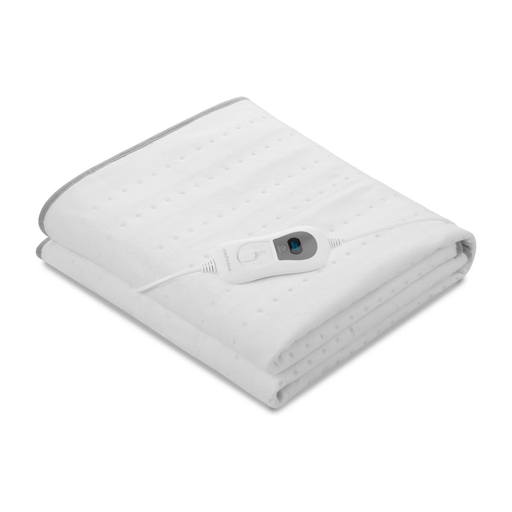
Why this fits the profile: This model is intended for single mattresses of 200 × 90–100 cm and offers simple operation with 3 heat settings.
The size and usage type are clearly stated, so you won’t accidentally buy this model as a large sofa throw.
Detachable controls, washable, automatic switch-off after 180 minutes and overheat protection.
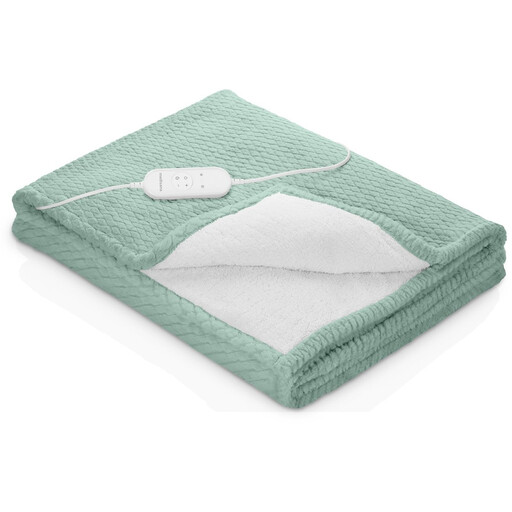
Why this fits the profile: The generous size of 180 × 130 cm and 9 temperature settings suit anyone who values comfort and precise control.
The product information gives concrete dimensions, settings, switch-off time and washing guidance instead of vague “extra warm” claims.
Polyester sherpa fleece, detachable controller, washing at 30 °C according to the product information and automatic switch-off after 120 minutes.
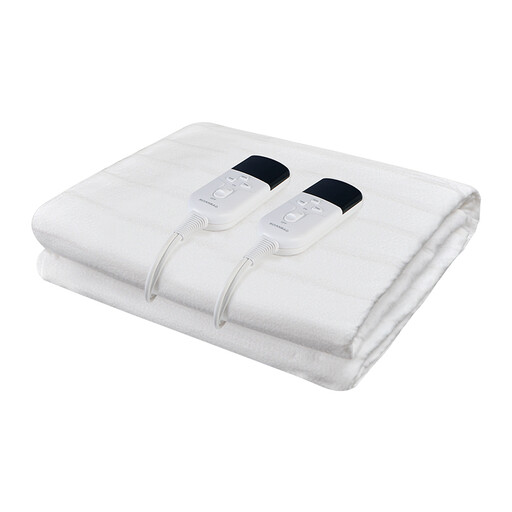
Why this fits the profile: The wider size, dual controls and adjustable timers are practical for intensive use or two people.
The specifications list the dimensions, 2-, 4- and 12-hour timer, detachable connector and care instructions.
3 heat settings, booster function, machine washability and overheat and overcurrent protection stated in the product information.
We’ve compiled a complete, up-to-date list of products that fully meet these strict selection criteria and current European safety regulations.
Lay the blanket completely flat and do not use it folded, creased or under heavy objects. Keep the controller dry, don’t use damaged cables and unplug before washing or storing the blanket. Also read the manual for the recommended duration of use.
Lifespan depends on use, storage and maintenance. Regularly check the cord, controller, connector and fabric for wear. Stop using immediately if there’s any damage, unusual heat build-up or a faulty control unit. A fixed lifespan cannot be guaranteed based on a product page alone.
Consumption depends on the wattage and the setting you choose. A 60-watt model running at full power for one hour theoretically uses 0.06 kWh. In practice, consumption may be lower if the thermostat or heat control doesn’t heat continuously at maximum. Multiply consumption by your current electricity rate to calculate the cost per use.
