
Vandaag of morgen in huis

Kwaliteit gegarandeerd

Welkomstaanbiedingen ontgrendelen: GRATIS bezorging | Tot 80% korting | Gratis 30 dagen JoyPlus-proefperiode
Download de app
An electric all-terrain bike needs to do more than simply provide a comfortable ride on asphalt. In the Netherlands, commuting, cycle paths, cobbles, woodland tracks and gravel can all feature on the same journey. The right e-bike therefore combines suitable tyres, reliable brakes, sufficient battery capacity and a frame that suits how you plan to use it.
E-bike marketing does not always make comparisons straightforward. For example, a long range means little if it is only achieved in ideal conditions. Wide tyres, a powerful motor and a suspension fork are not automatically necessary for every cyclist either. Below, we cover the main pitfalls and key points to check.
A stated range, such as 90, 110 or 120 kilometres, depends on factors including:
An electric bike with a long range is therefore mainly appealing when the battery has enough capacity for your daily route. Always allow some reserve for commuting. For example, a 70-kilometre round trip requires more reserve than the stated average range alone.
An electric fat bike with 4-inch tyres offers plenty of volume and stability on loose surfaces. However, this also means extra rolling resistance, more weight and often a wider space requirement for parking or storage. If you mainly ride on asphalt and gravel, a 45-millimetre-wide tyre may be more practical.
Also check whether the bike fits in your storage room, bike shed or cycle carrier. An electric folding bike can be more convenient for train travel or limited storage, but the folding mechanism must be properly locked before every ride.
Under European regulations for standard pedelecs, assistance up to 250 watts and a speed of 25 km/h are important reference points. However, how the motor feels depends on more than its wattage. A torque sensor responds to the effort you put into pedalling and can feel more natural than a system that mainly measures rotation.
Also consider where the motor is located. A rear-wheel motor can be suitable for flat routes and mixed use. For lots of hills or heavy loads, the gears, torque, brakes and weight distribution are also important.
For an electric bike for off-road paths, tyres with sufficient volume and grip are important. 28-inch tyres measuring 45 millimetres wide, as found on an electric gravel bike, roll relatively easily on asphalt while providing extra comfort on gravel. 20 × 4.0-inch fat-bike tyres offer greater stability on sand, loose ground and bumpy paths, but they generally make the bike heavier.
A rigid aluminium fork can be simple and low-maintenance. A lockout or lockable suspension fork offers greater flexibility when switching between asphalt and off-road terrain. Also consider the frame size, step-over height and riding position. A step-through frame can be practical if you frequently get on and off the bike or carry luggage.
Hydraulic disc brakes use brake fluid and generally provide smooth, consistent braking. They are particularly useful in wet weather, on descents, with heavy luggage and during frequent urban riding. Do check the brake pad wear, and have the hydraulic system serviced if the brake lever feels spongy.
A 7- or 10-speed derailleur gives you a choice of gears for different gradients and speeds. A Shimano GRX 10-speed system is designed for riding that combines asphalt and gravel. With a cargo bike, it is not just the gears that matter, but also the maximum load for the frame, racks and tyres.
Compare battery capacity in Wh (watt-hours) rather than looking only at the claimed kilometres. The Prophete GRAVELER 1.0, for example, uses an integrated 360 Wh battery. The product information states a range of up to 110 kilometres, depending on how it is used. This is a product specification, not a guaranteed distance for every ride.
A removable battery is practical if you live in a flat or store the bike in a shared bike shed. Also consider the bike’s overall weight. An electric folding bike is not automatically light; wide tyres, a motor, battery and suspension can all make it more difficult to lift.
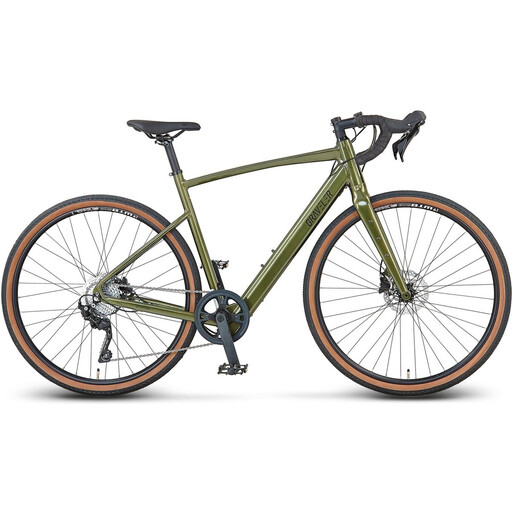
Why it suits this profile: This bike is a good fit for anyone looking for a sporty e-bike for asphalt, cycle paths and gravel without immediately opting for wide fat-bike tyres.
The 28-inch, 45 mm tyres are designed for mixed terrain without the bulk of 4-inch fat-bike tyres. The stated range of up to 110 km still depends on how the bike is used.
360 Wh 36V battery, Shimano GRX 10-speed and hydraulic disc brakes. The torque sensor is located at the bottom bracket.
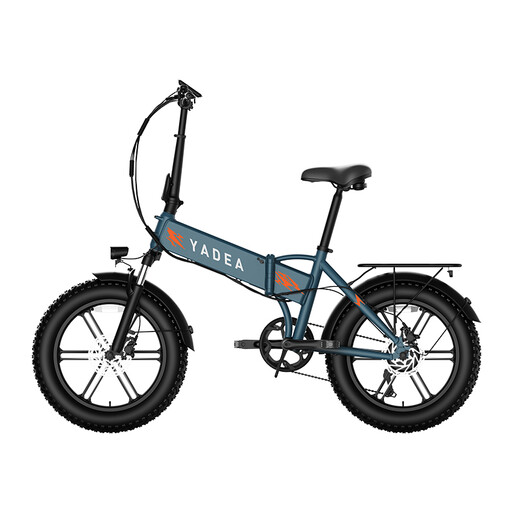
Why it suits this profile: A practical choice for anyone looking for a folding electric bike with wide tyres, suspension and useful everyday features for the city, countryside and storage in limited spaces.
The lockable front fork, 20 × 4.0-inch tyres and hydraulic disc brakes are clearly defined features for changing terrain. Check the folding locks before setting off.
Fully folding aluminium frame, Shimano 7-speed, NFC unlocking and a removable battery. The product information states a range of 90–120 km, depending on conditions.
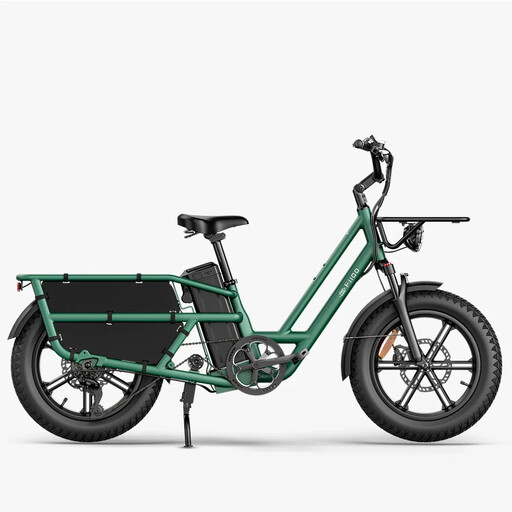
Why it suits this profile: This electric cargo bike is designed for families, shopping, pets or other loads where stability and carrying capacity are the priority.
The stated maximum load capacity of 200 kg makes the capacity clearer than a general term such as ‘heavy-duty’. Distribute the load evenly and do not exceed the limit.
20 × 4.0-inch tyres, front suspension, hydraulic brakes, Shimano 7-speed and integrated front and rear racks. According to the product specifications, the step-through frame is suitable for riders measuring 155–200 cm.
We have put together a complete, up-to-date list of products that fully meet these strict selection criteria and the applicable European safety regulations.
That depends on the tyres, riding position and route. If you mainly ride on asphalt and cycle paths, a gravel model with 28-inch tyres can be efficient. If you regularly ride on sand, cobbles or unpaved paths, wider tyres and suspension can provide greater comfort. Also check the weight beforehand if you need to carry the bike up stairs.
Its lifespan depends on charging cycles, temperature, storage and use. Store a removable battery in a dry place and avoid prolonged exposure to extreme heat or cold. Use the supplied charger and follow the instructions. A larger battery pack can increase the number of kilometres per charge, but it often makes the bike heavier and more expensive.
In addition to the purchase price, you should budget for electricity, servicing, tyres, brake pads and potentially a replacement battery in the long term. The electricity cost per charge is usually manageable; wear and maintenance are more strongly affected by mileage, weight, rain and off-road terrain. When comparing bikes, therefore consider not only the range, but also parts availability and servicing requirements.
