
Christmas market host looking to serve something soft
An eierkoek is a handy choice if you want to offer a soft biscuit to eat by hand or use as the base for a small winter snack. Be sure to consider the size of each biscuit.


Choose an eierkoek if you want to serve a soft biscuit or use one as the base for a winter snack; choose a digestive biscuit if you prefer a crunchy bite. Always check the specific variety for fibre, ingredients and allergens, especially if you’re serving the biscuits unpackaged at a Christmas market.
An eierkoek is a handy choice if you want to offer a soft biscuit to eat by hand or use as the base for a small winter snack. Be sure to consider the size of each biscuit.
If you’re comparing eierkoeken and digestive biscuits by ingredients or nutritional value, the information for each variety is more useful than the category name. Check details such as wholemeal flour, fibre, sugars and serving size.
If you’re selling biscuits from a Christmas market stall, customers need to know which allergens they contain. The Netherlands Food and Consumer Product Safety Authority has rules on this for unpackaged food.
Ideal for: serving straight from the hand or using as the base for a snack.
Bear in mind: the eierkoeken reviewed vary in fibre content and list allergens such as wheat, egg, milk or soya; check the specific variety you choose.
Ideal for: anyone who prefers to serve a crunchy biscuit and compare varieties made with wholemeal flour or with different fibre contents.
Bear in mind: a digestive biscuit won’t automatically suit every dietary requirement. The AH wholemeal digestive reviewed contains wheat; check the other ingredients and nutritional information on the label too.
| What to consider | What to check when buying | Who it matters to |
|---|---|---|
| Texture and serving | Choose carefully between a soft eierkoek, a crisp variety and a crunchy digestive biscuit. | For my stall, I want a biscuit that suits how I hand it out or finish it as a snack; for around 29% of consumers, the way it’s served would be the top priority. |
| Allergens and ingredients | Read the allergen list and any warnings about possible traces; if selling unpackaged, make the information available to customers. | If I’m selling unpackaged biscuits, I want to know exactly which ingredients and allergens apply to each variety; for around 29% of consumers, this information would be their first consideration. |
| Nutritional information | Compare fibre, sugars, fat and energy per 100 g and per serving; check the packaging separately for any listed ingredients or nutritional claims. | I want to weigh up the fibre content against the rest of the nutritional value in my serving; for around 24% of consumers, this would be the main reason for choosing. |
| Packaging and availability | Check the number of biscuits, the best-before date and whether the variety you want is currently available. | If I’m buying for a group, I want to know how many biscuits I can hand out and whether I can get the same pack in time; for around 18% of consumers, packaging and availability would be deciding factors. |
The AH wholemeal digestive lists 6 g of fibre, but also 18 g of fat and 460 kcal per 100 g. Fibre content alone doesn’t tell you what you’ll get in a serving.
Compare the nutritional information per 100 g, then consider how much you’ll actually serve.
The eierkoeken reviewed list different combinations of wheat, egg, milk and soya. Bolletje also warns that its Brosse Eierkoek Kaneel may contain nuts and sesame.
Use the current ingredients and allergen information for the exact variety you’re serving, including any relevant warnings about possible traces.
Lidl listed its eierkoeken as a special buy in stores from 5 to 11 October 2026. This doesn’t tell you whether they’ll be available when the Christmas market takes place.
Check that your chosen variety is available shortly before you buy, and allow time to find an alternative if you need a larger quantity.
According to the Netherlands Food and Consumer Product Safety Authority, customers must be able to get information about the 14 designated allergens in unpackaged food.
Keep the product information available at your stall and check the requirements if you plan to provide it verbally.
The Albert Heijn product ranges reviewed include regular and wholemeal eierkoeken and digestive biscuits.
The Jumbo product range reviewed includes regular and wholemeal eierkoeken.
Bolletje Brosse Eierkoek Kaneel is a crisp, spiced variety with a milk coating, rather than the same soft texture as a regular eierkoek.
Verkade Verk digestive puur is a digestive biscuit with a chocolate coating.
ALDI Nederland lists free-range eierkoeken from Heerlijck Banket.
Lidl listed a pack of 12 eierkoeken as a limited-time in-store item.
This product selection suits the digestive biscuit option: a biscuit to serve with coffee or tea, for example. If you’re choosing mainly for nutritional value or allergens, compare the label with your requirements.
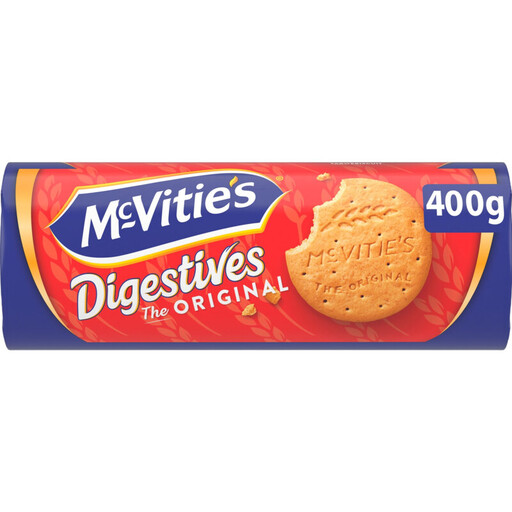 Image unavailable
A digestive biscuit for anyone who’d rather serve a biscuit with coffee or tea than a soft eierkoek.
Pack weight: 400 g. Before serving, check the current ingredients and allergen information on the packaging.
For this variety, Joybuy recommends storing it in a cool, dry place away from direct sunlight.
No. The eierkoeken and digestive biscuits reviewed list wheat or cereals containing gluten. The AH digestive biscuits labelled vegan and lactose-free also contain wheat, so always read the label for the exact variety.
Yes. According to the Netherlands Food and Consumer Product Safety Authority, customers must be able to get information about the 14 designated allergens in unpackaged food. Keep this information available where you’re selling the biscuits, and check the requirements if you plan to provide it verbally.
Follow the storage instructions on the packaging you choose. For McVities Digestive Original, Joybuy recommends a cool, dry place away from direct sunlight; also check the packaging and date before serving.
No. The AH wholemeal digestive reviewed lists 460 kcal and 18 g of fat per 100 g, compared with 301 kcal and 3.4 g of fat per 100 g for the AH wholemeal eierkoek reviewed. The digestive does contain more fibre—6 g per 100 g compared with 3.5 g—but you should also compare the serving you plan to offer.