
If you’d like a soft cake to serve with drinks
A classic egg cake is a good choice if you prefer a light, soft cake, perhaps to enjoy with coffee or tea. Don’t choose by the name alone: a crisp egg cake has a different texture.


Choose a classic egg cake if you’d like a soft, light cake to serve with drinks; a digestive is a better fit if you’re after a crunchy wheat biscuit. Before choosing, compare the nutritional information per 100 g and per serving. If you have dietary requirements or allergies, check the ingredients on the packaging of the exact variety.
A classic egg cake is a good choice if you prefer a light, soft cake, perhaps to enjoy with coffee or tea. Don’t choose by the name alone: a crisp egg cake has a different texture.
A digestive is a good choice if you’re after a crunchy wheat biscuit to enjoy with a drink or as part of a dessert-style spread.
If you have an allergy or dietary requirement, the exact variety matters. Check the ingredients and allergen information on the packaging; a label such as vegan or lactose-free won’t automatically answer other dietary questions.
Decide what texture you’d like to serve with drinks, then compare the serving size and label of the varieties that fit the bill.
| What to consider | What to check when buying | Who it matters to |
|---|---|---|
| Texture and how you’ll serve it | Check whether you’re choosing a classic soft egg cake, a crisp egg cake or a crunchy digestive. | I’d like to serve a soft cake with drinks, or perhaps a crunchy biscuit instead. For around 40% of consumers choosing between these types of cake, the texture they’re after is the deciding factor. |
| Serving size and nutritional information | Compare energy, fat, sugars, fibre and salt per 100 g, then consider the serving you’ll actually offer. | If I’m putting out a selection of cakes, I want to know how their nutritional values compare with the amount I’ll serve. For around 30% of these consumers, serving size and nutritional information are the main priorities. |
| Allergens and dietary requirements | Read the ingredients and allergen information on the packaging of your chosen variety, including any relevant warnings about possible cross-contamination. | If I need to avoid certain ingredients, I only want to serve a cake whose label is suitable for my requirements. Around 20% of these consumers say suitability is their top priority. |
| Exact variety | Check the full product name, type and information on the packaging you’re buying. | I don’t want to accidentally pick up a wholemeal, crisp or coated variety when I have a different egg cake in mind. For around 10% of these consumers, getting the exact variety is the main concern. |
The name doesn’t tell you the full nutritional picture. According to Albert Heijn, the AH Digestive in this comparison contains 21 g of fat per 100 g; Albert Heijn lists 10 g of saturated fat per 100 g for Verkade Digestive Original.
Check the full nutrition table rather than relying on a product name or a claim on the front of the pack.
Classic, wholemeal and crisp egg cakes can differ in their ingredients and nutritional values. For its classic egg cakes in this comparison, Jumbo lists 1.9 g of fibre per 100 g, compared with 3.9 g per 100 g for the wholemeal variety.
Compare the exact varieties if fibre, sugars or allergens will influence your choice.
Individual biscuits aren’t always the same size: Albert Heijn lists a 30 g serving for the AH Eierkoeken in this comparison and a 15 g serving for AH Digestive.
Start by comparing the values per 100 g, then consider how much you’ll actually serve.
Ingredients and warnings vary between varieties. The Netherlands Food and Consumer Product Safety Authority explains how allergens are listed on food labels.
Before serving, check the ingredients and allergen information on the packaging you receive.
The own-brand products in this comparison show how an egg cake and a digestive can differ in serving size and nutritional value.
The Brosse Eierkoek in this comparison is a different type from the classic soft egg cake: Bolletje describes it as light, whipped and crisp.
Verkade Digestive Original is a branded digestive whose listed nutritional values can be compared with those of other biscuits.
The classic and wholemeal own-brand egg cakes in this comparison offer two varieties within the same product range.
This digestive is a good fit if you’d prefer a biscuit rather than a soft egg cake. Check the packaging to see whether the ingredients and serving size suit your drinks spread.
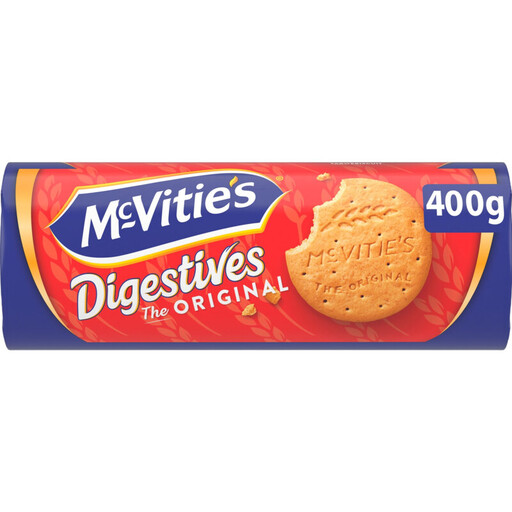 No image available
A good choice if you’d like to serve digestive biscuits with drinks. If you have allergies or dietary requirements, check the ingredients and allergen information on the packaging you receive.
No, not for every variety or serving size. Albert Heijn lists 316 kcal per 100 g for the AH Eierkoeken in this comparison and 485 kcal per 100 g for AH Digestive, but their stated serving sizes are 30 g and 15 g respectively. Compare both products per 100 g, then consider what you’ll actually serve.
No, these characteristics don’t automatically apply to every digestive. Albert Heijn labels the AH Digestive in this comparison as vegan and lactose-free; for another variety, check its ingredients and the information on the packaging.
It depends on the exact variety. The egg cakes in this comparison list wheat, egg, milk and soya, among other ingredients; with digestives, too, check the ingredients and any warnings on each pack. The Netherlands Food and Consumer Product Safety Authority says allergens are listed in the ingredients list.
Follow the storage advice on the packaging you’ve chosen and reseal it as directed after opening. For the AH Eierkoeken in this comparison, Albert Heijn recommends storing them in a cool, dry place away from light. For AH Digestive, it recommends a cool, dark, dry place and, once opened, a sealed tin.