
If you prefer a soft cake
A plain egg cake is a good choice for a coffee break when you fancy a soft texture and one cake per person. Also check the portion size, sugar content and allergens for the variety you choose.


Choose an egg cake if you’d like a soft, individually portioned cake with your coffee; choose a digestive if you prefer a crunchy biscuit. The varieties compared differ in portion size and nutritional values. So compare the figures per 100 g as well as per portion, and check the allergens on the packaging.
A plain egg cake is a good choice for a coffee break when you fancy a soft texture and one cake per person. Also check the portion size, sugar content and allergens for the variety you choose.
With digestives, you can choose based on texture and the nutritional information for each variety. Compare the wholemeal flour content and fibre, but also check the fat, sugar and salt per 100 g.
A mix of soft egg cakes and crunchy digestives offers a choice of textures. When you shop, check the pack size and allergens for each product.
First decide whether you’d prefer a soft egg cake or a crunchy biscuit; then compare the portions and nutritional information of the varieties you’re considering.
| What to consider | What to check when buying | Who is this important to? |
|---|---|---|
| Soft cake and portion size | Check the weight and nutritional value per cake; compare the sugar content per 100 g too. | If I want a soft cake with my coffee, it’s useful to know what one cake counts as a portion. Around 44% of consumers prioritise this. |
| Crunchy biscuit and fibre | Compare the stated wholemeal flour content and fibre per 100 g, along with the other nutritional values. | I like the idea of a crunchy biscuit, but I want to know how much fibre the variety contains. For around 33% of consumers, this is the top priority. |
| Sharing over coffee | Check the pack size, whether the biscuits are individually wrapped, and the allergens. | If I’m putting something out for several people, I want to be able to share the biscuits and take account of what they can eat. This matters most to around 23% of consumers. |
According to Albert Heijn, AH Digestive Volkoren contains 6 g of fibre, 18 g of fat and 460 kcal per 100 g. So the wholemeal flour content or fibre figure alone doesn’t give you the full nutritional picture.
Read the full nutrition table per 100 g, then check the weight of one biscuit. Use any Nutri-Score only to compare like-for-like products.
According to Jumbo’s product information, a Bolletje Brosse Eierkoek met melklaagje contains 58 kcal per biscuit, which weighs around 15.5 g. Albert Heijn lists 94 kcal for a plain AH Eierkoek weighing 30 g. The portions aren’t the same size.
When comparing different biscuit sizes, look at both the weight per item and the nutritional value per 100 g.
According to their ingredients information, the digestives described by Albert Heijn as vegan and lactose-free contain wheat. Those labels therefore don’t tell you whether a product is gluten-free.
If you have a dietary requirement, always check the ingredients and allergen information for the exact variety.
Lidl says that the Digestives naturel shown are only available in store. So an online product page doesn’t necessarily mean you can buy the product online.
Check current availability before you shop, and look at the packaging of the product you actually choose.
The own-label range has product information for both plain egg cakes and digestives, including a wholemeal variety.
The own-label range includes wholemeal egg cakes.
The Brosse Eierkoeken met melklaagje included in this comparison are a crisp, individually wrapped variety, not a standard soft egg cake.
Biscotto Digestive Biscuits are crunchy wheat biscuits sold in a larger pack.
Lidl stocks Sondey biscuits and also lists Digestives naturel.
These products are digestives for anyone who fancies a crunchy biscuit with their coffee: one plain variety and two chocolate varieties. If you’d prefer a soft egg cake, the texture and portion size are different considerations.
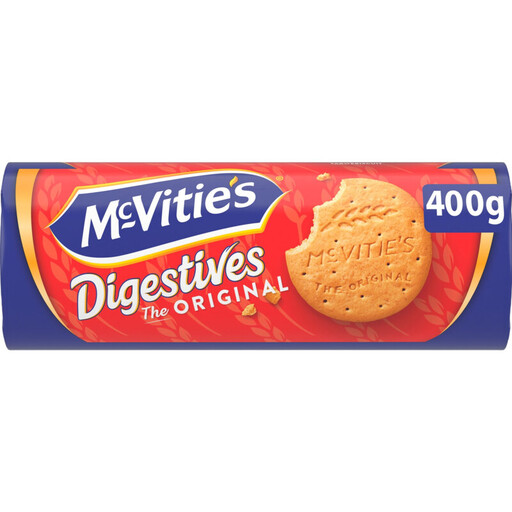 Image unavailable
A plain digestive for anyone looking for a crunchy biscuit to enjoy with coffee. If you’re comparing it with an egg cake, check the portion size, nutritional information and allergens on the packaging.
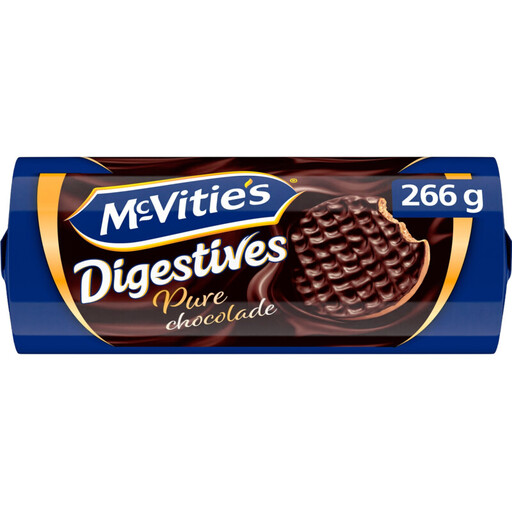 Image unavailable
A digestive topped with dark chocolate for anyone who’d like a chocolate layer as well as a biscuit. Check the weight per biscuit on the packaging, and look at the nutritional information and allergens for this variety.
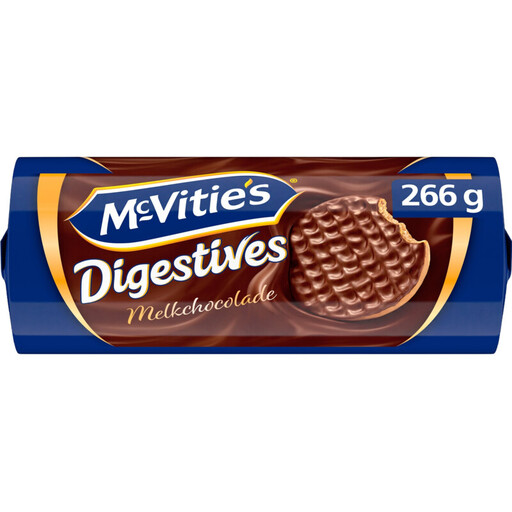 Image unavailable
A digestive topped with milk chocolate for anyone who enjoys that combination with coffee. Check the weight per biscuit on the packaging before comparing portions, and read the nutritional information and allergens too.
No, that isn’t true of every variety. Albert Heijn lists 316 kcal and 3.7 g of fat per 100 g for its plain egg cakes, compared with 485 kcal and 21 g of fat per 100 g for its plain digestive. According to the same product information, the egg cakes contain 31 g of sugar per 100 g. So compare portion size and the other nutritional values of the products you’re considering too.
It varies by variety. Albert Heijn describes its plain and wholemeal digestives as vegan and lactose-free; the product information for McVitie's Digestives Original says that the product may contain milk. Always check the packaging of the exact biscuit. Vegan or lactose-free doesn’t mean gluten-free, either: the AH varieties mentioned contain wheat.
Nutri-Score can help you compare similar products, but it isn’t a verdict on a biscuit in isolation. According to the Dutch government, even an A or B doesn’t automatically mean a product is healthy. So compare digestives with similar digestives, and check the nutritional information and portion size as well.
Check the allergen information for the specific product. The egg cake varieties included in this comparison contain ingredients such as egg and wheat; depending on the variety, milk and soya may also be relevant. The digestives included contain wheat, while other allergens vary by variety. The Netherlands Food and Consumer Product Safety Authority stresses that allergens must be clearly listed on the labels of pre-packed foods.