
Vandaag of morgen in huis

Kwaliteit gegarandeerd

Welkomstaanbiedingen ontgrendelen: GRATIS bezorging | Tot 80% korting | Gratis 30 dagen JoyPlus-proefperiode
Download de app
Educational toys for toddlers should above all suit your child’s age, play area and interests. A toy that looks versatile on the packaging may turn out to be too noisy, fragile or quickly lose its appeal in everyday use. This applies to toys for 1 to 3-year-olds, as well as activities suitable for children up to around 5 years old.
So don’t just look for terms such as “Montessori”, “sensory” or “early learning”. Check the specific details, safety warnings and how the toy is intended to be used.
A product with lights, music, buttons and accessories may look appealing. However, toddlers can actually lose interest more quickly when everything happens at once. Check whether you can adjust the volume, use the functions separately and whether the toy still offers value without batteries.
With activity toys for babies, it is also important that your child can easily reach the components. A toy designed for use while lying down is not automatically suitable once a child starts standing or walking.
An age recommendation is not decorative information. Toys with small parts may be unsuitable for young children, while an active product such as a children’s trampoline requires plenty of space and constant supervision.
Always check:
Words such as “safe”, “non-toxic” and “European certified” should be supported by clear product information. Check whether the product includes a materials description, manufacturer details and references to relevant standards. The product descriptions of several listed items, for example, mention CE and EN71. This is useful information, but also check the full warnings on the product page and in the manual.
A brand’s claim about supporting motor skills or hearing is not a guaranteed result. According to a brand’s own research, certain features may contribute to the play experience, but the effect varies from child to child and depending on how the product is used.
For babies from around 6 months, simple activities such as grasping, pressing, turning and listening are usually more appropriate than a complex construction system. An activity cube or musical activity table may become interesting once a child can sit, crawl or stand independently.
A 2-in-1 design can be practical. According to the product description, an activity table with removable legs can first be used as a floor panel and later as a standing table. However, check that the structure is stable and that the height suits your child.
For sensory toys and indoor play equipment for toddlers, smooth surfaces, rounded edges and easy-to-clean materials are important. With soft playsets, look for:
ABS and BPA-free materials are sometimes specified for plastic toys. Treat this as a product specification, not as a reason to stop supervising your child.
Measure the area where the toy will be placed. Children’s climbing blocks often take up more space than the product photo suggests. Also consider walkways, furniture and sufficient clearance around active toys.
For musical toys for children, an adjustable volume setting is a practical feature. A silent mode is useful in a flat or during quiet times. For battery-powered products, check whether batteries are included and how often you are likely to need to replace them.
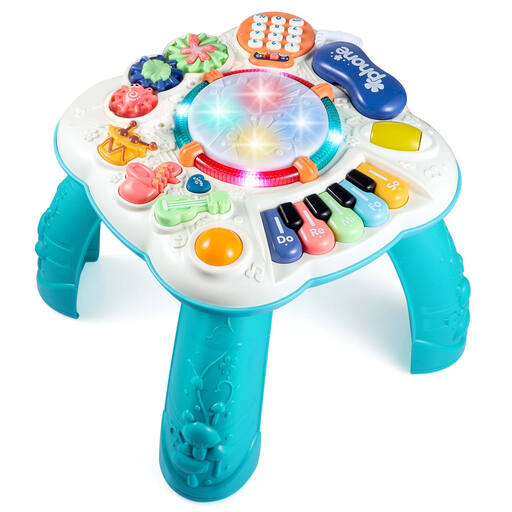
Why it suits this profile: A compact choice for families who want to combine several activities in one product. According to the product description, the table can be used with or without the legs for children aged 6 to 36 months.
The description mentions volume control, a silent mode and rounded edges. However, check the current warnings and battery requirements before buying.
Six play zones, a size of approximately 30 × 30 × 31 cm and a design that supports both seated and standing play.
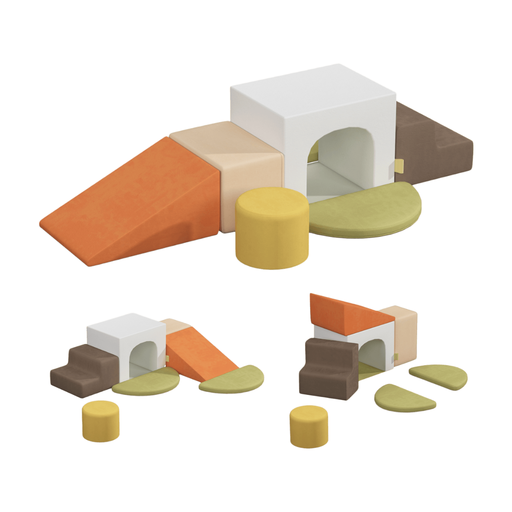
Why it suits this profile: Ideal for families who want to encourage active indoor play and value washable covers and different configurations.
The product information lists a non-slip base, hook-and-loop fasteners and removable covers. The set is vacuum-packed and can take up to 48 hours to fully expand.
Seven foam pieces, washable covers and, according to the description, EN71-1, EN71-2 and EN71-3 compliance.
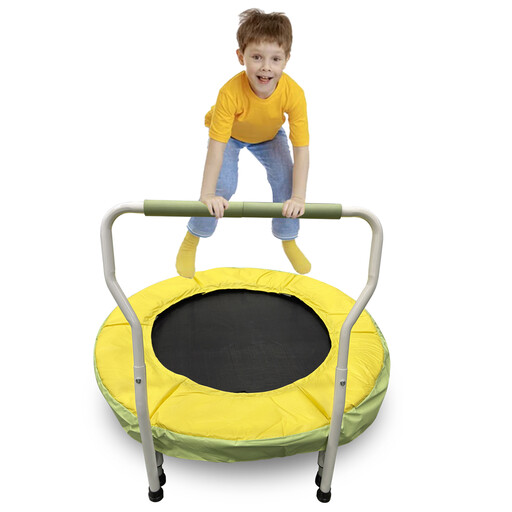
Why it suits this profile: For households with enough clear floor space that are looking for focused active play for children aged approximately 3 to 6.
The specifications list a full cover over the 24 springs, an adjustable handlebar and a maximum load of 25 kg. Supervision remains essential.
A diameter of approximately 91.6 cm, an adjustable handlebar and a polypropylene jumping mat.
We’ve put together a complete, up-to-date list of products that fully meet these strict selection criteria and the applicable European safety regulations.
A product marketed as a Montessori toy for toddlers does not necessarily have to meet a formal Montessori certification. Instead, focus on the specific play activity: can your child sort, build, move or experiment independently?
Choose toys with large, securely attached parts and simple actions such as pressing, turning, rolling and sorting. Check the minimum age and supervise your child when using electronic toys. A compact activity table or ball activities may be suitable once your child can sit or stand steadily.
Lifespan depends on the materials, how intensively the toy is used, storage and maintenance. Washable covers can be helpful with soft playsets. With electronic toys, batteries and switches are vulnerable components. Regularly inspect toys for cracks, loose parts, damaged cables and signs of wear.
The purchase price does not tell you everything about running costs. Check whether batteries are included, which type is required and whether the toy has an automatic shut-off or volume control. For frequent use, rechargeable batteries may be practical, provided they are used according to the manual.
