
Vandaag of morgen in huis

Kwaliteit gegarandeerd

Welkomstaanbiedingen ontgrendelen: GRATIS bezorging | Tot 80% korting | Gratis 30 dagen JoyPlus-proefperiode
Download de app
A toy box full of items does not automatically mean that a child will play with them for long. When choosing educational toys for toddlers, parents often look at colourful packaging, lots of features or terms such as Montessori and sensory. Yet these promises can easily lead to an unsuitable purchase.
The key question is not how many features a product has, but whether it matches the child’s age, interests and available play space. With these checks, you can make a more informed choice when buying toddler toys for ages 1–3, toys for babies or an educational gift for children.
A product marked 6 to 36 months may be suitable for several stages of development, but not every feature will be appropriate at the same time. A baby mainly plays by looking, feeling and pressing. A toddler can also sort, imitate, build and follow simple game rules.
Therefore, check:
Musical toys for children quickly attract attention, but a product with lots of melodies can become predictable after a short time. A volume control is also important in a flat, during quiet periods or when several children are playing together.
Do not just look at the number of sounds, but also at how the child activates them. Buttons, rotary wheels, keys and moving parts encourage more active discovery than a toy that mainly makes sounds automatically.
Terms such as BPA-free, non-toxic and CE marking are often given prominent placement. A CE mark is a declaration by the manufacturer that the product is said to meet the relevant European requirements; it is not an independent quality mark. You should therefore also check the warnings, manufacturer details and information about small parts.
According to the product descriptions of several of the items mentioned, the materials are ABS, BPA-free and have rounded edges. Always check the product yourself upon delivery for loose parts, sharp edges, damage and a clear age recommendation.
For toys for babies from around 6 months, large, easy-to-grip parts and simple cause-and-effect reactions are practical. Think of a drum where pressing activates a light or sound. For toddlers, sorting, turning, stacking and imaginative play are often more engaging.
Motor skills toys should encourage actions such as grasping, turning, building or walking. For example, an activity cube for ages 1–3 may have several sides with piano, guitar, telephone and gear functions. According to the product description, these features are designed to support fine motor skills and hand–eye coordination. These are product claims; the actual play experience varies from child to child.
Look for a sturdy construction, rounded corners and parts that do not come loose easily. With building toys for toddlers, the size of the blocks is important: larger blocks are generally easier to hold than small building bricks.
For everyday use, removable and washable covers are convenient. Soft foam toys may be suitable for climbing and crawling, but make sure you have enough space and a flat surface. Also check whether a product is delivered vacuum-packed and needs time to return to its original shape.
Electronic toys often run on batteries, which are not included. Check the required type before placing your order. Also look at:
With ride-on toys, balance bikes and large foam sets, supervision and a safe environment are particularly important. Do not use these toys on stairs, slopes, public roads or wet and uneven surfaces if the product information advises against it.
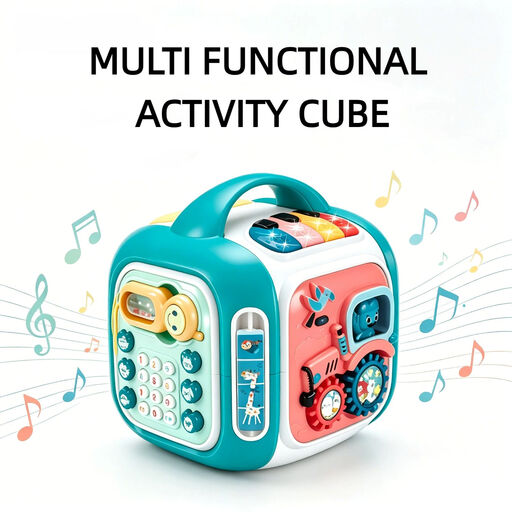
Why it suits this profile: A compact choice for families looking for several activities in one product. The cube is portable and designed for children aged 1–3.
The age recommendation, dimensions and fact that batteries are not included are stated in the product information. This helps avoid surprises when unboxing.
23 × 23 × 24 cm, eight play modes and a handle. According to the product description, the edges are rounded and ABS is used.
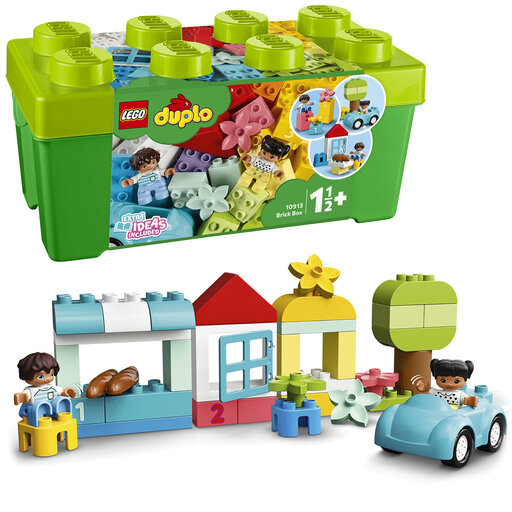
Why it suits this profile: For parents and grandparents who prefer reusable building and imaginative play without batteries.
The set contains 65 pieces, a storage box and 15 simple building ideas. The minimum age is 18 months, making the size more suitable for toddlers.
Large building bricks, two figures, number blocks and a sealable box. No batteries are required.
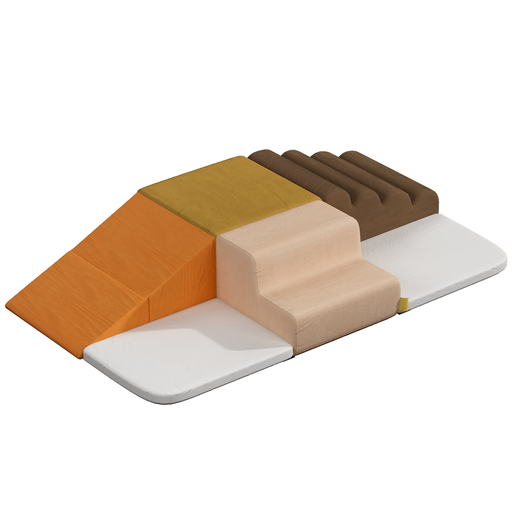
Why it suits this profile: For families with plenty of indoor space who want to combine active climbing, crawling and building.
The set has a non-slip underside, hook-and-loop connections and covers with concealed zips. According to the product information, the covers are removable and machine washable.
Six foam blocks for different arrangements and an easy-care washable cover. According to the product information, the set complies with EN71-1, EN71-2 and EN71-3.
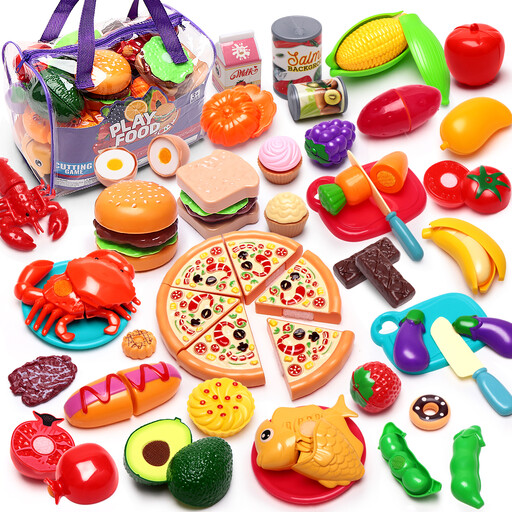
Why it suits this profile: A good choice for children aged 3 and over who enjoy cooking, playing shop or inventing role-play scenarios with others.
The warning about small parts and the minimum age of 3 years are clearly stated. The storage bag helps keep loose pieces together.
According to the product information, the set contains 78 play pieces, hook-and-loop fastenings and BPA-free plastic with rounded corners.
We have compiled a complete, up-to-date list of products that fully meet these strict selection criteria and the applicable European safety regulations.
Toys for boys and girls do not need to be chosen according to gender. Instead, focus on the type of play the child enjoys: music, animals, building, movement or make-believe.
Choose a product with large parts, rounded edges and simple actions such as pressing, turning or stacking. An activity cube or sturdy sensory toy may be suitable, provided the age recommendation and warnings match the child’s development.
This depends on the material, use and the child’s interest. Toys with several ways to play, such as building blocks or imaginative playsets, may remain engaging for longer because children can invent new scenarios. Check regularly for loose, damaged or missing parts and store the toys in a dry place.
Many musical toys do require batteries. The product information usually states the type and number of batteries needed. Several of the items mentioned are supplied without batteries. Check this before buying and, if the toy will be used indoors, preferably choose a product with volume control.
