
Vandaag of morgen in huis

Kwaliteit gegarandeerd

Welkomstaanbiedingen ontgrendelen: GRATIS bezorging | Tot 80% korting | Gratis 30 dagen JoyPlus-proefperiode
Download de app
Educational toys for children do not need to be complicated or expensive. The right choice matches the child’s age, interests and way of playing. A baby benefits more from grasping, turning and listening, while a pre-schooler enjoys building, role play and simple rules.
However, purchases often go wrong. A toy may have lots of functions but offer little real play value. Safety claims are also sometimes presented more strongly than the available product information justifies. This guide helps you compare toys using verifiable criteria.
A toy table with a piano, lights, telephone sounds and rotating parts may look appealing. For a six-month-old baby, however, too much stimulation can be confusing. So do not just check the number of functions. Focus especially on the following:
For baby toys and toddler toys, a simple action such as pressing, turning or stacking can already be valuable.
Terms such as Montessori toys, sensory toys and interactive toys are widely used. On their own, they say very little. Look at the specific activity. A product that lets children sort, build, compare or discover cause and effect offers clearer play opportunities than one that mainly produces sound and light.
According to the relevant brands’ own product information, certain activities may support fine motor skills, communication or problem-solving play. These are product descriptions, not a guarantee of a particular developmental outcome.
Children’s building sets, construction toys and role-play sets often contain loose parts. Check the small-parts warning and consider where you will store everything. A large set without a dedicated storage solution can quickly become impractical.
Also pay attention to the dimensions. A ball pit or foam play set requires considerably more space than an activity cube or a compact musical toy set.
Age guidance is a starting point, not a substitute for supervision. Products with small parts are generally not intended for children under three. Extra care is needed with magnetic tiles, marbles, balls and small building bricks.
For toys from 3 years onwards, check regularly for cracks, loose parts and damage. Toys from 4 years onwards may offer a greater building challenge, but instructions and warnings remain important in these cases too.
Many products in this category are made from ABS plastic, wood, textiles or foam. Look out for:
When a brand or seller makes a safety or material claim, it is still sensible to check the packaging, instructions and current product page.
Musical toys often run on batteries, which are not always included. Check the battery type and quantity. Volume control is useful in a flat or during quieter moments, but always use a comfortable sound level.
For magnetic or construction toys, maintenance is straightforward: wipe the parts clean according to the instructions and replace any pieces with cracks or loose connections. Foam toys with removable, washable covers are practical when children play intensively every day.
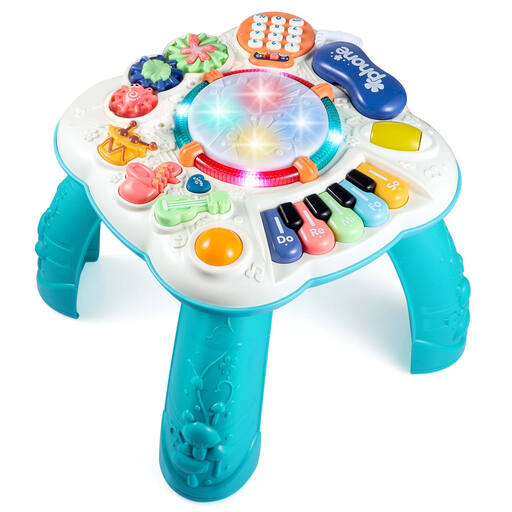
Why it suits this profile: A compact choice for families looking for one activity product to cover different types of play between 6 and 36 months.
The product description mentions volume control, removable legs and rounded edges. Check the current safety information yourself before buying.
Six play zones, batteries not included, and suitable for use as a floor board or table.
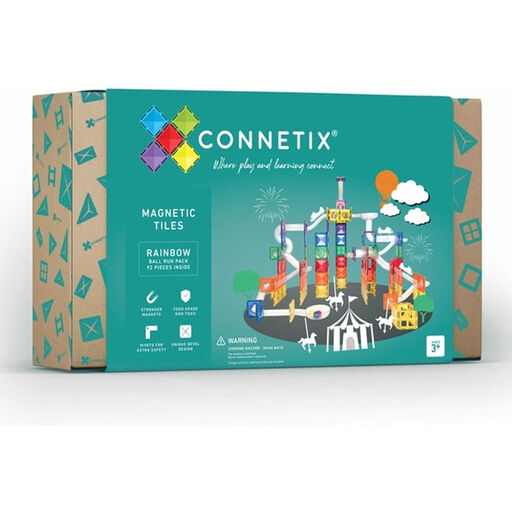
Why it suits this profile: For families looking for construction toys that grow from simple tracks into more complex builds.
The set works without batteries and includes clear warnings about small parts, supervision and checking for damage.
92 pieces, transparent tubes and compatibility with Connetix packs and many magnetic tiles.

Why it suits this profile: Suitable for indoor spaces where children regularly want to climb, crawl and move around.
The product information mentions non-slip bases, hook-and-loop fasteners and concealed zips. The balls for the ball pit are not included.
Soft foam blocks, removable covers and a combination of climbing, crawling and sensory play.
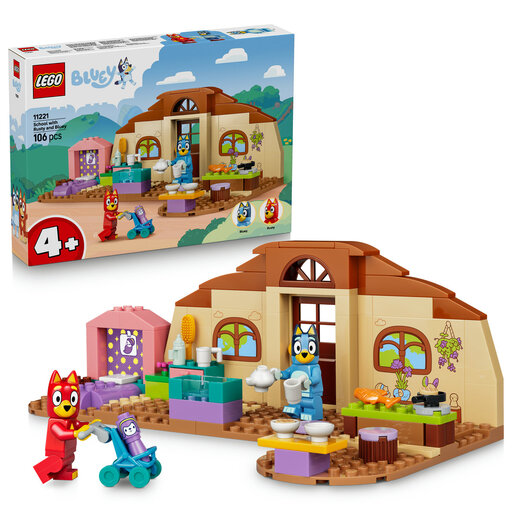
Why it suits this profile: A birthday present for children aged 4 and over who enjoy combining Bluey, building and role play.
The set has clear age guidance for 4 years and over, pictorial instructions and a defined total of 106 pieces.
Bluey and Rusty figures, a school theme, Starter Bricks and opportunities for imaginative play.
We have put together a complete, up-to-date list of products that fully meet these strict selection criteria and the applicable European safety regulations.
For babies and young toddlers, an activity cube, musical toy or simple stacking blocks is a logical choice. The 8-in-1 activity cube mentioned above combines a piano, guitar, telephone and gears in one product, among other features. With electronic functions, always check whether batteries are required and whether the volume can be adjusted.
For children aged three and over, children’s building sets, vehicles, dinosaurs, outdoor toys and climbing toys suit a more active style of play. A crane truck without batteries encourages children to push, lift and tilt it manually. With intensive outdoor use, sturdy wheels and checks for wear and tear are important.
LEGO Bluey is aimed at young fans aged three or four and over, depending on the set. LEGO Pokémon 72152 Pikachu and Poké Ball, on the other hand, is intended for adult fans aged 18 and over and contains 2,050 pieces. It is primarily a building and decorative product, rather than the same type of educational toy designed for young children.
Choose products that allow the child to grasp, turn, press, stack and listen. A compact activity cube, soft building blocks or an activity panel are practical options. Avoid small parts and supervise the child during play.
That depends on the amount of playtime, the battery type and the number of batteries. Check before buying whether batteries are included. Products without batteries, such as magnetic tiles or some building sets, have no ongoing battery costs.
Lifespan depends on the materials, how the toy is used and how well it is maintained. For everyday use, look for verifiable details such as sturdy connections, washable covers and replaceable or readily available parts. Inspect toys regularly and stop using them as soon as any part is damaged.
