
Vandaag of morgen in huis

Kwaliteit gegarandeerd

Welkomstaanbiedingen ontgrendelen: GRATIS bezorging | Tot 80% korting | Gratis 30 dagen JoyPlus-proefperiode
Download de app
A toy box can quickly fill up with products that are barely touched after a few weeks. With educational toys for children, it's not just about bright colours, lots of features or a long product title. The right choice should match the child's age, interests and way of playing.
A product with lights, music, buttons and sounds may look appealing. However, a young child can easily become distracted by it. Check whether the features match what the child can actually do: pressing, turning, building, sorting or creating a story.
For babies, simple actions are often enough. A musical baby toy, such as a drum or activity table, should therefore be easy to reach and stable. For older children, magnetic building blocks, construction toys or STEM toys usually suit independent discovery better.
A toy set might seem suitable for a toddler, yet still contain small parts. Always pay attention to the minimum age and warnings. Products with small parts are generally not suitable for children under three years old due to choking hazards.
A set with magnets requires extra care. Check that magnetic parts are securely enclosed and do not let children chew on parts during play. Damaged or opened parts should no longer be kept in the toy box.
Terms like Montessori, sensory, STEM and educational describe a play approach, not a guaranteed result. According to a brand's product description, certain toys may support fine motor skills, rhythm or spatial awareness, for example. That is different from a fixed medical or developmental claim.
Instead, focus on verifiable features: the number of parts, the age range, the material, the dimensions, whether batteries are required and how the toy is used.
Choose toys that match the child's motor skills. For babies aged 6 to 18 months, large buttons, rounded edges and a stable base are practical. For toys from age 3, small building parts and more complex tasks may be suitable, but supervision is still needed when the set contains many loose pieces.
Also check the dimensions. An activity table must stand firmly without blocking a walkway. A portable activity cube, on the other hand, is handy for visits, holidays or use at the kitchen table.
Commonly mentioned materials in this selection are ABS plastic and wood. Do not just look for "BPA-free" or "non-toxic" in the product text, but also check:
A CE marking is a manufacturer's declaration that the product meets certain EU requirements; it is not a quality ranking. For product claims about CE or EN71 conformity, we refer to the information on the relevant product page.
With electronic toys, batteries are not always included. Check the battery type and whether the battery compartment must be opened by an adult. A volume control or silent mode is useful in a flat, during a car journey or around bedtime. Keep the volume low and regularly check that buttons, cables and casings are intact.
Wooden toys such as a DIY model require a different approach. Check whether glue, tools or sharp edges are present and whether an adult needs to help with assembly.
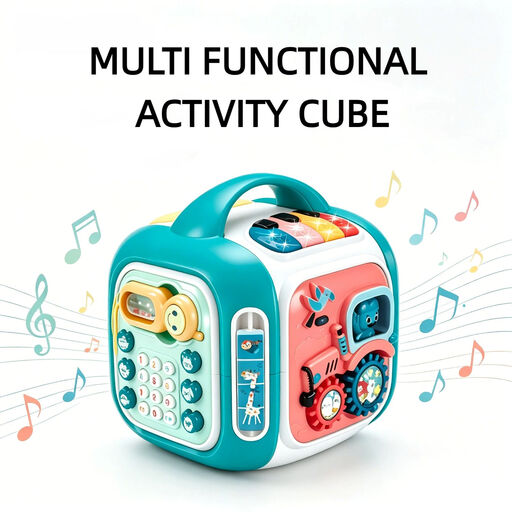
Why this fits the profile: The compact cube combines multiple activities for children aged 1 to 3 and is easy to move thanks to the handle.
The product page states the age, dimensions and that no batteries are required. This makes the conditions of use clear upfront.
Eight play modes, compact size and a carry handle; according to the product description, rounded edges and ABS material are used.
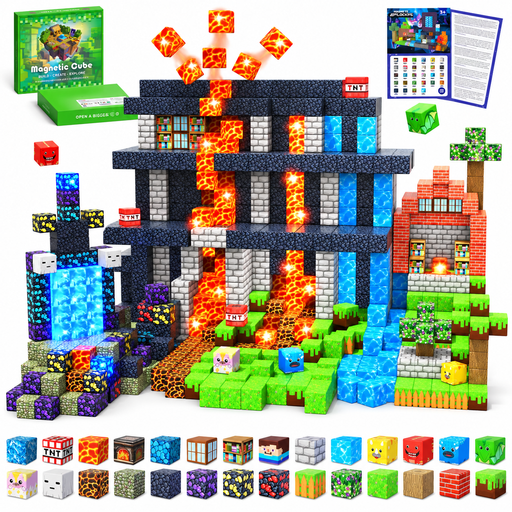
Why this fits the profile: The set is aimed at children aged 3 and over who enjoy building, making patterns and exploring spatial shapes.
The stated number of 150 parts makes the contents concrete. Still check all parts and the magnetic connections upon receipt.
150 pieces, rounded edges according to the product information and suitable for construction toys and STEM-style tasks.
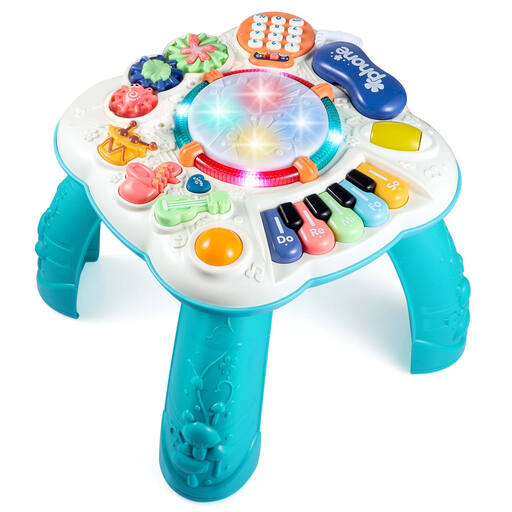
Why this fits the profile: This baby activity table is designed for households where the child often wants to switch between different play actions.
The product description mentions six play zones, removable legs and volume control. This makes it clear upfront how the product can be used at home.
Piano, drum, telephone and spinning parts; according to the product information, the legs can be removed for floor play.
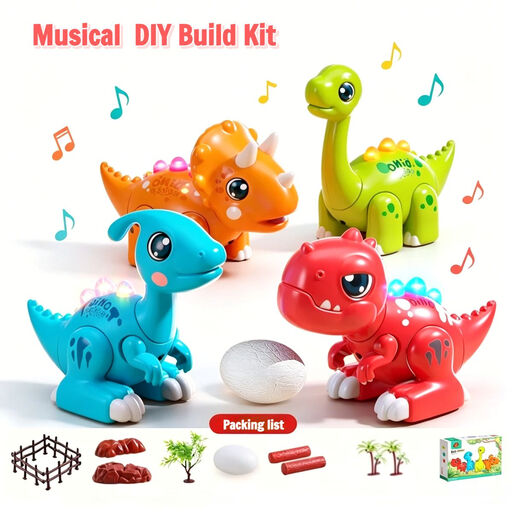
Why this fits the profile: A fitting birthday gift for children who love dinosaurs, building and role play.
The product page states four dinosaur figures, accessories, age 3-6 years and included button cell batteries. This makes the contents verifiable.
Click-together connections, light and sound effects and scenery pieces for narrative play; according to the product information, the ABS plastic has rounded edges.
We have compiled a full, up-to-date list of products that fully meet these strict selection criteria and current European safety regulations.
Choose toys with large parts, rounded edges and simple actions such as pressing, turning, sorting and tapping. A musical baby toy, activity cube or activity table can be suitable when the age recommendation is correct. Supervise play and check regularly for damage.
No. Montessori is a play and educational approach, not a safety certification. Always check the age, materials, warnings and finish. According to the product description, a product may have Montessori-inspired features, but you should assess its suitability based on the concrete specifications.
That depends on the product information and the size and fastening of the parts. Many sets are intended for children aged 3 and over, but supervision is still advisable. After play, check that magnets are securely attached and remove any parts that are cracked, loose or damaged.
