
Vandaag of morgen in huis

Kwaliteit gegarandeerd

Welkomstaanbiedingen ontgrendelen: GRATIS bezorging | Tot 80% korting | Gratis 30 dagen JoyPlus-proefperiode
Download de app
Parents and grandparents often look for educational toys for children that won’t end up at the back of a cupboard after a few days. Yet it can be tricky to judge marketing claims. A toy box may contain lots of pieces, but that doesn’t necessarily mean the toy is age-appropriate, enjoyable to play with, or built to last.
A large box with hundreds of pieces might look appealing, but young children can struggle with small parts or complicated building steps. So, don’t just check the number of pieces – also consider:
A set of 50 magnetic tiles can be more useful for a 3-year-old than a much larger building set with complex instructions.
Terms like creative, educational and STEM-focused don’t automatically describe a legal product category. Look at the concrete features instead. Can a child combine shapes, adapt a structure, invent a story, or carry out a step-by-step action? That gives you a clearer idea of the kind of play it supports.
Claims about materials and safety should also come from the product information. According to the product details from Tokky, the magnetic tile set complies with EN 71 and the materials mentioned meet EU REACH regulations. Always check the current packaging and safety warnings when you buy.
A building set with small parts could be fine for an older child, but less practical for a household with a toddler. Magnets need extra care: according to the warning on the Tokky set, swallowing two or more magnets can cause serious injury. So use magnetic toys as instructed and store loose parts safely.
Age recommendations are a starting point, not a substitute for supervision. Toys for ages 3 and up may contain small parts that need to be used under adult supervision. Also note the difference between:
For children aged 3 to 5, large, easy-to-handle pieces and short play activities often work best. Children aged 6 to 10 tend to get more out of creative building sets with multiple models or features.
Check whether the product page gives information about material, sharp edges, loose parts and safety markings. Plastic toys often mention ABS. That tells you something about the material, but it doesn’t on its own confirm suitability.
For example, the manufacturer of the DIY dinosaur set states ABS, BPA-free material, rounded edges and CE and EN71 compliance. Treat this as a manufacturer’s claim, not a general guarantee. Also check batteries, light and sound functions, and any small accessories.
A product often stays interesting for longer if children can use it in different ways. Think about:
Also check that all the pieces fit easily back into the box. That prevents loss and makes tidying up simpler.
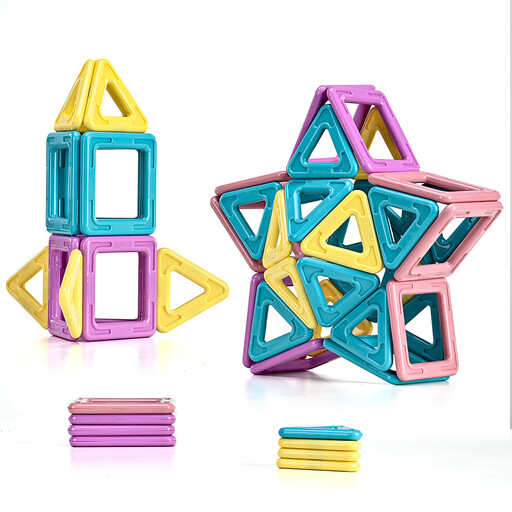
Why this fits the profile: This set contains 50 magnetic pieces in pastel shades and, according to the product information, is designed for children aged 3 and up. That makes it a good introduction to magnetic building.
The basic shapes can be combined straight away and no assembly is needed. This makes the starting point simpler than building sets with long instructions. Do bear in mind the warning about small parts and magnets.
50 ABS pieces, magnetic connections and triangular and square basic shapes for flat and 3D structures.
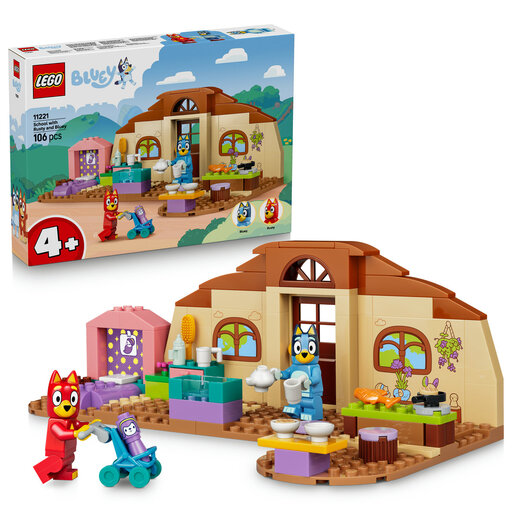
Why this fits the profile: This set is aimed at children aged 4 and over and combines building with familiar role play around Bluey. The starter bricks and picture instructions support a clear, easy start.
The set isn’t just about counting pieces: children can build, use the characters and invent their own scenes. That gives several ways to play with it.
106 pieces, two minifigures, starter bricks and access to digital building instructions via the LEGO Builder app.
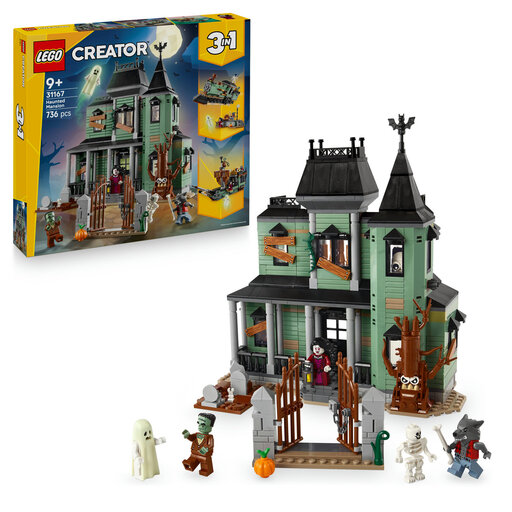
Why this fits the profile: For children aged 9 and over who enjoy building and then inventing role-play scenarios, this LEGO Creator 3-in-1 set offers a more involved project with a haunted house, ghost train or ghost ship.
The same bricks can be used for three different build ideas. Please note: according to the product information, the three models cannot be built at the same time.
736 pieces, five minifigures and interactive details such as a rotating knob that makes a ghost appear.
We’ve put together a full, up-to-date list of products that fully meet these strict selection criteria and current European safety regulations.
Not every child wants to build. A DIY craft set with foil, colouring cards and a crayon can be suitable for children aged 4 to 9 who enjoy quiet, focused activities. According to the product description, the Food Series Foil Art Craft Kit contains 112 pieces and involves peeling, pressing and decorating.
For imaginative play, a dinosaur building set, Playmobil set or fantasy-themed toy with figures and accessories are logical options. A Disney Frozen children’s make-up set contains water-based cosmetic products, according to the supplier’s product information. Always check the ingredients, age suitability, expiry date and instructions on the packaging before use. Do not use cosmetics if irritation occurs, and supervise children.
A suitable birthday gift for children doesn’t have to be specifically for boys or girls. Instead, focus on their interests, age, available play space and the way they like to play.
Choose toys with a clear age recommendation, sturdy pieces and simple actions such as stacking, clicking or sorting. Magnetic tiles can be suitable, but check the warnings and supervise children because of small parts and magnets.
How long it lasts depends on the material, storage and variety of play. Sets with multiple building options, loose accessories or room for children’s own stories often stay interesting for longer than toys with a single fixed function. Store pieces in a dry place and check regularly for damage.
Yes. LEGO building sets, magnetic tiles, creative building sets and construction toys are not gender-specific. The recommended age and the child’s personal interests give a better guide. Choose a dinosaur set, fantasy figures, animals or buildings based on what the child actually enjoys.
