
Vandaag of morgen in huis

Kwaliteit gegarandeerd

Welkomstaanbiedingen ontgrendelen: GRATIS bezorging | Tot 80% korting | Gratis 30 dagen JoyPlus-proefperiode
Download de app
Buying educational toys for children sounds simple—until you have to choose between dozens of activity cubes, construction sets, musical toys and Montessori products. A colourful design does not automatically mean that a toy is suitable for a child’s age or safe for everyday use.
Pay particular attention to three common pitfalls:
With the right selection, toys can support a child’s development while remaining engaging enough for regular use. Below, you will find the key points to check, along with several popular choices for 2026.
Start by checking the recommended age on the product page. Baby toys from 6 months should be suitable for grasping, exploring textures and responding to simple actions. Avoid components that could come loose or be swallowed by babies.
For toddlers, toddler toys with larger buttons, spinning wheels and simple shape puzzles are practical choices. Toys for ages 3 and up may contain smaller parts, but only when the safety warning permits this and an adult is able to supervise play.
Also consider the child’s play position:
Product descriptions may mention ABS, BPA-free materials, rounded edges or EN71 compliance. These are useful details, but you should also read the warnings and care instructions.
Check:
The product information for several of the articles mentioned refers to CE and EN71. This information is taken from the product descriptions; always check the current product page and packaging before purchasing. Extra caution is required with toys containing magnets: damaged or detached magnets must no longer be used.
Musical toys can be excellent for exploring rhythm, cause and effect, and imaginative play. However, constant sound can quickly become disruptive, particularly in an apartment. An adjustable volume or silent mode is therefore a practical advantage.
Also consider:
For battery-operated products, it is advisable to inspect the battery compartment regularly. Do not use the toy if the casing or battery holder is damaged.
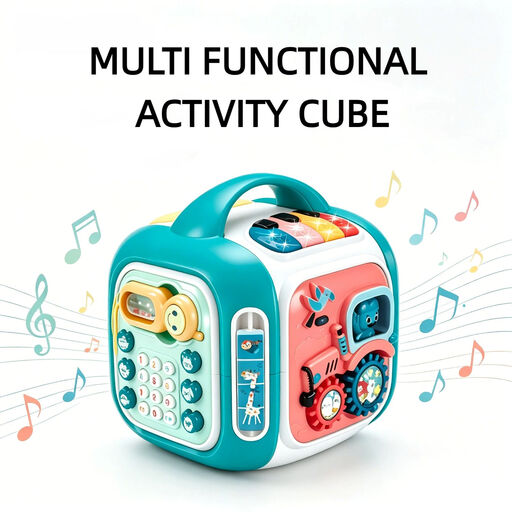
Why This Fits Their Persona: A compact choice for parents looking for several activities in one product, whether at home or on the go.
The product information describes eight play modes in one cube, along with a carry handle. Check that the volume and battery requirements suit your intended use.
ABS casing according to the product description; piano, guitar, telephone and gear functions; batteries not included.
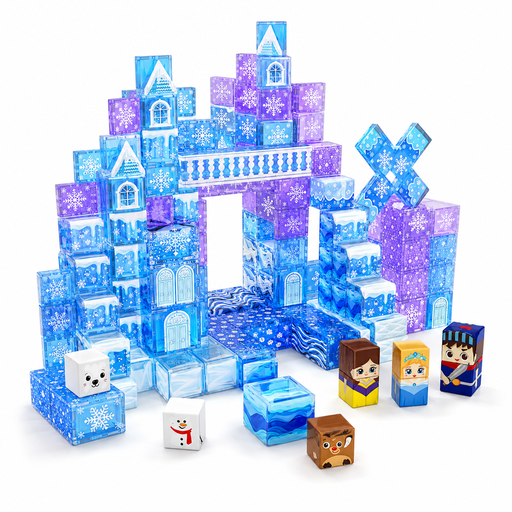
Why This Fits Their Persona: Suitable for children aged 3 and over who enjoy designing, combining and starting again from scratch.
The magnetic construction allows children to build without tools. Before use, check that every tile is intact and store the set out of reach of younger children.
Transparent design; encourages construction play and spatial awareness; recommended for ages 3 and up according to the product title.

Why This Fits Their Persona: Designed for families with ample indoor space who want to combine climbing, crawling and sensory play.
The product information mentions non-slip bases, hook-and-loop fasteners and removable covers. The balls are not included and must be purchased separately.
Soft foam components; machine-washable covers according to the description; the set may require 24–48 hours after delivery to fully expand.
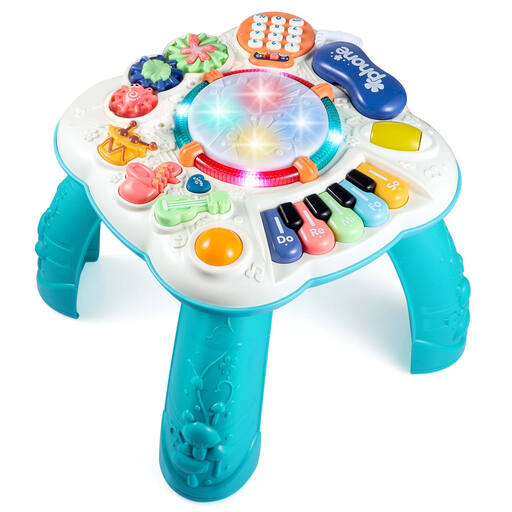
Why This Fits Their Persona: A versatile option for parents looking for one product that supports floor play first and standing play later.
According to the product description, the legs can be removed, allowing the table to be used as a floor panel at first. Check its stability before allowing a child to pull themselves up on it.
Six play zones; volume control and silent mode according to the product information; batteries not included.
The right choice depends on the available space, the child’s age and their preferred way of playing. For children aged 3 and over, a kitchen food set, dinosaur vehicle set or magnetic construction set with 85 to 150 pieces may also be worth considering. For babies, a musical drum or compact activity cube is often a better fit than a toy containing many small parts.
Browse the current selection and compare age recommendations, dimensions, materials and warnings on the page for educational toys for children.
We have curated a current selection of products that meet clear selection criteria and include relevant European safety information.
Choose baby toys with large, securely attached components and simple actions such as pressing, turning or tapping. An activity table that can also be used without its legs as a floor panel may be particularly practical. Always follow the supervision guidance and warnings on the packaging.
That depends on the type of play they offer. Toys with a single fixed sound or light effect may become repetitive more quickly. Construction sets, pretend-play toys and products with multiple levels of difficulty can remain engaging for longer, as children discover new combinations. Avoid keeping everything available at once; rotating a few sets can help maintain interest.
Magnetic building blocks are generally recommended for ages 3 and up, but always check the specific product’s age recommendation. Children should play only with undamaged components, and you should regularly check that the magnets remain securely enclosed. Magnets must never be swallowed. Keep these sets away from babies and toddlers.
