
Vandaag of morgen in huis

Kwaliteit gegarandeerd

Welkomstaanbiedingen ontgrendelen: GRATIS bezorging | Tot 80% korting | Gratis 30 dagen JoyPlus-proefperiode
Download de app
Educational toys for children should be more than just attractive in the product photo. They should be suitable for the child’s age, able to withstand daily use and offer plenty of ways to play. For parents, grandparents and other gift buyers, the choice is extensive: from Montessori toys and wooden toys to interactive toys, construction sets for children and dinosaur toys.
Even so, there are a few common pitfalls that can lead to a purchase being less suitable than expected.
Lights, sounds and buttons quickly attract attention. That does not automatically mean a child will continue playing with the toy for very long. A product with several functions is more practical when children can also build, sort, move around or make up stories themselves.
Pay attention to the balance between active play and automatic effects. A toy kitchen, construction toy or role-play toy, for example, can remain interesting for longer because the play takes on a different form each time.
“For children” is not a useful age indication. Toys for toddlers require different considerations from toys for children aged 3 and over. Small parts can pose a risk to young children. Always check the recommended age and warnings on the product page and packaging.
For example, a doll with accessories may be suitable from the age of 4, while a musical activity table for babies may be suitable for ages 6 to 36 months. Do not choose based solely on a child’s interests; consider their motor skills too.
Electronic toys can involve additional costs and maintenance. Check whether batteries are included, how many are needed and whether the volume can be adjusted. For toys with lights and sounds, volume control is useful in a flat, during quieter play or when several children are using toys at the same time.
First check:
A large climbing triangle can be great for active indoor play, but it requires clear floor space and supervision. A magnetic construction set or doll accessory takes up less room, but may contain small parts.
Product descriptions often mention materials such as ABS plastic, vinyl, wood or PVC. Also look for rounded edges, loose parts and the strength of the connections. With wooden toys, it is important to check for visible splinters, the finish and the presence of small accessories. With plastic toys, smooth edges and a securely assembled construction are important points to check.
A statement such as BPA-free comes from the product information, but does not on its own say everything about a product’s suitability. Read all the safety information and use the toy according to the instructions.
The CE marking indicates that the manufacturer declares the product complies with the relevant European regulations. The product pages for some items also mention EN71, the European standard for toy safety. Check that this information is actually provided for the specific item.
According to the product descriptions for the musical toys, these products comply with CE and EN71 requirements. This is a statement in the product information; you should still use the toys according to the age limit and warnings. The dinosaur robot mentions ASTM F963, an American toy safety standard. This is not the same as a European standard, so also check the European product information when purchasing.
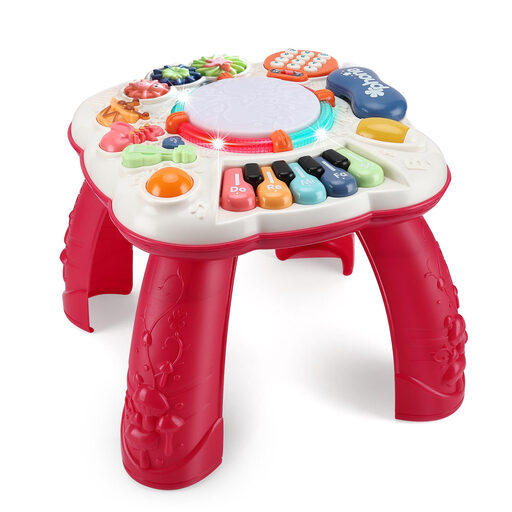
Why it suits this profile: This activity table combines several simple ways to play in one product, making it suitable as a first toy for babies and toddlers.
The age range is stated as 6–36 months. The removable legs allow it to be used on the floor or as a table. Batteries are not included.
Six play zones, including piano keys, gears and a toy telephone. The product description mentions rounded edges and BPA-free ABS plastic.
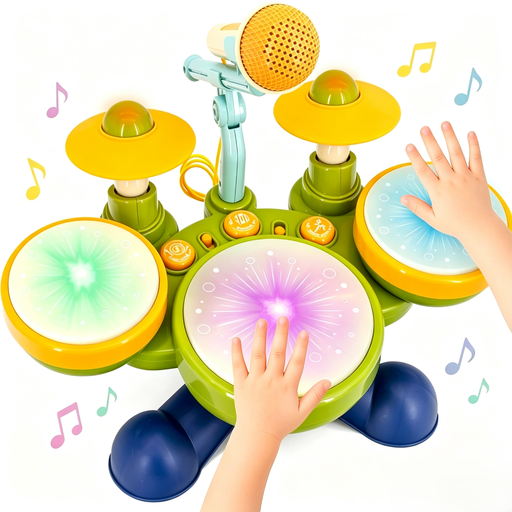
Why it suits this profile: For children aged 1 to 3 who enjoy moving, singing and discovering sounds. The set offers a clear combination of musical toys and parent-and-child play.
The built-in volume wheel helps you adjust the sound level to suit the surroundings. The recommended age and the fact that batteries are not included are clearly stated.
Three illuminated drum pads, two adjustable cymbals and a working microphone. According to the product description, the set is made from BPA-free ABS plastic with rounded edges.
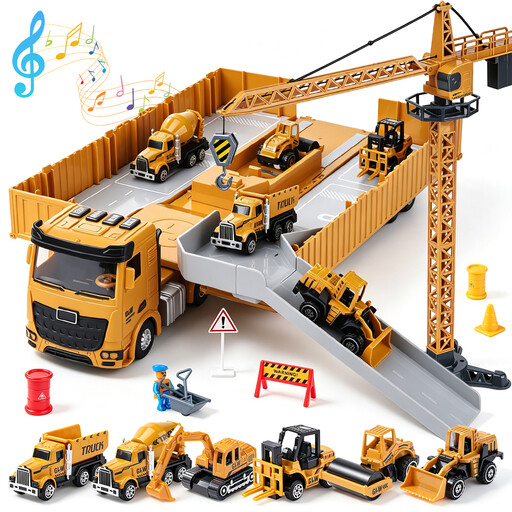
Why it suits this profile: For children aged 3 to 8 who enjoy spending a long time playing with vehicles, building and role play. The set is suitable for independent play, playing together and parent-and-child activities.
The vehicle also doubles as a storage box, helping to prevent loose parts from ending up all over the room. Do note the warning about small parts and the need for three AA batteries.
The product description mentions eight vehicles and accessories, a rotating crane and a fold-out car park. The recommended age is 3 years and over.
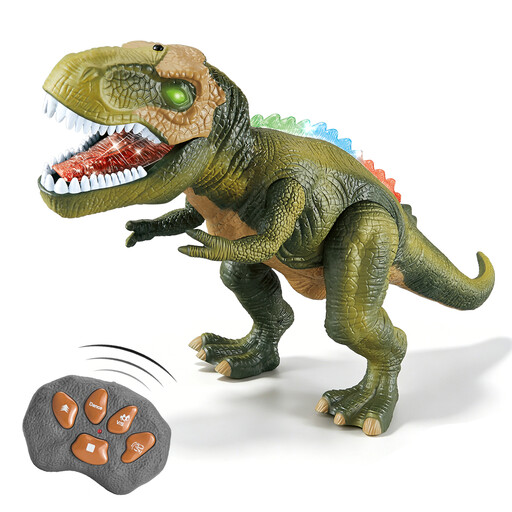
Why it suits this profile: A good choice for children with a particular interest in dinosaurs who enjoy responding to movement, lights and sounds.
The main functions are clearly described: walking, dancing, moving its head, lights and sounds. The body uses three AA batteries and the remote control uses two; these are not included.
LED lighting on the back, eyes and tongue, plus a remote control. According to the product description, the dinosaur is made from BPA-free vinyl; check the age and safety information before use.
We have put together a complete, up-to-date list of products that fully meet these strict selection criteria and the applicable European safety regulations.
Educational toys support activities such as building, sorting, moving, making music or role play. A toy is not automatically educational simply because it is marketed as “educational”. Look at the specific activity it enables, the age recommendation and whether children can vary the play independently.
The lifespan depends on the materials, moving parts, batteries and intensity of use. Regularly check buttons, hinges, magnets and accessories. Put small toys away after use and replace the batteries when a product no longer works properly. If a toy is visibly damaged or misshapen, it is best to stop using it.
In addition to the purchase price, batteries can increase the cost of use. Check whether batteries are included and which type is required. Volume control or a silent mode can also be practical at home. For everyday play, toys without batteries, such as a wooden set or simple construction set, can be easier to maintain.
