
Vandaag of morgen in huis

Kwaliteit gegarandeerd

Welkomstaanbiedingen ontgrendelen: GRATIS bezorging | Tot 80% korting | Gratis 30 dagen JoyPlus-proefperiode
Download de app
Choosing a gift for a child aged 3 to 10 may seem straightforward—until you have to decide between magnetic building blocks, wooden toys, role-play sets and outdoor toys. A product may look appealing yet offer limited play value, wear out quickly or be unsuitable for the child’s age.
As a Joybuy Product Recommendation Officer, I filter product information according to practical criteria. Pay particular attention to these three common purchasing pitfalls:
Start by checking the age recommendation. Toys intended for children aged 3 and over may contain small parts that, according to the product information, pose a choking hazard. This applies, for example, to magnetic building blocks, doll accessories and pretend-play toys.
The age shown on the packaging is a guideline, not an automatic guarantee that the toy will suit every child. A 3-year-old plays with construction toys differently from an 8-year-old. Ask yourself:
Extra care is needed with products containing strong magnets. According to the Tokky set’s product information, swallowed magnets can cause serious injury. Check regularly that the magnets remain securely enclosed, and stop using the product immediately if any part becomes damaged.
For wooden toys, check for splinters, loose joints and a smooth finish. For plastic toys, rounded edges and securely enclosed components are important. For foam play sets, a non-slip base, sturdy connectors and removable covers are practical features for a typical household.
Also pay attention to the cleaning instructions. Some products may only be cleaned with a dry or slightly damp cloth, while others have removable, machine-washable covers. This distinction matters when the toy is used every day.
A reference to EN 71 indicates European safety requirements for toys. Always check whether the information comes from the product description, manufacturer or seller. A brand claim should not be presented as conclusive evidence without a source.
Compact sets are a practical choice for apartments or smaller playrooms. Magnetic tiles, a doll set or a wooden ring-toss game can be stored away after use. A foam climbing set requires more floor space, but it can also serve as a soft play area.
For outdoor use, consider the following points:
A children’s basketball set, for example, can be used indoors or outdoors, but according to the product information, the base must be weighted with water or sand. The set is intended for children aged 3 to 8 and should be placed on a level surface.
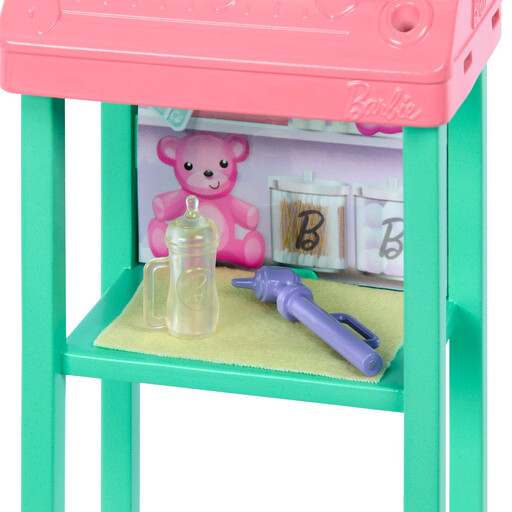
Why it’s a good fit: A well-organised choice for children who enjoy caring for others, inventing stories and engaging in role play. According to the product description, the set is suitable from 36 months.
The number of parts and the recommended age are clearly stated. However, make sure that small accessories are stored away after play.
6-piece set, no assembly required and can be wiped clean with a dry or slightly damp cloth, according to the product information.
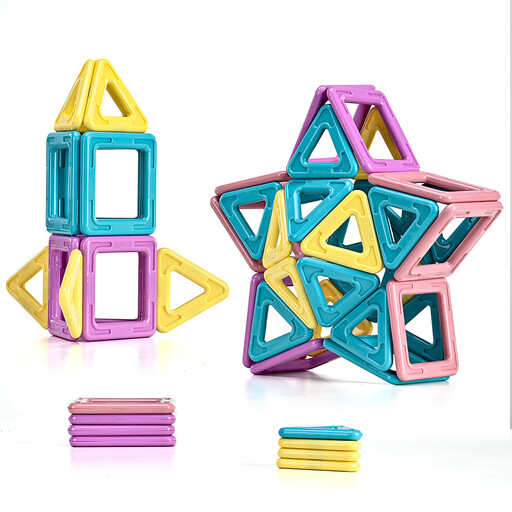
Why it’s a good fit: For children aged 3 and over who enjoy creating flat and three-dimensional shapes with pastel-coloured magnetic building tiles.
The product information specifies ABS, rounded edges and ultrasound-welded housings around the magnets. Nevertheless, inspect the tiles regularly for cracks or loose magnets.
50 pieces, no assembly required and suitable for independently combining triangles, squares and other shapes.
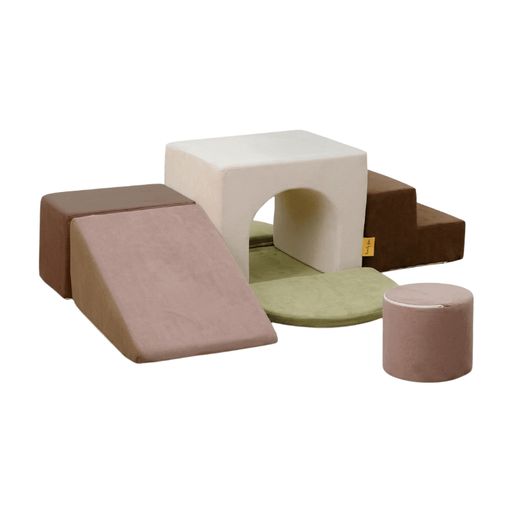
Why it’s a good fit: For families with plenty of available floor space and children who enjoy climbing, crawling, building and creating their own obstacle course.
The product information specifies a non-slip base, hook-and-loop fasteners and covers with concealed zips. Allow vacuum-packed foam pieces to expand for up to 48 hours, as described.
Removable, machine-washable covers and multiple configurations for active indoor play.
Browse a current selection of children’s playsets and compare age suitability, materials, play space and intended use before placing your order.
The right choice depends on how the child plays:
Choose toys with a clear age recommendation, rounded edges and an activity suited to the child’s abilities. Role-play toys, simple wooden games and magnetic building blocks may be appropriate, but always check the warning about small parts and provide supervision.
Their lifespan depends on the materials, frequency of use and storage conditions. Regularly inspect magnets, seams, foam connectors, wooden pins and plastic joints. Store parts in a dry, organised place and follow the cleaning instructions provided by the manufacturer or in the product description.
Many construction sets, wooden games and role-play toys work without batteries. Toys with lights or sound may require batteries, so check whether these are included. For a foam ball pit, also note that the play balls may sometimes need to be purchased separately, according to the product information.
