
Vandaag of morgen in huis

Kwaliteit gegarandeerd

Welkomstaanbiedingen ontgrendelen: GRATIS bezorging | Tot 80% korting | Gratis 30 dagen JoyPlus-proefperiode
Download de app
Educational toys for children should offer more than colourful packaging. Parents look for toys that suit their child’s age, remain interesting for long enough and match the way they like to play. However, it can be difficult to distinguish marketing claims from verifiable product information.
In this guide, you’ll learn what to look for when choosing magnetic building blocks, musical toys, sensory toys and a children’s play kitchen. You’ll then find recommendations for different user profiles, helping you make a more targeted choice.
Terms such as “Montessori”, “STEM” and “developmental” may sound appealing, but they don’t automatically explain how the toy is used in practice. It’s better to check:
For example, a toy set with lots of functions can quickly become confusing. A simpler product may remain interesting for longer if it supports several types of play.
Toys marked as suitable from 3 years onwards are not suitable for younger children if they contain small parts. So don’t just check the age stated in the title; read the warnings too. With magnetic building blocks, it’s important that the magnets cannot come loose. Check the toy for cracks, loose parts and damage before every use.
For baby and toddler toys, adult supervision is advisable, even when the product information says that the toy has rounded edges.
Musical toys can take up a lot of space at home or sound louder than expected. A volume control is therefore useful, particularly in a flat. Think about storage too: loose blocks, toy food and drumsticks can easily go missing without a bag or designated storage space.
Look at the materials used, rounded corners and whether the toy contains small parts. Product information about BPA-free ABS plastic can be useful, but also check the age limit and warnings. A CE mark is relevant within the European market; the product listing should also provide clear information about the manufacturer, importer or responsible party.
Claims about EN71 compliance come from the product information. Therefore, don’t treat “fully compliant” as a substitute for supervision or checking the product when it arrives.
For children aged 1 to 3, simple activities such as tapping, pressing, sorting and listening are often more suitable than complicated constructions. For toys suitable from 3 years onwards, you can look for:
The stated age recommendation remains the most important guide. A construction set with hundreds of small parts may be less suitable for a young child, even if the theme is appealing.
Always check whether batteries are required. Several of the musical toys in this overview do not include batteries. With electronic toys, look out for:
This helps you avoid extra costs and disappointment on the first afternoon of play.
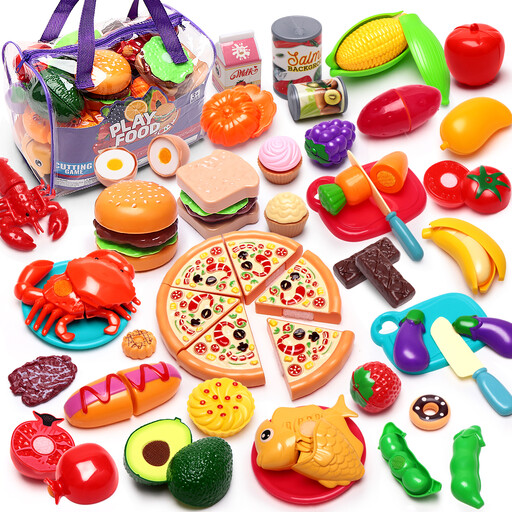
Why it suits this profile: An extensive set for children aged 3 and over who enjoy role play and “cooking” with a parent.
The set lists 78 toy food pieces, a storage bag and hook-and-loop fastenings. However, check the warning about small parts and supervise play.
BPA-free plastic according to the product description, rounded corners, no batteries required and parts that can be stored in the included bag.
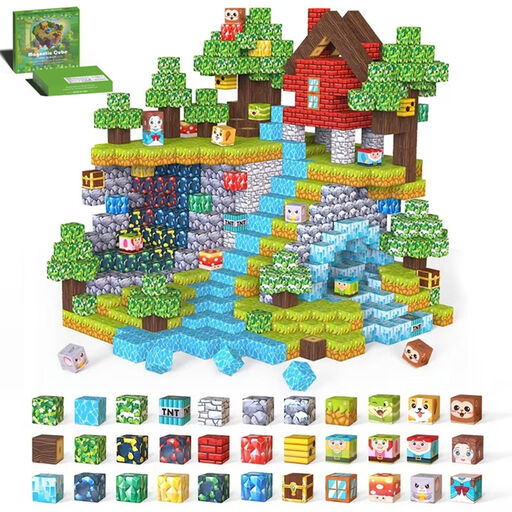
Why it suits this profile: Suitable for families looking for creative construction toys with plenty of pieces for building again and again from the age of 3.
The number of 150 pieces is clearly stated. When the set arrives, check that the magnets and connections are intact, and keep small parts out of the reach of younger children.
150-piece set, ABS material according to the product title and rounded edges as stated in the product information.
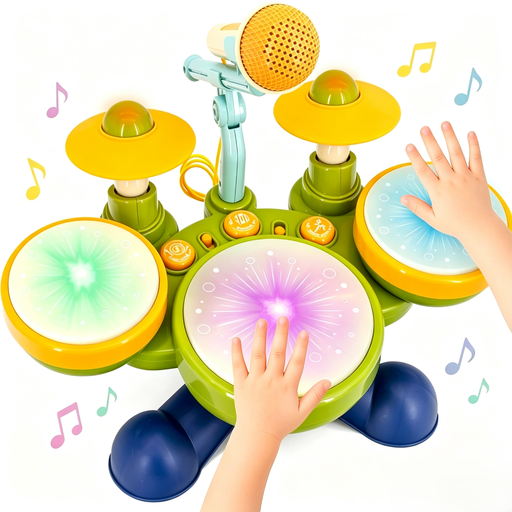
Why it suits this profile: For toddlers aged 1 to 3 who want to move, tap and sing while actively playing with musical toys.
A volume control helps parents adjust the sound level. According to the product description, the model has a removable stand; batteries are not included.
Three illuminated drum pads, two movable cymbals, a microphone and adjustable drumsticks according to the product information.
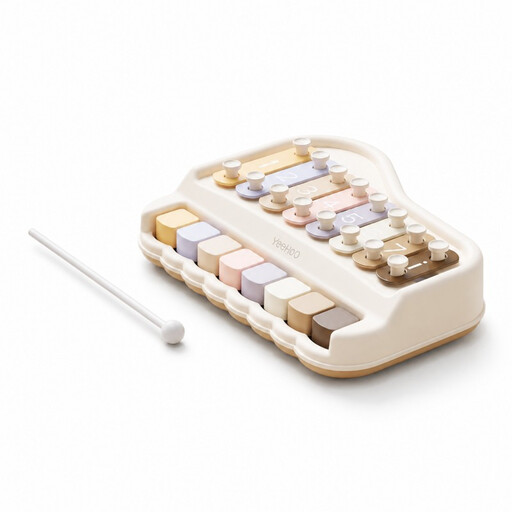
Why it suits this profile: A compact alternative to a large musical toy, suitable for children aged 3 and over and for parent-child interaction.
The product information gives dimensions of approximately 20 × 15,5 × 4,5 cm and mentions storage space for the beaters. Check for loose or damaged parts before use.
Eight tones, two playing modes and a music sheet included according to the product description.
First, choose the type of play you want to encourage. STEM toys and magnetic building blocks are ideal for children who enjoy designing and starting again. A children’s play kitchen supports imaginative play and conversation. Wooden musical instruments or a play mat are well suited to rhythm and parent-child interaction. For younger children, sensory toys with lights, sounds and shapes can be engaging, provided you follow the age limit and supervision instructions.
Then compare the materials, number of pieces, dimensions and battery requirements. This ensures that a birthday present for children is not only exciting to unwrap, but also practical for everyday use.
We’ve put together a complete, up-to-date list of products that fully meet these strict selection criteria and the applicable European safety regulations.
Choose toys with large, easy-to-handle parts and a clear age recommendation. Magnetic building blocks, simple role-play toys and musical toys are possible options. Avoid sets with small parts if younger children at home may come into contact with them.
This varies by product. Several of the models mentioned state that batteries are not included. Always check the product page for the required battery type and number before placing your order.
How long a toy remains engaging depends on the variety it offers and the child’s age. Toys with several play modes, such as building, sorting or role play, can remain useful for longer. Playing together and adding existing parts can also help make a product appealing again.
