
Vandaag of morgen in huis

Kwaliteit gegarandeerd

Welkomstaanbiedingen ontgrendelen: GRATIS bezorging | Tot 80% korting | Gratis 30 dagen JoyPlus-proefperiode
Download de app
Educational toys for children should not only sound educational, but also suit a child’s age, play space and interests. A product with lots of lights or functions may seem appealing, yet quickly go unused in practice. Likewise, a large construction set is not automatically suitable for a toddler.
With this buying guide, the Joybuy Product Recommendation Officer highlights the most important points to consider when browsing the range. This helps you compare toys based on verifiable features rather than marketing terms.
Packaging sometimes shows wide age ranges. However, the way an 8-month-old baby, a 2-year-old toddler and a 5-year-old child play can differ considerably. Therefore, check:
For example, a construction set with magnetic parts from the age of 3 is not suitable for a baby who often puts toys in their mouth.
A toy table with a piano, drum, telephone and rotating parts offers a range of activities. This is only useful if the functions match the child’s development and interests. Also pay attention to the sound controls. Musical toys without volume control can quickly become disruptive at home, especially in a flat or during quiet periods.
Words such as “safe”, “non-toxic” or “CE-certified” do not tell you everything about everyday use. Check whether the product information gives specific details about the material, age suitability, battery use and construction. The CE marking indicates that the manufacturer declares compliance with relevant European requirements; it is not a general quality ranking.
Extra care is needed with magnetic building blocks. Check regularly that the magnets are securely enclosed in the parts. Loose magnets must not be swallowed. Young children should therefore only play with magnetic toys under supervision.
For toys aimed at toddlers, large parts that are easy to hold and simple controls are often practical. For children aged 3 and over, magnetic tiles, children’s construction sets or STEM toys can offer more of a challenge. Do not just look at the age shown on the product page; also consider:
The term Montessori toy does not, in itself, describe an official safety standard. Assess the product based on specific features instead, such as manual operation, simple shapes and open-ended play.
ABS plastic is widely used in activity tables, musical instruments and construction sets. More important than the name of the material are rounded edges, sturdy construction and parts that do not come loose easily. According to the product information for some of the models mentioned, BPA-free ABS plastic and rounded edges are used. Check the current product page for the full specifications.
For wooden toys, such as a climbing triangle, look for smoothly finished surfaces, stability and a safe set-up. Use climbing equipment on a level surface and supervise children while they play.
For musical toys, a volume control and mute function are useful specifications. They make the product easier to adapt to your home and the time of day. Also check:
According to the product information, batteries are not included with the activity table and drum set mentioned. The dinosaur model uses 3 AA batteries for the toy and 2 AA batteries for the remote control.
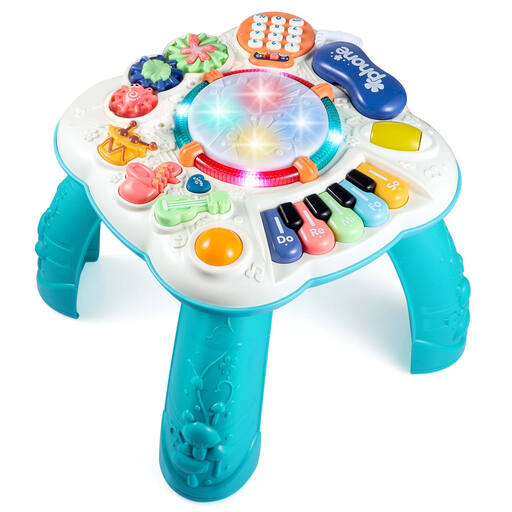
Why it suits this profile: This activity table for babies combines six play zones in one product and, according to the product description, can be used with or without its legs. This makes it a practical introduction to educational toys for children aged approximately 6 to 36 months.
The product information mentions a volume control, a silent mode and an age range of 6-36 months. However, check the current details before buying and supervise young children.
Six play zones, detachable legs, ABS plastic according to the product description, and batteries not included.
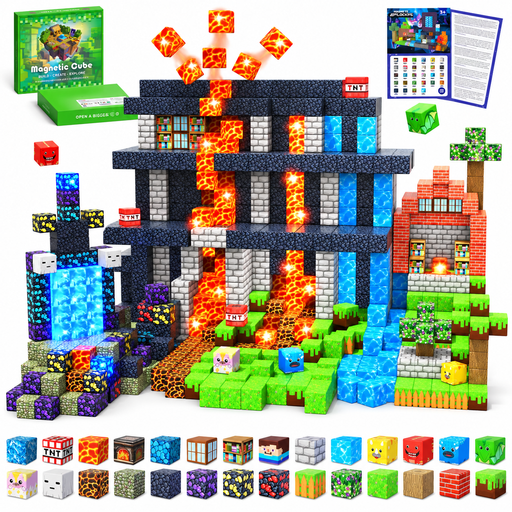
Why it suits this profile: A set of 150 parts allows for free building and repeated use. This suits children aged 3 and over who are interested in construction, patterns and spatial awareness.
The set has a clear piece count and age indication in the product name. Check that the magnets are securely enclosed and do not let children younger than the stated age play with it.
150 parts, rounded edges according to the product name, and suitable for constructions made with magnetic building blocks.
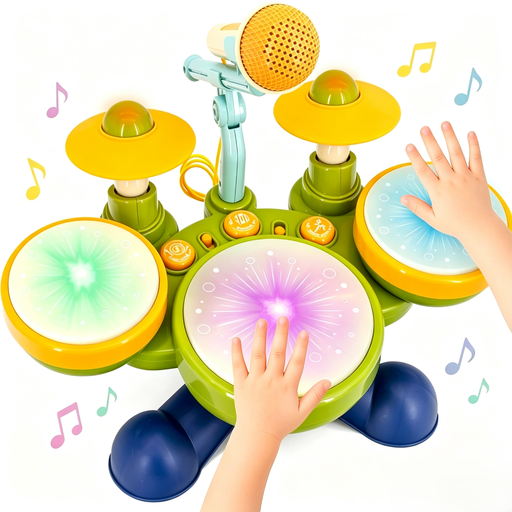
Why it suits this profile: For children aged 1-3 who enjoy moving, singing and making sounds, this drum set offers several interactive components. The detachable stand allows for different playing positions.
According to the product description, the set has a volume control and detachable stand. This is helpful in smaller homes, but always check the sound level before allowing independent play.
Three illuminated drum pads, two cymbals, microphone, volume control and batteries not included.
Use this quick checklist before buying:
For a gift for boys and girls, an open-ended toy, such as magnetic tiles, may remain interesting for longer than a product with one fixed game pattern. Compact toys are often more convenient when travelling. You can also browse the range of children’s travel toys.
We have put together a complete, up-to-date list of products that fully meet these strict selection criteria and the applicable European safety regulations.
For toddlers, activity tables, simple musical toys and large building pieces are practical choices. Always check the age indication and avoid toys with small parts if a child still puts lots of things in their mouth.
How long a toy lasts depends on its material, construction, maintenance and the child’s interest. An open-ended construction set may last longer because children can keep creating new shapes. With electronic toys, batteries, switches and moving parts also help determine how intensively the product can be used.
No. STEM toys can also involve simple activities with shapes, cause and effect or building. For young children, large parts and straightforward actions are more important than complicated tasks. Choose a product that matches the child’s motor skills and concentration span.
