
Vandaag of morgen in huis

Kwaliteit gegarandeerd

Welkomstaanbiedingen ontgrendelen: GRATIS bezorging | Tot 80% korting | Gratis 30 dagen JoyPlus-proefperiode
Download de app
A brightly coloured package is no guarantee of a good toy. When choosing educational toys for children, parents often focus mainly on age, theme and price. Yet the biggest differences are usually found in the details: small parts, limited play time, batteries not included or a product that does not suit the child’s motor development.
With this guide, the Joybuy Product Recommendation Officer filters the most important information. This allows you to compare baby toys, musical toys, sensory toys and creative playsets based on verifiable features rather than bold marketing claims.
A product marked “from 3 years” may seem appealing for a younger child, but small accessories can pose a risk. Conversely, toys for babies from a certain age may be too simple for a pre-schooler. So do not just look at the age shown on the front. Also consider:
Lights, sounds and dozens of buttons attract attention. That does not automatically mean a child will play with the toy for long. A product is more practical when it supports several types of play, such as building, sorting, movement, making up stories or role play.
With musical toys, for example, volume control is more relevant than simply the number of sound effects. With Montessori toys or sensory toys, the focus is more on independent discovery, grasping, sorting and cause and effect.
Before buying, check whether batteries are included. Some activity tables and drum sets are supplied without batteries. Also consider cleaning, storage and expansion sets. Magnetic building blocks, for example, are more appealing when they can be combined with existing blocks without requiring an additional purchase.
For toddler toys, rounded edges, a sturdy base and a suitable size are important. An activity table that can be converted into a floor panel is useful at different stages of play, but check that the parts are securely attached and that the product stands firmly.
For toys intended for children aged 3 and over, check whether the child can handle the accessories safely. A doll’s house, dinosaur figure or building set involves a different type of play from a baby activity centre.
Product descriptions sometimes mention ABS plastic, BPA-free materials, PVC or a coating. Treat this as product specification information, and also check the warnings and recommended supervision. A mention of CE and EN71 in the product information indicates that the seller claims compliance; if in doubt, always check the latest information on the product page.
Pay particular attention to:
Ask yourself how the toy will actually be used. A set with several ways to play may be more suitable for everyday use. A blind box figure is more likely to be suitable as a collectible or a gift for an older user. With collectible toys and blind box figures, the contents are often random. Do not buy with the expectation of receiving a specific version.
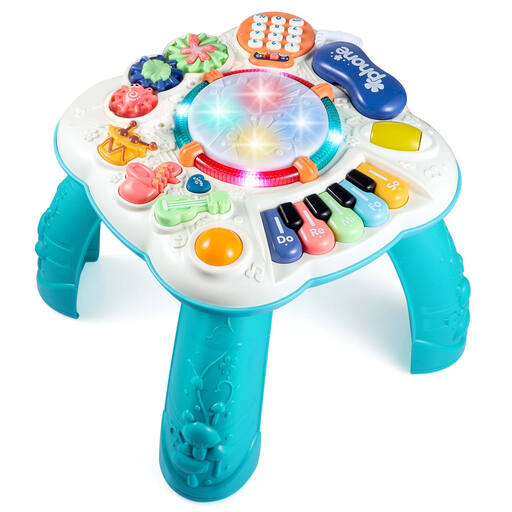
Why it suits this profile: This activity table is designed for children aged 6 to 36 months and can be used with or without its legs. That makes it a practical choice for families looking to use one product across several stages of play.
The product information lists six play zones and volume control. However, check whether the required batteries need to be purchased separately.
ABS plastic according to the product description, rounded edges, six activities and a convertible design.
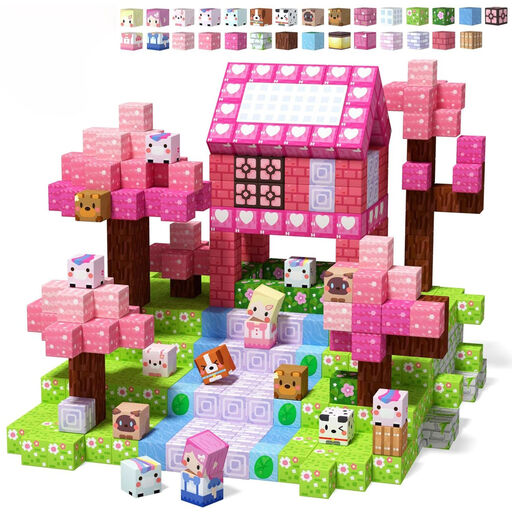
Why it suits this profile: For children aged 3 and over who enjoy combining building with storytelling. With 100 pieces and 29 tree models, the set encourages creative play without batteries or sound.
Play does not depend on lights or sound. Check the age warning before use, and supervise young children when they play with magnetic parts.
100 pieces, magnetic construction and a combination of building, sorting and imaginative play.
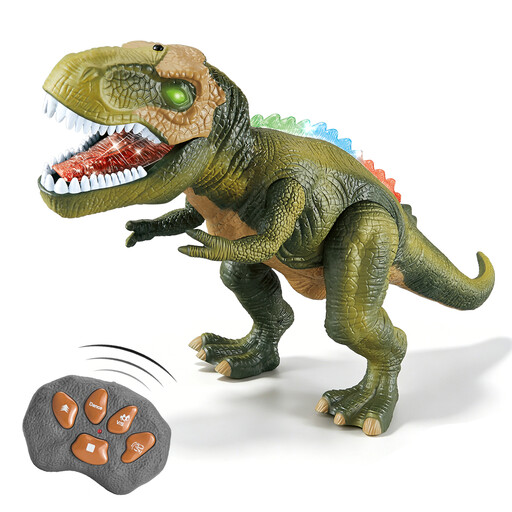
Why it suits this profile: A focused choice for children interested in dinosaurs and moving toys. The remote control makes walking and dancing part of the play.
The functions are clearly described: walking, head movements, lights and sounds. The dinosaur requires 3 AA batteries and the remote control requires 2; these are not included.
Remote control, LED lighting, sound effects and a dinosaur design for active role play.
For gentle imaginary storytelling, dolls and doll’s houses, such as the Sylvanian Families Sea Otter Family, are suitable for children aged 3 and over. The set includes figures, clothing and accessories; small parts require supervision.
A cuddly rabbit can be a simple birthday present for children, but check the warning about small parts. Blind box figures are appealing to older children and collectors. The contents are random, and some products are intended exclusively for users aged 8 or 15 and over.
Dress-up and make-up toys also require you to check the packaging, ingredients, shelf life and instructions for use. Claims such as “water-based” or “washable” come from the brand’s product information; always follow the label.
We have put together a complete, up-to-date list of products that fully meet these strict selection criteria and the applicable European safety regulations.
Choose toys with large, securely attached parts and simple cause-and-effect functions. An activity table, sorter or simple musical toy may be suitable, provided the age indication and safety warnings are appropriate for the child.
Their lifespan depends on the material, how intensively they are played with and the child’s interests. Products that can be adapted or offer several ways to play, such as a convertible table or magnetic building set, may remain relevant for longer. Check regularly for loose parts, damage and leaking batteries.
In addition to the purchase price, batteries and any accessories may need to be taken into account. Check whether batteries are included, whether the volume can be adjusted and how easy the product is to clean and store. This helps avoid surprises after purchase.
