
Vandaag of morgen in huis

Kwaliteit gegarandeerd

Welkomstaanbiedingen ontgrendelen: GRATIS bezorging | Tot 80% korting | Gratis 30 dagen JoyPlus-proefperiode
Download de app
Educational toys for children can support building, discovery, movement and imaginative play. However, choosing the right one is not always straightforward. Colourful packaging or promises about “learning through play” say little about whether a toy is suitable for your child. Age, materials, size and how the toy will be used are much more important.
This guide helps parents, grandparents and other gift buyers assess marketing claims more carefully and choose toys that suit a child’s development and interests.
“From 3 years” does not mean that every child from that age can play without supervision. Magnets, small building blocks and loose accessories can pose a choking hazard. Always check the warnings on the product page and consider whether the child is used to handling small parts.
Extra care is needed with magnetic building blocks. Swallowed magnets can cause serious injury. Before each use, check that the magnets are firmly secured and stop using the toy immediately if any component is damaged.
A building set with 150 or 500 pieces may look appealing, but the number of parts is not automatically a measure of how enjoyable it will be. For a toddler, large blocks that are easy to grip are often more suitable than small pieces. Older children may get more enjoyment from a model with building instructions or a complex construction system.
Also consider storage. A set without a sturdy box or bag is more likely to become incomplete. This is particularly inconvenient with magnetic building blocks, children’s puzzles and small construction sets.
Lights, sounds and a microphone can be appealing, but not every family wants a toy with a high volume level. With musical toys, an adjustable volume control is therefore a useful specification. For outdoor toys, portability, exposure to the weather and supervision are more important.
Choose toys based on both the stated age range and the child’s level of development. For babies and young toddlers, larger shapes without loose small parts are the more sensible choice. Toys from 3 years may contain small parts, but supervision is still advisable.
For example, the YEEHOO Navia Forest Mystery set contains 22 building blocks and, according to the product information, is offered for children from 12 months. The manufacturer states that supervision is recommended and that damaged or loose components should be removed immediately.
Much construction toy is made from ABS plastic. Check whether the product information mentions rounded edges, burrs, loose parts and how the magnets are enclosed. The Tokky Magnetic Tiles, for example, state that the magnets are ultrasonically sealed and that the edges are smooth and burr-free. According to the product information, this set complies with the EN 71 toy safety standard.
A safety statement is not a reason to skip your own checks. Inspect toys regularly and follow the instructions for use. Do not use products with cracked components, loose magnets or missing pieces.
A compact set is useful for an apartment, a holiday or a visit to grandparents. The 2.5 cm magnetic forest set from XINQIYUAN comes with a storage container and, according to the product description, is designed for creating forest landscapes and animal habitats.
For outdoor play, a portable design can be useful. According to the product specifications, the Science Can Kids STEM Bug-Catching Kit measures 16 × 16 × 18,01 cm, has a 5× lens with 360° rotation and a ventilated lid. The product is intended for temporarily observing insects, plants or small aquatic animals. After viewing them, make sure children return animals to their natural environment.
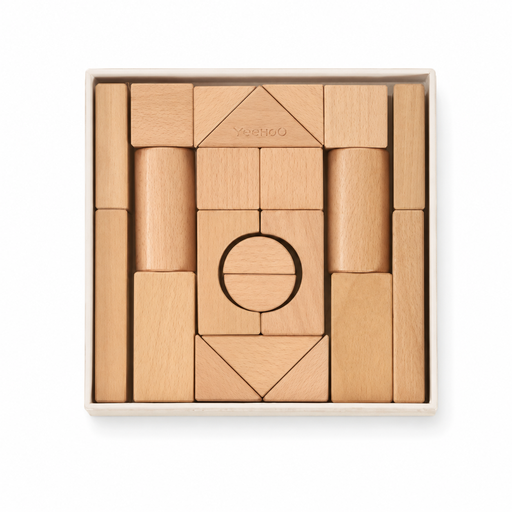
Why it suits this profile: A manageable set for young children discovering stacking, shapes and simple storytelling.
The 22 pieces are easy to keep track of. The product information also states a recommended age from 12 months and warns against using damaged components.
22 building blocks, woodland theme, no batteries and suitable for parent-and-child play.
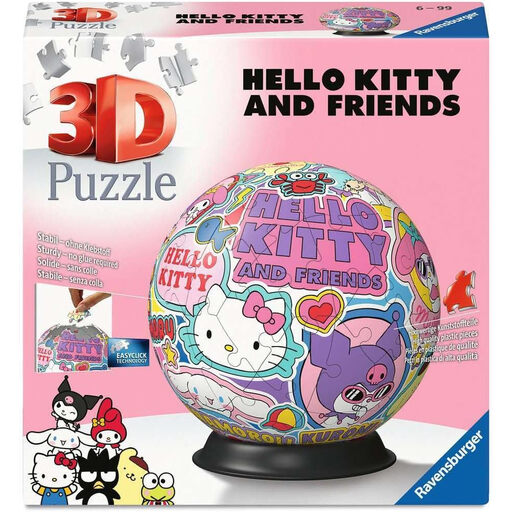
Why it suits this profile: For children from 6 years who enjoy calmly working towards a tangible end result.
The 72 plastic puzzle pieces are numbered on the back and designed to click together without glue. This makes the process easy to follow.
72 pieces, Easyclick system, sturdy 3D shape and stand included.

Why it suits this profile: For curious children aged 3 to 12 who want to observe plants and small animals outdoors.
The kit has a ventilated lid and a removable cleaning opening. According to the product description, it is reusable; animals should be released after observation.
5× magnification, 360° rotating lens, portable design and no assembly required.
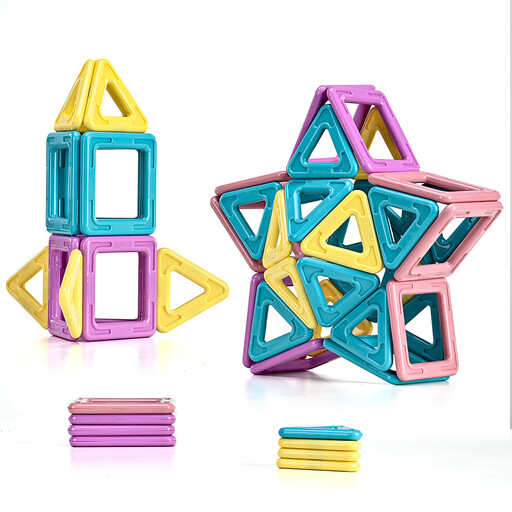
Why it suits this profile: A great gift choice for children who enjoy building houses, vehicles, animals and other shapes.
The product information states a minimum age of 3 years, embedded magnets and a warning about loose or damaged components.
50 pieces, pastel colours, triangles and squares, storage box and no batteries required.
We have put together a complete, up-to-date list of products that fully meet these strict selection criteria and the applicable European safety requirements.
When choosing a toy as a gift, consider more than just age. Think about the child’s interests too. A child who enjoys being outdoors may get more from the bug-catching kit than from a building set. A play kitchen set may be a better fit for role play, while musical toys could suit children who enjoy creating rhythms.
These are toys that allow children to recognise shapes, build, sort, create stories or observe their surroundings while playing, for example. Examples include magnetic building blocks, STEM toys, puzzles, musical toys and construction toys. The educational value depends mainly on how the child plays with the toy and whether an adult joins in occasionally.
Their lifespan depends on the materials, storage and use. Keep small parts in the supplied box, keep magnetic sets away from heat and moisture, and check toys regularly for cracks or loose components. Products with parts that are no longer securely attached should be replaced.
Many building sets, puzzles and observation toys work without batteries. Electronic or musical toys may require batteries, so check the product information. For example, the drum set in the range states that batteries are not included. Also consider cleaning instructions and the storage space available, so that the toy remains practical to use.
