
Vandaag of morgen in huis

Kwaliteit gegarandeerd

Welkomstaanbiedingen ontgrendelen: GRATIS bezorging | Tot 80% korting | Gratis 30 dagen JoyPlus-proefperiode
Download de app
Educational toys for children should primarily suit their age, interests and everyday play environment. A product with lots of lights and buttons may look appealing, but that does not automatically make it suitable for a baby or toddler. A large box full of parts may also go unused if the toy is too difficult, takes up too much space or is awkward to store.
Before buying, watch out for these three common pitfalls:
Always check the recommended age on the product page and compare it with the child’s stage of development. For babies aged 6 to 12 months, large, easy-to-grip parts and simple cause-and-effect activities are generally more suitable than loose construction pieces.
For toys from age 3, construction toys and magnetic building blocks can be interesting. However, the warnings remain important: small parts can pose a choking hazard. Young children need supervision, even when a product is described as being made from safe materials.
An age label is not a substitute for a parent’s or carer’s judgement. Also consider the child’s motor skills, whether they tend to put objects in their mouth and where the toy will be used.
Look for clear information about:
A CE marking is a declaration of conformity by the manufacturer or responsible party. It is not a quality ranking and does not prove that a product is suitable for every child. Therefore, always check the full warnings and the latest product information.
According to the product descriptions of several items mentioned, certain models are made from BPA-free ABS and have rounded edges. This information comes from the listing and is not an independent assessment. Magnetic toys require extra checks: stop using the toy immediately if a magnet comes loose or a part is damaged.
With musical toys for babies, a baby activity table or a musical instrument for toddlers, adjustable volume settings are practical. A volume control or silent mode gives parents more control in a flat, during quiet time or while travelling. Also check whether batteries are included and how easy they are to replace.
A product with lots of features is not necessarily more valuable. Six or eight play zones are mainly useful if the child can operate them independently. Also consider cleaning advice, storage space and how stable the toy is on the floor.
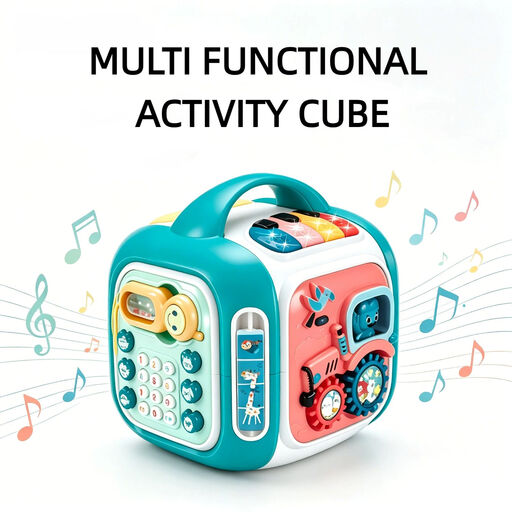
Why it suits this profile: This compact cube combines several activities in one product. That can be useful for families with limited play space or anyone looking for a portable gift for a toddler. According to the product description, it includes piano, guitar, telephone and cogwheel functions.
The 1-3 years age range and compact design make the choice more straightforward. However, check the batteries, volume and warnings yourself before use.
Eight play modes according to the listing, ABS material and a handle for transport. The product is intended for children aged 1-3 years.
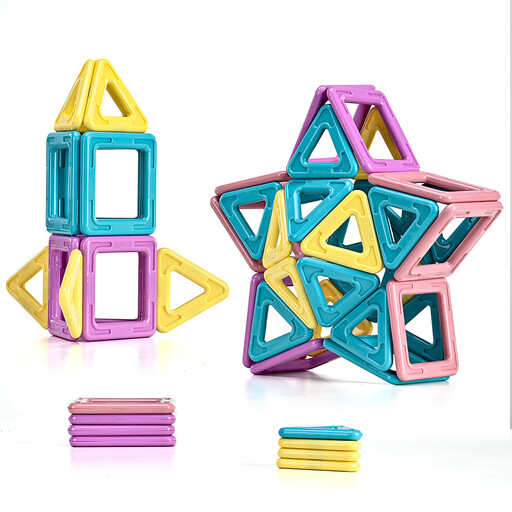
Why it suits this profile: For children aged 3 and over who enjoy building, a set with different geometric shapes offers plenty of scope for open-ended play. The product information lists 50 pieces, ABS plastic and embedded magnets.
The listing includes explicit warnings about small parts and strong magnets. Inspect the tiles regularly and let children play under supervision.
50 pieces, pastel colours and magnetic connections according to the product description. The recommended age is 3 years and over.
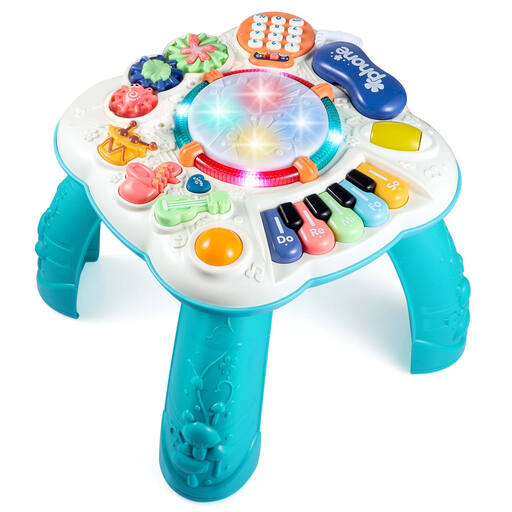
Why it suits this profile: This activity table is intended for children aged 6-36 months and, according to the product description, has six play zones, including a piano keyboard, drum, telephone and rotating cogwheels. The legs can be removed for floor play.
The option to convert it from a floor panel into a table makes the product useful across several stages of play. According to the listing, it also has volume control; batteries need to be provided separately.
For children who enjoy making music, a children’s drum kit or a baby musical drum could be suitable options. Check the volume control, stability and age limit. A toddler who mainly wants to build may get more from creative construction toys or a 100- or 150-piece set of magnetic building blocks.
For a birthday or Christmas present, the packaging is practical, but it should not be the deciding factor. Look at the age suitability and play safety first. Collectable toys, model cars and blind-box figures form a separate category. Some models, such as the Volkswagen T1 and Yamaha YZF-R1, are intended for ages 14 and over according to the product information. Blind-box figures may contain small parts and are therefore not suitable for young children.
We have put together a complete, up-to-date list of products that fully meet these strict selection criteria and the applicable European safety regulations.
Choose large, sturdy parts without loose small components. A musical baby toy with simple push buttons, sounds and visual responses may suit this stage. Always check the age recommendation and stay nearby while the child is playing.
Lifespan depends on the material, usage and storage conditions. Electronic toys may need batteries; magnetic sets should be checked regularly for damage. Store parts in a dry, organised place and follow the manufacturer’s care instructions.
No. “Montessori” is not a guarantee of a particular type of play value. Look at the specific activity: can the child sort, build, turn, listen or engage in pretend play independently? A simple product that matches the child’s interests may be more practical than a toy set with lots of features.
