
Vandaag of morgen in huis

Kwaliteit gegarandeerd

Welkomstaanbiedingen ontgrendelen: GRATIS bezorging | Tot 80% korting | Gratis 30 dagen JoyPlus-proefperiode
Download de app
Educational toys for children should be more than just seemingly educational on the packaging. They should be suitable for the child’s age, safe and offer enough ways to play to avoid ending up in the cupboard after a few days. That is why parents, grandparents and other family members are paying increasing attention to materials, playtime and ease of use.
There is a wide range of products to choose from, including magnetic building blocks and STEM toys, as well as an interactive activity table, children’s drum or play kitchen with food. Below, you can read what to look out for in practical terms in the Netherlands and which popular choices suit different play profiles.
A toy may have lots of buttons, lights and sounds, but that does not automatically mean a child will play with it for long. So check which actions the child performs themselves. Pressing, building, sorting, combining and role play generally offer more variety than a single repetitive sound.
For musical toys for babies, an adjustable volume and simple controls are practical features. Without volume control, a children’s piano or toy drum can quickly become disruptive in a flat or during quieter moments.
A product for children aged 3 and over is not suitable for a baby who puts everything in their mouth. Small parts, balls and magnets can pose a risk. Always check the age indication, warnings and whether there are small loose parts.
Also consider the motor skills required. A complicated construction set may be interesting for a 7-year-old, but frustrating for a toddler. For younger children, larger parts, rounded edges and stable constructions are often a more sensible choice.
Terms such as “safe”, “non-toxic” or “sustainable” are only useful when supported by clear product information. Check whether the material is specified, whether care instructions are provided and whether the manufacturer or seller supplies safety information.
A CE marking indicates that the responsible party declares that the product meets relevant EU requirements. It is not an independent quality mark. For toys, the applicable requirements concerning toy safety and warnings are particularly important. Keep the packaging and instructions, especially for toys with batteries or magnetic components.
First choose based on the child’s age and development. For babies aged 6 to 18 months, simple cause-and-effect activities, soft controls and stable shapes are suitable for discovering things together. From the age of 3, creative construction toys, role play and simple sorting or building tasks become more relevant.
Also check:
For plastic toys, rounded edges, a smooth surface and sturdy connections are practical points to consider. The product information for several baby products in this overview mentions ABS and BPA-free materials. Always check the latest specifications on the product page and follow the manufacturer’s warnings.
For wooden or DIY products, the finish is particularly important. According to the product information, the DIY wooden Bluetooth speaker model contains small parts and may have accessible sharp edges. Supervised use is especially important here.
Musical toys often run on batteries. Check the type required and whether batteries are included. A volume control or silent mode is useful when the toy is used indoors.
Storage also matters. A set with lots of parts but no storage bag or box is more likely to become incomplete. A play kitchen set with a transparent storage bag, for example, is more practical for families who regularly tidy away or take toys with them.
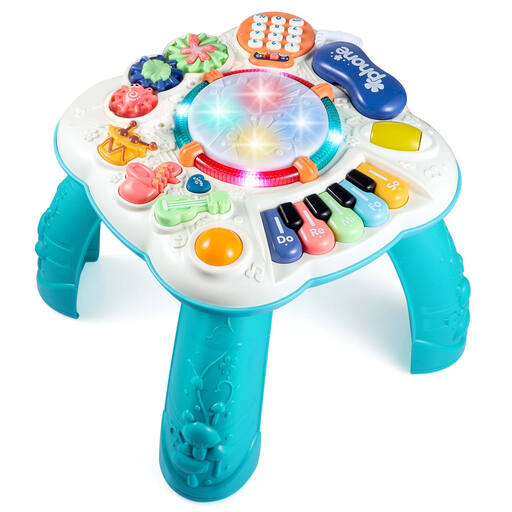
Why it suits this profile: According to the product information, this compact activity table combines six play zones, including piano keys, a drum, gears and a toy telephone. The detachable legs allow it to be used on the floor or as a standing table.
The different activities provide more variety than a single sound function. The product information states that it is made from BPA-free ABS, with rounded edges and volume control. Check the latest warnings before use.
Suitable for 6–36 months according to the product listing; batteries are not included; detachable legs and adjustable volume.
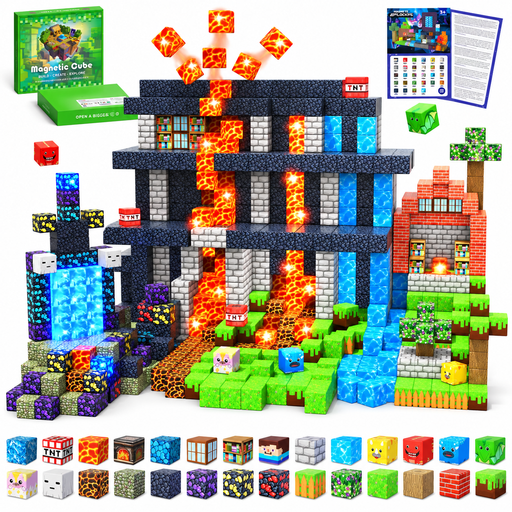
Why it suits this profile: A 150-piece set provides plenty of scope for repeated building and expansion. The product title mentions ABS, rounded edges and suitability from the age of 3. This makes it an option for children who enjoy adapting their constructions.
The large number of parts prevents limited building options. Before buying, check the magnetic connections, warnings and storage options on the product page.
150 pieces; natural design; intended for children aged 3 and over according to the product title.
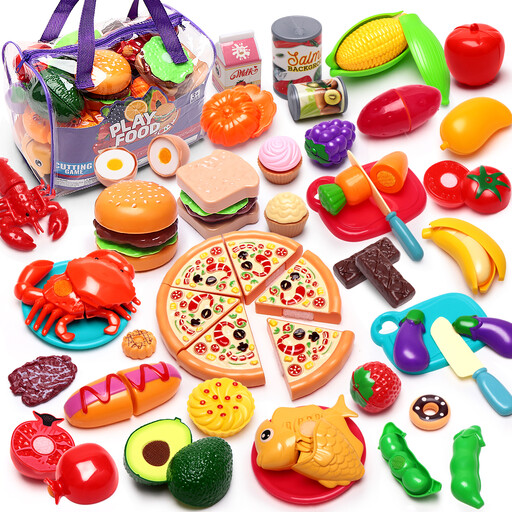
Why it suits this profile: This toy kitchen with food is designed for role play. According to the product information, the set contains 78 toy food items with hook-and-loop fasteners for safe “cutting”, plus a storage bag.
The storage bag helps keep the parts together. However, note the warning: small parts may present a choking hazard, and the set is not suitable for children under 3 years of age.
78 listed food items; BPA-free plastic according to the product information; no batteries required; storage bag included.
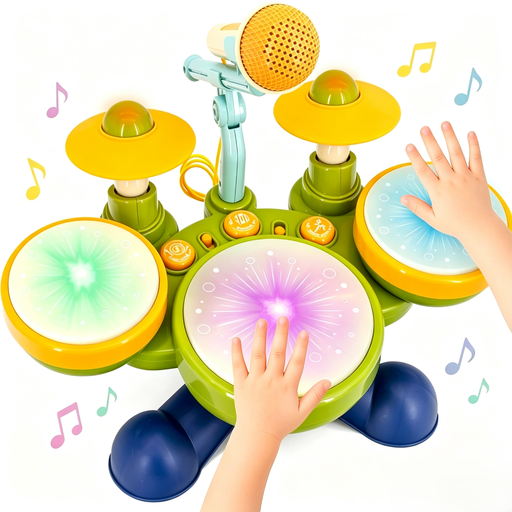
Why it suits this profile: This children’s toy drum is intended for 1–3-year-olds and, according to the product information, includes illuminated drums, cymbals, a microphone and a detachable stand.
The volume control helps adjust the sound level. The detachable stand offers another playing arrangement, but always check stability and supervise children during use.
Suitable for 1–3 years; working microphone; adjustable volume; detachable stand; batteries not included.
We have put together a complete, up-to-date list of products that fully meet these strict selection criteria and the applicable European safety regulations.
Magnetic building blocks, simple STEM playsets, role-play toys and creative construction toys are practical options. Choose a product with a clear age indication and check whether it contains small parts.
Lifespan depends on the materials, connections, storage and use. Sets with expansion parts or several ways to play can remain interesting for longer. Store small parts somewhere dry and keep them together, and regularly check for cracks, loose parts or damage.
In addition to the purchase price, batteries and noise levels may be factors. So check whether batteries are included, how the volume is controlled and whether there is a silent mode. With intensive use, easy cleaning and sturdy controls are also practical considerations.
