
Vandaag of morgen in huis

Kwaliteit gegarandeerd

Welkomstaanbiedingen ontgrendelen: GRATIS bezorging | Tot 80% korting | Gratis 30 dagen JoyPlus-proefperiode
Download de app
Educational toys can help children explore, build, sort and enjoy imaginative play. But not every colourful or ‘Montessori-inspired’ product is automatically right for your child. Marketing copy often focuses on development, while important details about age, size, batteries or small parts may be less prominent.
As a Joybuy Product Recommendations Officer, I focus on the practical details that matter most. That way, you can compare toys using verifiable specifications rather than relying on promises alone.
A product labelled ‘from 1 year’ may still contain small parts, sounds or activities that aren’t suitable for every child of that age. So check the minimum age, the size of the parts and how the toy is used.
For toys for children aged 1 and over, large parts that are easy to grip and simple activities are usually more practical. For children aged 3 and over, toys with more parts, shape games and imaginative play may be more engaging. Every child develops differently, but the age recommendation remains the first safety check.
Terms such as ‘Montessori toy’, ‘sensory toy’ and ‘supports cognitive development’ sound appealing, but they don’t always tell you exactly what a product does. For example, a brand’s product description may say that an activity table spins, lights up and makes sounds. That doesn’t automatically mean every child will play with it independently for long periods.
Instead, look for specific features:
Some electronic toys need batteries that aren’t included. Also check whether the parts can be cleaned, how much storage space the product needs and whether you’ll have to buy accessories separately. For example, extra play pieces or balls may not be included with a water and sand table.
Always check the recommended age and safety warnings. Magnetic construction toys need extra care: according to the product information, Tokky Magnetic Tiles are suitable from age 3 and contain strong built-in magnets. The manufacturer warns that swallowing magnets can cause serious injury. Use this type of toy under supervision and check the parts regularly for damage.
Building blocks and shape games may also contain small parts. A product for children aged 2 and over isn’t automatically suitable for a baby who still often puts toys in their mouth.
ABS plastic products can be lightweight and easy to clean. However, check the specific safety information for each product. According to the product description provided, some models are made from BPA-free ABS with rounded edges. Other products are listed with CE or EN 71 information.
A CE mark isn’t a quality rating. It indicates that the manufacturer declares the product meets the relevant European requirements. Also check:
A baby activity table can offer plenty of ways to play, but it takes up more space than a toddler activity cube. The musical activity table in this selection measures around 30 × 30 × 31 cm and has removable legs. According to the product description, it can therefore be used as a floor panel or a table. Batteries aren’t included.
For toys that make sounds, look for a volume control and a quiet mode, if available. This is useful in a flat, when travelling or when several children are playing in the same room.
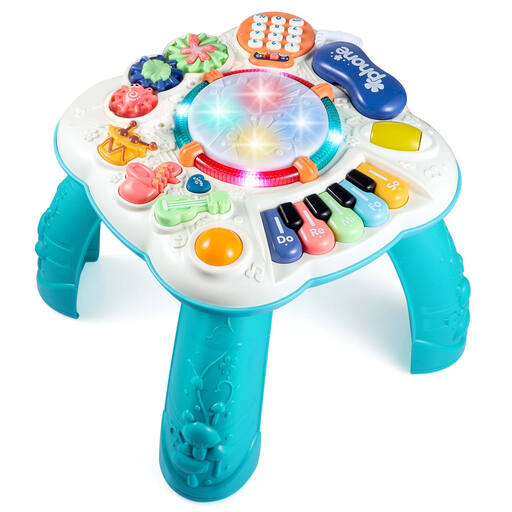
Why it suits this profile: A compact option for parents looking for several activities in one product, without having to buy lots of separate toys straight away.
The product description lists six play zones, removable legs and a volume control. Remember to check whether you need to buy the batteries separately.
Removable legs, six interactive zones and a stated size of around 30 × 30 × 31 cm.
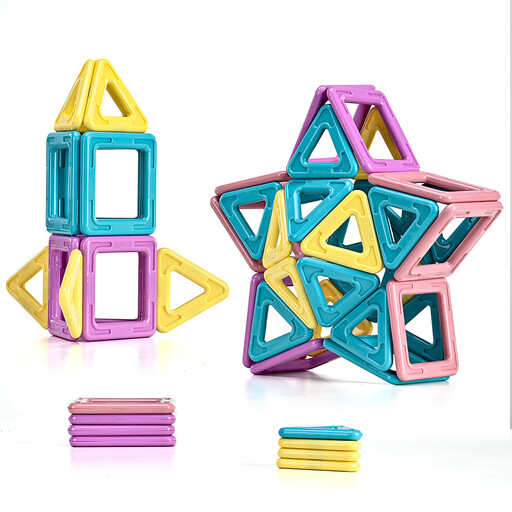
Why it suits this profile: Suitable for children aged 3 and over who enjoy designing their own creations with wooden and magnetic construction toys as an alternative to traditional stacking toys.
The product information mentions smooth edges, ultrasonically sealed magnets and a clear warning about small parts. Supervision is still essential.
50 pieces, including basic shapes such as triangles and squares, with no batteries required.
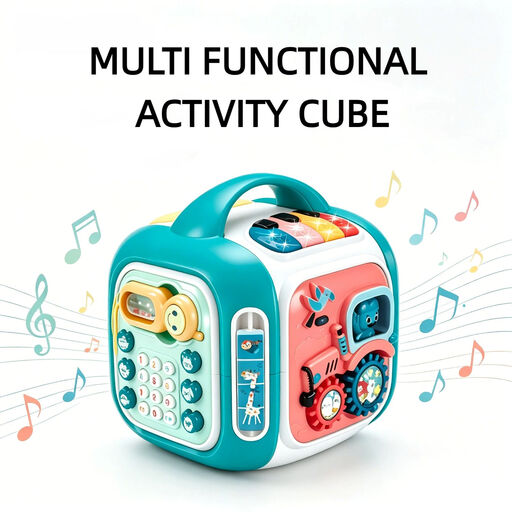
Why it suits this profile: A handy option for families looking for a portable toy to use at home, on the go or when visiting family.
The stated dimensions of around 23 × 23 × 24 cm and the handle make it easy to judge how much storage space it needs and how portable it is. Batteries aren’t included.
Eight play modes, including a piano, guitar, phone and gears; according to the product information, it’s made from BPA-free ABS with rounded edges.

Why it suits this profile: A straightforward shape game for children aged 2 to 5, offering short play sessions at the table with no batteries required.
The game includes 16 cardboard shapes and colour cards, and has a stated playing time of around 15 minutes. This makes it clear what you’ll receive.
No assembly or batteries needed; designed to develop shape and colour recognition and manual dexterity.
We’ve put together a complete, up-to-date list of products that meet these strict selection criteria and the current European safety requirements.
Choose toys with large parts, simple activities and a clear age recommendation. Activity tables, soft blocks and simple building blocks may be suitable, but always check the warnings and stay nearby while your child is playing.
It depends on the materials, how often the toy is played with and how well it’s maintained. Check moving parts regularly, replace damaged toys and store magnetic tiles in a dry place. Electronic toys may last longer if you remove the batteries before putting them away for an extended period.
No. A simple shape game that doesn’t need batteries can be affordable and still offer focused play. The price is often affected by the number of parts, electronics, materials and accessories. So compare what’s in the box and how long your child is likely to use it, rather than looking at the product name alone.
