
Vandaag of morgen in huis

Kwaliteit gegarandeerd

Welkomstaanbiedingen ontgrendelen: GRATIS bezorging | Tot 80% korting | Gratis 30 dagen JoyPlus-proefperiode
Download de app
Educational toys should be more than just fun-sounding words on the packaging. They need to suit a child’s age, play space and preferred way of playing. Parents and grandparents often run into the same problems: a building set turns out to be too complicated, magnetic pieces are easily lost, or a game needs batteries that aren’t included.
This guide helps you cut through the noise with the Joybuy Product Recommendation Officer. You can compare educational toys based on verifiable features, rather than relying on marketing copy alone.
A product labelled “from age 3” isn’t automatically suitable for every toddler. Consider the number of small parts, the size of the pieces and whether adult supervision is needed. For example, a three-year-old may already enjoy playing with simple magnetic tiles, but still need help with more complicated builds.
Always check:
A set with 150 pieces may sound appealing, but how much fun it offers depends on the shapes, connections and storage space available. With magnetic building blocks, it’s also important to check whether the tiles are compatible with one another. A small starter set may be easier for a young child to manage than a large building set with lots of loose pieces.
So don’t just look at the number of pieces. Check which shapes are included, whether examples or instructions are provided, and how to store the set after play.
Construction toys, puzzles and board games may contain small parts. Magnetic tiles need extra care because of the loose magnets they may contain. Swallowed magnets can pose a serious risk. Stop using the product immediately if a tile is damaged or a magnet comes loose.
A visible CE marking is mentioned in the supplied product information for several products. Always check the full warnings on the product page and packaging too. A CE marking is no substitute for appropriate supervision or checking the toy before use.
For toddler and pre-school toys, large pieces that are easy to grip are often a practical choice. A simple fishing game or a compact set of magnetic tiles gives children immediate feedback: they can see what happens as soon as they move or connect a piece.
For toys for children aged 6 and over, consider games with rules, time limits or multi-step challenges. Options include board games for children, puzzles and construction toys that call for more planning and precision.
ABS plastic is often used for magnetic building sets. Check whether the product description mentions rounded edges, a smooth finish and securely enclosed magnets. The Tokky model, for example, is described as having tiles made from ABS plastic with rounded edges. According to the product information, the pieces should be cleaned with a dry cloth and must not be treated with water or harsh products.
Wooden and metal puzzles need different considerations. The MIMI metal brain teasers are described as having some edges and corners that may be sharp by design. Supervised use is therefore an important factor when choosing them.
Measure the space where the toy will be used and stored. According to its product specifications, the Little Dutch Fishing Game measures 55 × 23 × 17 cm. It’s suitable for a play table or the floor, but needs more storage space than a small card game.
Check whether batteries are needed too. Dokter Bibber runs on 3 AA batteries, which aren’t included according to the product information. A fishing game or magnetic building set doesn’t need batteries, so it can be used straight out of the box.
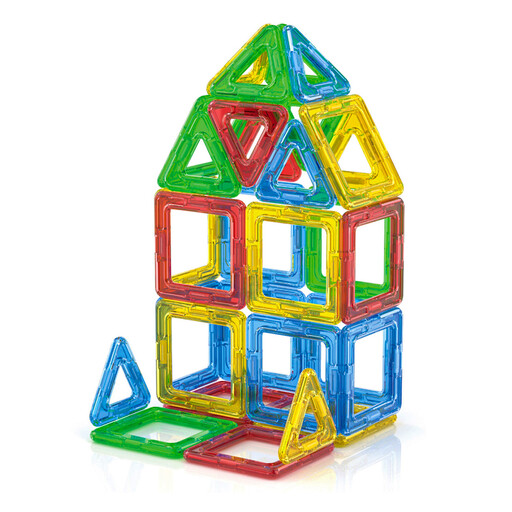
Why it suits this profile: The set contains 36 pieces and, according to the product information, is intended for children aged 3 and over. That makes it a manageable introduction to magnetic building blocks.
The clear piece count means you don’t have to buy a large set before finding out whether the child enjoys magnetic building.
ABS plastic, rounded edges and no assembly required. The tiles can be combined to make flat or three-dimensional designs.
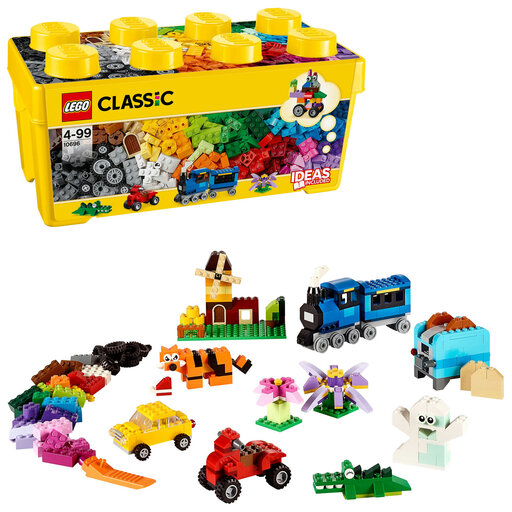
Why it suits this profile: According to the product description, this building set is suitable for children aged 4 and over. It contains 484 pieces in 35 colours, along with a storage box and an ideas booklet.
The included storage box helps keep loose pieces together. Make sure small bricks are kept out of reach of younger children.
484 pieces, 35 colours, 18 wheels and a green building plate. According to the product description, the bricks are compatible with other LEGO Classic sets.
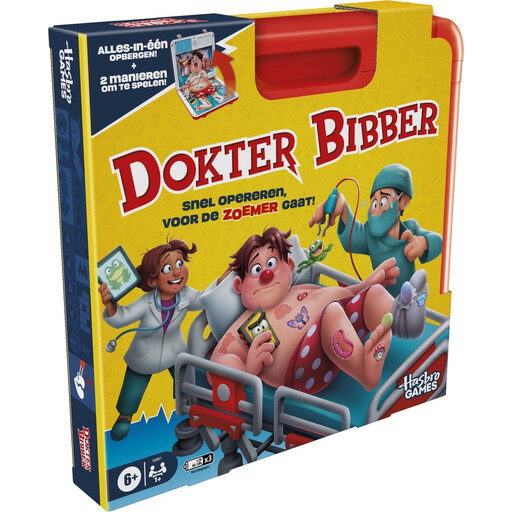
Why it suits this profile: For families looking to make time for a regular game together, this board game offers two modes and a playing time of around 20 minutes, according to the product specifications.
The minimum age of 6 is clearly stated. Bear in mind that it needs 3 AA batteries, which aren’t included.
Two game modes, 12 ailment pieces and an integrated carry case. According to the product information, use under adult supervision.
We’ve put together a complete, up-to-date list of products that meet these strict selection criteria and the applicable European safety regulations.
Choose toys labelled for ages 3 and over, with manageable pieces and a simple activity. Magnetic tiles with larger shapes, a fishing game or creative toys with clear colour and shape combinations are practical options. Always check the warning about small parts and stay nearby while your child plays.
Magnetic building blocks can be suitable when the magnets are securely enclosed and the product has a clear age recommendation. Check the toy before every use for cracks, loose parts or visible magnets. Never let children put magnets in their mouths. If a magnet is swallowed, contact medical help immediately.
Lifespan depends on the materials, how the toy is used and how it’s stored. Construction toys often stay in good condition for longer when the pieces are kept dry and sorted. With board games, it’s a good idea to put all the counters and cards back in the box after each game. Toys that use batteries also need their battery compartment checked to prevent leaks or corrosion.
