
Vandaag of morgen in huis

Kwaliteit gegarandeerd

Welkomstaanbiedingen ontgrendelen: GRATIS bezorging | Tot 80% korting | Gratis 30 dagen JoyPlus-proefperiode
Download de app
Educational toys for children do not have to be complicated or expensive. The most important thing is that they suit the child’s age, interests and way of playing. A baby needs different stimulation from a child practising sums or independently building a construction.
Yet purchases often go wrong. Products are promoted using terms such as “Montessori”, “STEM” or “sensory development”, without it always being clear what the toy actually offers. With these checkpoints, you can make a more informed choice for use at home, on the go or as a birthday present for children.
A baby activity table with lights, sounds, a piano and spinning parts may seem versatile. However, a standing table may not yet be suitable for a six-month-old. So check whether the toy can also be used as a floor panel and whether the stated age range matches the child’s motor development.
The opposite risk applies to toys for toddlers: a product may be too simple and stop being challenging after a short time. Look for extendable components, different ways to play or opportunities for playing together.
Words such as “Montessori”, “STEM” and “sensory toy” are not an automatic guarantee of quality. A product only has practical value when its features are clearly described. Examples include spinning, sorting, building, counting, making music or solving a problem.
According to the manufacturer’s own information, a product may support fine motor skills, hand-eye coordination or auditory perception. This is not a medical or guaranteed developmental claim. Focus instead on the actions the child performs and whether they fit into your usual play routine.
A CE mark indicates that the responsible party declares the product complies with relevant EU requirements. It is not an independent ranking system. Also check:
Magnetic toys require extra care. Check that the magnets are securely enclosed, and never allow children to bite parts or play with the toy if any components are damaged.
For babies of around 6 to 12 months, floor toys, graspable parts and simple cause-and-effect features are generally more practical. From the age of 1, an activity table, toy musical instrument or compact busy board can offer more variety. For children aged 3 and over, magnetic building blocks, construction toys, dinosaur toys and simple game sets are often suitable, provided that small parts are not an issue.
A broad age range does not mean that every feature is equally useful at every age. Pay attention to the motor actions involved: grasping, pressing, sorting, combining or planning.
ABS plastic is widely used in educational toys. Check whether the product information mentions BPA-free material, rounded edges and a sturdy construction. Wooden DIY toys may contain small parts and functional sharp edges; only use them according to the warnings and under supervision when indicated.
The Little Dutch Fishing Game, for example, is intended for children aged 3 and over. The product information warns about small parts and recommends supervision. This makes the set less suitable for young toddlers, even though the game looks simple.
Musical baby toys and electronic STEM products sometimes run on loose batteries or a rechargeable battery. Before buying, check:
Volume control is useful in a flat, during quiet times or when you are out and about. Do not use electronic products at a high volume for extended periods. Toys without electronics, such as magnetic building sets or a fishing game, do not incur battery costs, but you should still check their components regularly.
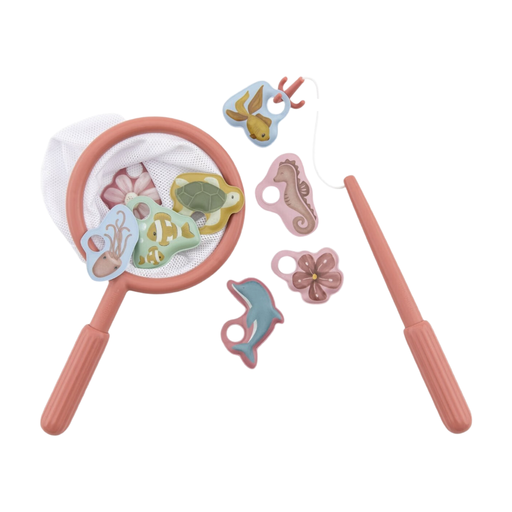
Why it suits this profile: This simple fishing game works without batteries and is suitable for playing together indoors or outdoors.
The product information clearly states that it is suitable from the age of 3 and warns about small parts. There are no batteries or complicated settings.
No power supply required; dimensions of 55 x 23 x 17 cm; suitable for interactive play.
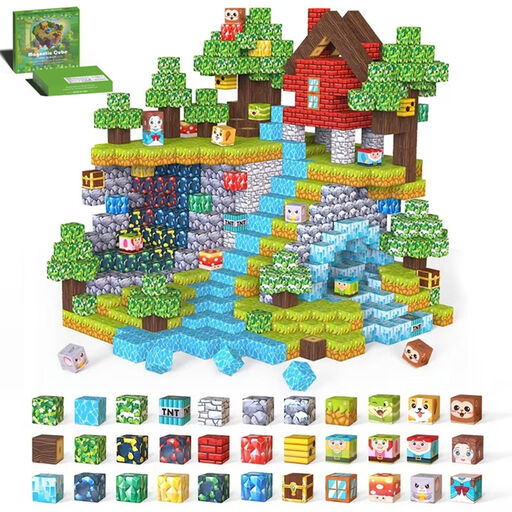
Why it suits this profile: A large set is ideal for children who enjoy building, combining pieces and continually adapting their constructions.
The set is intended for children aged 3 and over. Always check the magnet housing before use and follow the warnings concerning small parts.
150 pieces; magnetic construction system; suitable as a STEM toy and construction toy.
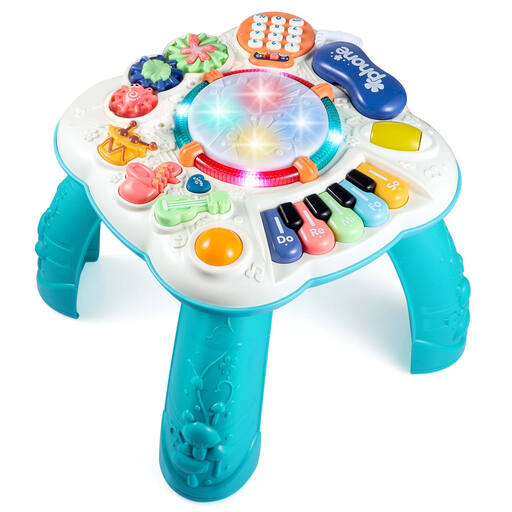
Why it suits this profile: This table is designed for babies and toddlers who want to explore different actions, from pressing keys to turning gears.
According to the product information, the legs can be removed so that the product can also be used as a floor panel. The volume is adjustable; batteries are not included.
Six play zones; dimensions of approximately 30 x 30 x 31 cm; the product page states that it is made from BPA-free ABS and has rounded edges.
We have put together a complete, up-to-date list of products that fully meet these strict selection criteria and the applicable European safety regulations.
When choosing a birthday present or Christmas present for children, do not focus solely on the packaging. Ask yourself what the child enjoys playing with: music, building, movement, imagination, maths or playing together. A suitable product will generally be used more often than a gift that simply has lots of features.
Choose toys with large, securely attached parts, rounded edges and simple features such as grasping, pressing, turning and listening. Always check the minimum age. A product for children aged 3 and over is not suitable for a baby because it may contain small parts.
No. “Montessori” often describes a play style involving independent actions and simple materials, but the word alone says nothing about safety, durability or suitability. Look at the specific features, age range, dimensions and warnings.
That depends on the product. Musical baby toys and interactive tables often use loose batteries, which are not always included. A magnetic building set or fishing game works without batteries. Also check whether the volume can be adjusted and whether charging is required before you buy.
