
Vandaag of morgen in huis

Kwaliteit gegarandeerd

Welkomstaanbiedingen ontgrendelen: GRATIS bezorging | Tot 80% korting | Gratis 30 dagen JoyPlus-proefperiode
Download de app
Educational toys for children can help them practise moving, listening, building, imagining and working together through play. However, a flashy box is no guarantee that a product will be used for long or that it suits your child’s age. Especially with baby toys and toys for 1 to 3 year olds, there are a few important points to check.
A play table with lights, music, buttons and spinning parts may seem versatile. But a child can quickly lose interest if the features don’t match their developmental stage. So don’t just look at the number of activities – consider how a child plays: pressing, turning, grasping, sorting or moving.
A product for children aged 3 and up may contain small parts that are not suitable for babies or toddlers. Conversely, a simple rattle-like product may offer little challenge to a 5-year-old. Always check the stated minimum age, warnings and dimensions before you order.
Many electronic musical toys do not come with batteries included. Also check whether the volume is adjustable and whether parts are easy to clean. For magnetic building blocks and construction toys, it’s important to make sure all parts are complete and can be stored away after use.
For babies around 6 to 12 months, activities that involve grasping, looking, tapping or reaching for a moving object during tummy time are ideal. A baby activity cube or sensory toy with different textures and simple sounds can work well here.
From 1 to 3 years, cause and effect, first role-play games and simple music become more interesting. A musical activity table or toddler musical toy offers multiple play options without needing complicated rules.
From 3 years onwards, magnetic building blocks, imaginative play toys and construction toys can place more emphasis on building, creating stories and playing together. With magnets, pay extra attention to the casing and always follow the manufacturer’s age warning.
Check the product information for:
According to the product information for several of the items below, ABS parts are BPA-free and have rounded edges. This is a statement in the product description and not an independent assessment. Also look for the stated CE marking and EN71 reference. A CE marking indicates that the seller declares compliance with relevant European requirements; if in doubt, always check the current information on the product page.
For toys with music or lights, a volume control is useful in a flat, during quiet times or on the go. A stable base is important for a table that a toddler might lean against. For mobile use, a handle, compact dimensions and a storage bag are practical bonuses.
Also think about where the toy will be used. A large soft play set needs more space than an activity cube. A construction set with lots of loose parts works better if you have a dedicated storage spot.
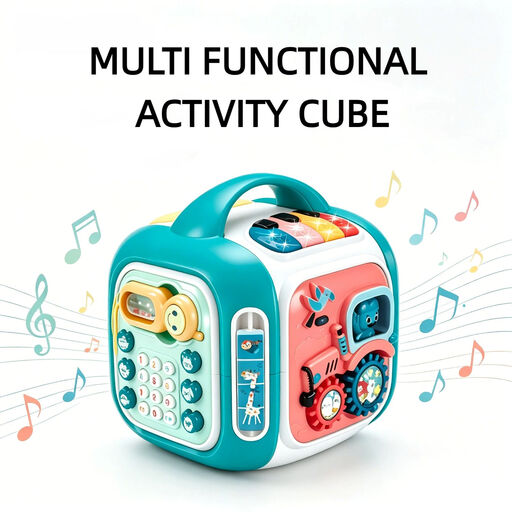
Why this fits the profile: According to the product description, this compact cube combines eight activities, including a piano, guitar, telephone, gears and a musical windmill. Thanks to the handle, it’s also suitable for visits or car journeys.
The age is stated as 1 to 3 years and the product is smaller than an activity table. Batteries are not included; bear this in mind when considering the total cost.
Compact size of 23 × 23 × 24 cm, multiple manual activities and a carrying handle.
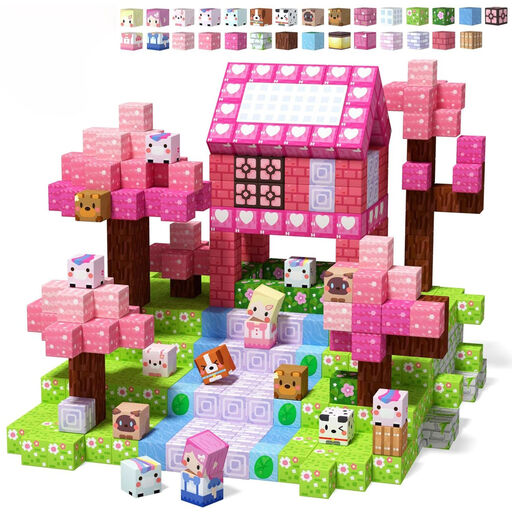
Why this fits the profile: For children aged 3 and up who enjoy building and making up stories, this set offers 100 pieces and 29 tree models according to the product name. The theme can appeal to imaginative play.
The age recommendation of 3+ is clearly stated in the product name. Still check the full safety information before purchase and store magnetic parts away after play.
100 pieces and a themed building challenge for spatial awareness and creative play.

Why this fits the profile: This soft play set is designed for active climbing, crawling and sensory play. It suits families with enough indoor space and children who prefer moving around to sitting at a table.
The product information mentions non-slip bases, concealed zips and removable, machine-washable covers. The balls for the ball pit are not included.
Soft foam parts, washable covers and multiple configurations for climbing and crawling.
A kitchen set with Velcro fastenings, for example, can be suitable for children aged 3 and up. The product information warns about small parts and choking hazards. Therefore, do not use this type of toy for younger children and supervise when necessary.
We’ve put together a full, up-to-date list of products that fully meet these strict selection criteria and current European safety regulations.
Choose toys with simple actions such as pressing, turning, tapping, sorting and imitating. An activity cube or musical activity table can combine several skills. Always check the minimum age, the sound level and the presence of small parts.
Not always. For several of the products mentioned, it is explicitly stated that batteries are not included. So check before you buy what type and how many batteries are needed. With electronic toys, battery life also depends on usage, volume and light functions.
The lifespan depends on age, material, play intensity and interest. Toys with open-ended play possibilities, such as magnetic building blocks or a soft play set, can often stay interesting for longer than a product with a single fixed programme. Regularly check for loose, damaged or missing parts.
