
Vandaag of morgen in huis

Kwaliteit gegarandeerd

Welkomstaanbiedingen ontgrendelen: GRATIS bezorging | Tot 80% korting | Gratis 30 dagen JoyPlus-proefperiode
Download de app
Educational toys for children can provide hours of enjoyment, but not every product suits every age or home environment. A baby needs different stimulation from a pre-schooler who enjoys building, making up stories or playing pretend. Focusing only on eye-catching looks or a long list of features can therefore quickly lead to a disappointing purchase.
A toy with lights, music, buttons and sounds may seem versatile. However, too much stimulation can cause a baby or toddler to lose interest quickly. So do not just look at the number of play modes; focus primarily on the actions a child can perform independently. Turning, pressing, stacking and sorting are often well suited to the early stages of development.
A product listed as toys for children aged 3+ is not automatically suitable for a younger toddler. Small parts can pose a choking hazard, and some functions require greater motor control. Always check the age recommendation on the product page and read the warnings. For example, children’s walkie-talkies often state explicitly that certain sets are not suitable for children under 3 and must be used under adult supervision.
Electronic baby toys and musical toys often run on batteries that are not included. Check in advance how many batteries are needed and whether the volume can be adjusted. In a flat or during nap time, volume control or a silent mode can be useful. Also measure the available play area. A baby activity table is handy on the floor, but takes up more space than an activity cube.
Product information for various selected items lists ABS plastic, rounded edges and BPA-free materials. These are verifiable properties, but they do not replace supervision. Check that parts are securely attached, that there are no sharp edges and that the battery compartment closes firmly.
Some product pages mention CE and EN71 compliance. The CE mark refers to the manufacturer’s declaration that the product meets relevant European requirements; it is not an independent quality rating. Use it alongside the age warning, material information and instructions. With magnetic products, it is especially important to check that the magnets cannot come loose.
A well-chosen product does not need to offer new features constantly. Toys that can be used in several ways often remain interesting for longer. A building set, for example, may first be used to create shapes and later for storytelling or shared activities.
Also consider:
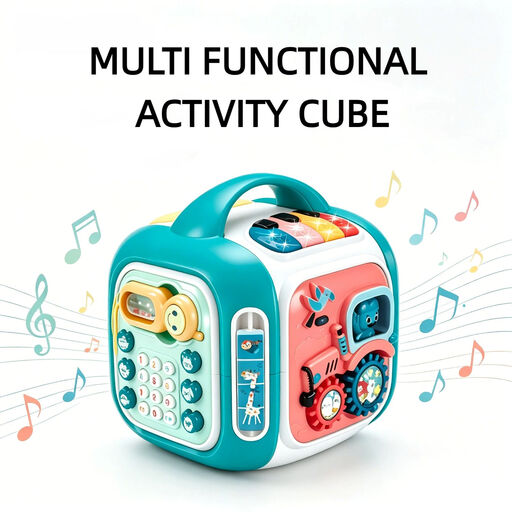
Why it suits this profile: This compact activity cube combines several activities in one product, making it suitable for families who want to try out different features without buying several large toys.
The recommended age is 1-3 years and the features are clearly visible: piano, guitar, telephone, gears and music. According to the product information, the edges are rounded and batteries are not included.
Compact size of approximately 23 × 23 × 24 cm, carry handle and eight play modes according to the product description.
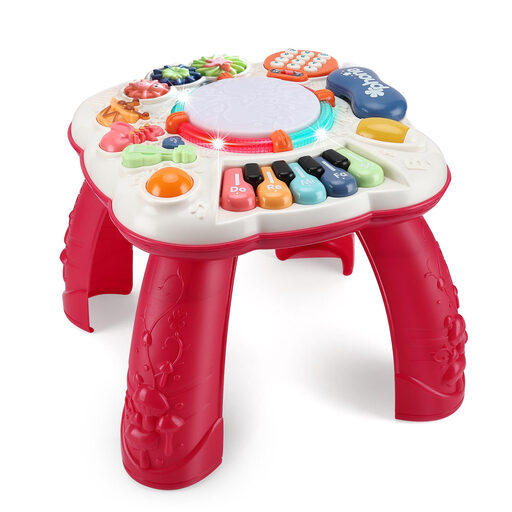
Why it suits this profile: This baby activity table is designed to grow with your child, from floor-based activities to standing play. That can be practical when a product needs to support several developmental stages.
According to the product description, the legs can be removed. Volume control is also listed. Check the current specifications before buying and use the product according to the stated age recommendation.
Six play zones, piano and drum functions, removable legs and a stated age range of 6-36 months.
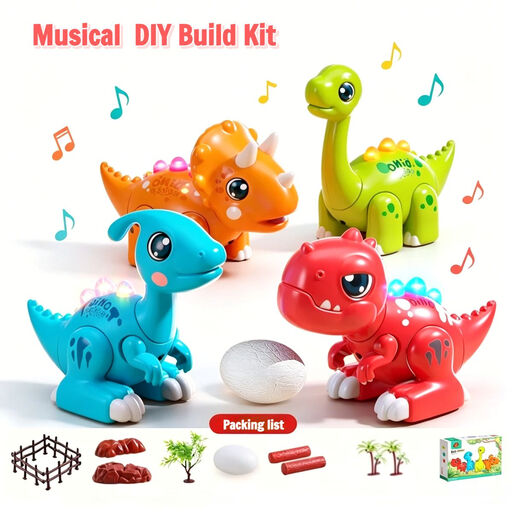
Why it suits this profile: For children who enjoy building and then creating stories, this set combines construction, dinosaur toys and imaginative play.
The set is recommended for ages 3-6 and contains four dinosaurs with accessories. According to the product information, the parts are designed to click together; check for small parts and battery requirements before play.
Four types of dinosaur, decorative play accessories, and light and sound functions according to the product description.
We have put together a complete, up-to-date list of products that fully meet these strict selection criteria and the applicable European safety regulations.
Choose large, sturdy parts without loose small accessories. An activity table or activity cube with turning, pressing and sliding functions may suit this stage. Always check the stated age recommendation and stay nearby during play.
This depends on the type of battery, play time and number of light and sound functions. Product information sometimes only states which batteries are required. Allow for additional costs and, where possible, choose a toy with volume control or a silent mode.
No. Montessori is not a fixed safety or age category. The term usually refers to independent, active learning, but the design varies from product to product. Before ordering, check the specific dimensions, materials, parts and age warnings.
